Hank Aaron Project

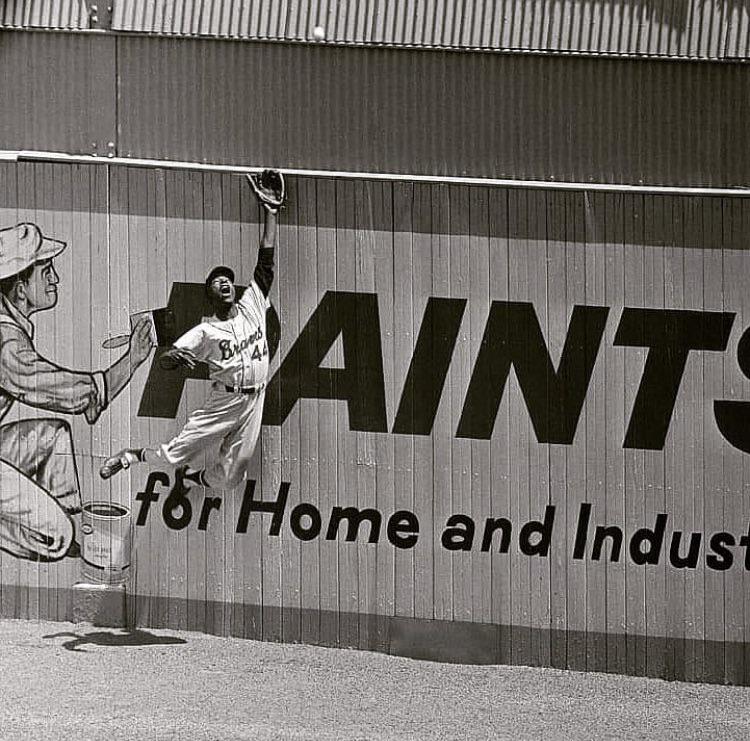
Since late August I have been on a quest to log every pitching appearance in the extraordinary life and baseball career of Hank Aaron. Now before anyone loses their cool here, I’m well aware that Aaron played the outfield, winning three Gold Gloves to boot, but I’m also aware of something else: Aaron made more money in his career as a pitcher than in the outfield.

Confused? Then perhaps it’s time to clarify. Aaron wasn’t pitching baseballs. He was pitching television sets, specifically Magnavox television sets, a side hustle for which he was paid a cool million dollars over five years.

“I’m Hank Aaron and I want you to meet the winning team from Magnavox.”

Naturally a project of this magnitude requires that work be done in phases. At the moment, I am only releasing Aaron’s work as a Magnavox pitchman in the immediate aftermath of the 1974 baseball season.

With hopes that my friends at the SABR Baseball Map will eventually make this interactive, here is an early what is likely the most ambitious undertaking to date to map the Hammer’s work as an appliance salesman in October 1974.

In all, the Great Hank Aaron Magnavox Tour of 1974 had five phases, each represented by a cluster of location markers on the map.

  • October 8-10, 1974 – “Spring Training” at Magnavox plants in Tennessee and North Carolina
  • October 15-16, 1974 – Appearances at four Bay Area Magnavox dealers (Daly City, San Francisco, Concord, Oakland). Also attended Game 5 of the 1974 World Series while in Oakland.
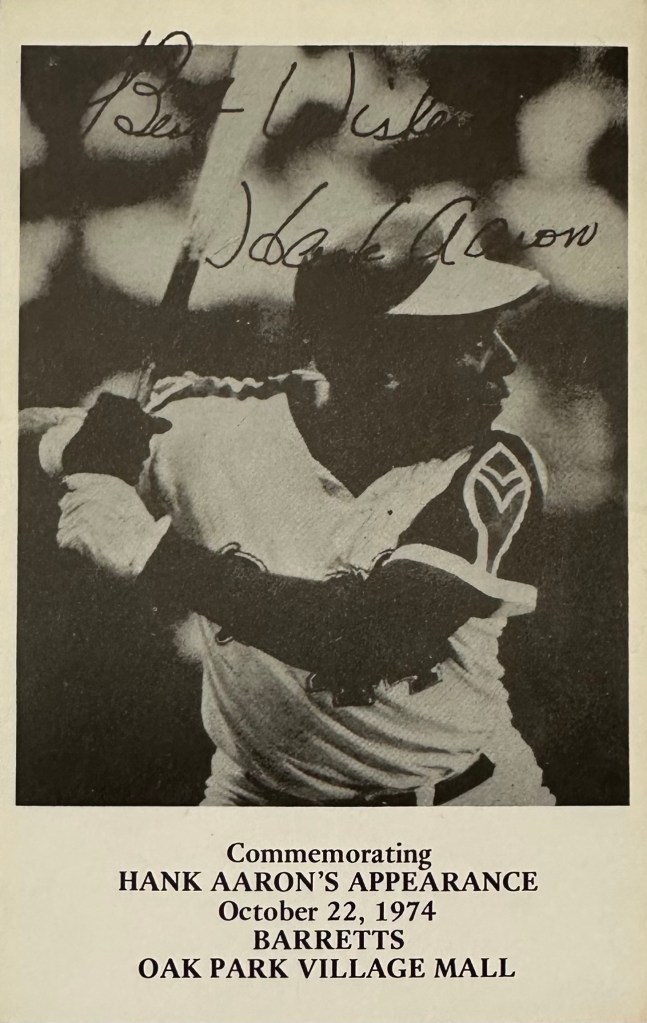
  • October 22, 1974 – Appearance at Magnavox dealer in Oak Park, IL
  • October 26-28, 1974 – Sponsored appearances at Magic Mountain theme park in Valencia, CA
  • October 30, 1974 – Appearances at four NY/NJ area Magnavox dealers (Staten Island, NY; Roxbury, NJ; Wayne, NJ; Paramus, NJ)
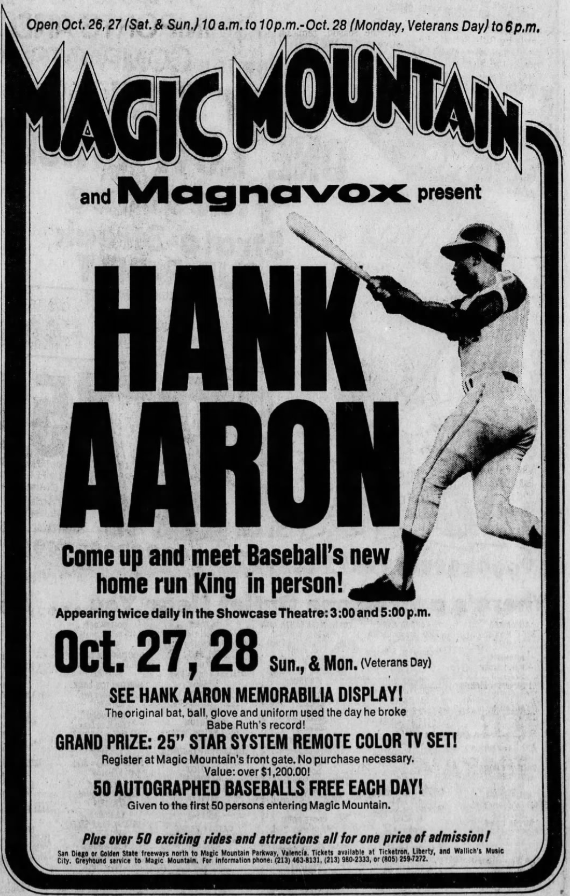
To the chagrin of the Hammer’s biggest fans, the dealership appearances were too frenzied and brief to support autograph requests. Some even bordered on violent. However, many attendees went home with specially produced baseball cards that included Aaron’s facsimile signature, and some even took home bigger prizes.
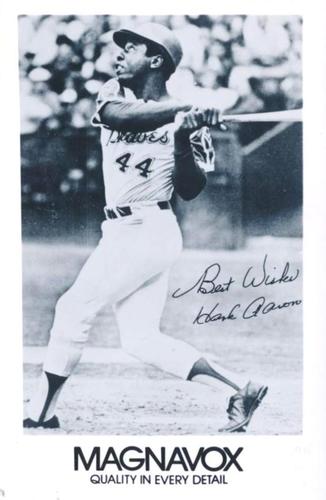
In the case of Aaron’s lone Midwest appearance, the card giveaway even identified the date and venue, though Hardball Voyagers hoping to visit the historic locale today will be sorely disappointed.
Having crisscrossed the country several times over as part of his tour, which began only days after hitting home run 733 in Atlanta’s season finale against the Reds, it would be natural to imagine the game’s newly crowned Home Run King would be ready for a break. Instead, however, the 40-year-old Aaron hopped a plane to Tokyo the very next day and on November 2 defeated Japanese slugger Sadaharu Oh in a home run hitting competition.

* * * * *

Author’s Note: Feel free to use the map and source data however you wish. But the Project is still very much a work in progress so your input would be appreciated. Specifically, if you come across any tour stop that is not here please let me know (jason DOT 1969 AT yahoo DOT com). If there are errors in any of the Magnavox locations, or if there are any errors in the appearance dates, please pass those on as well.
The Mystery of Faith

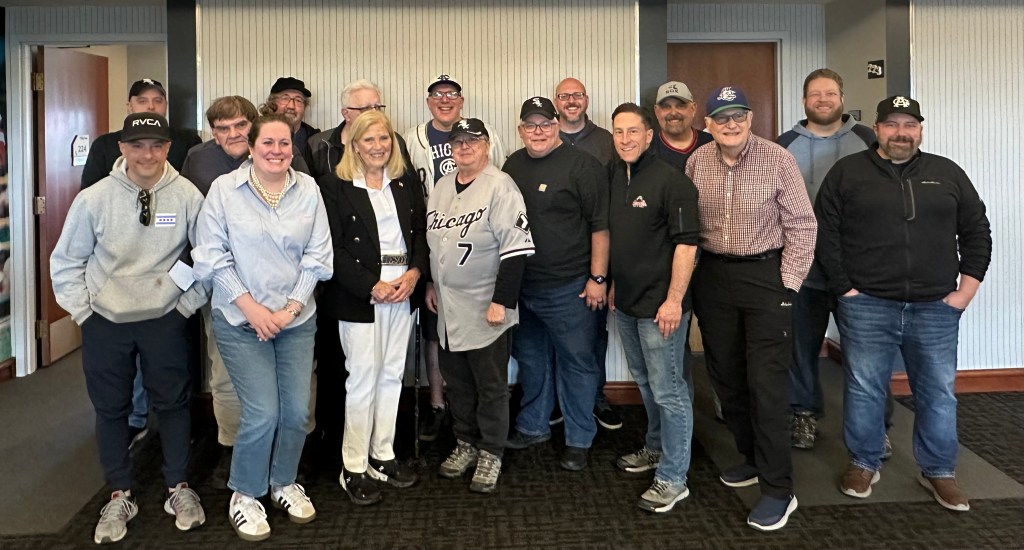
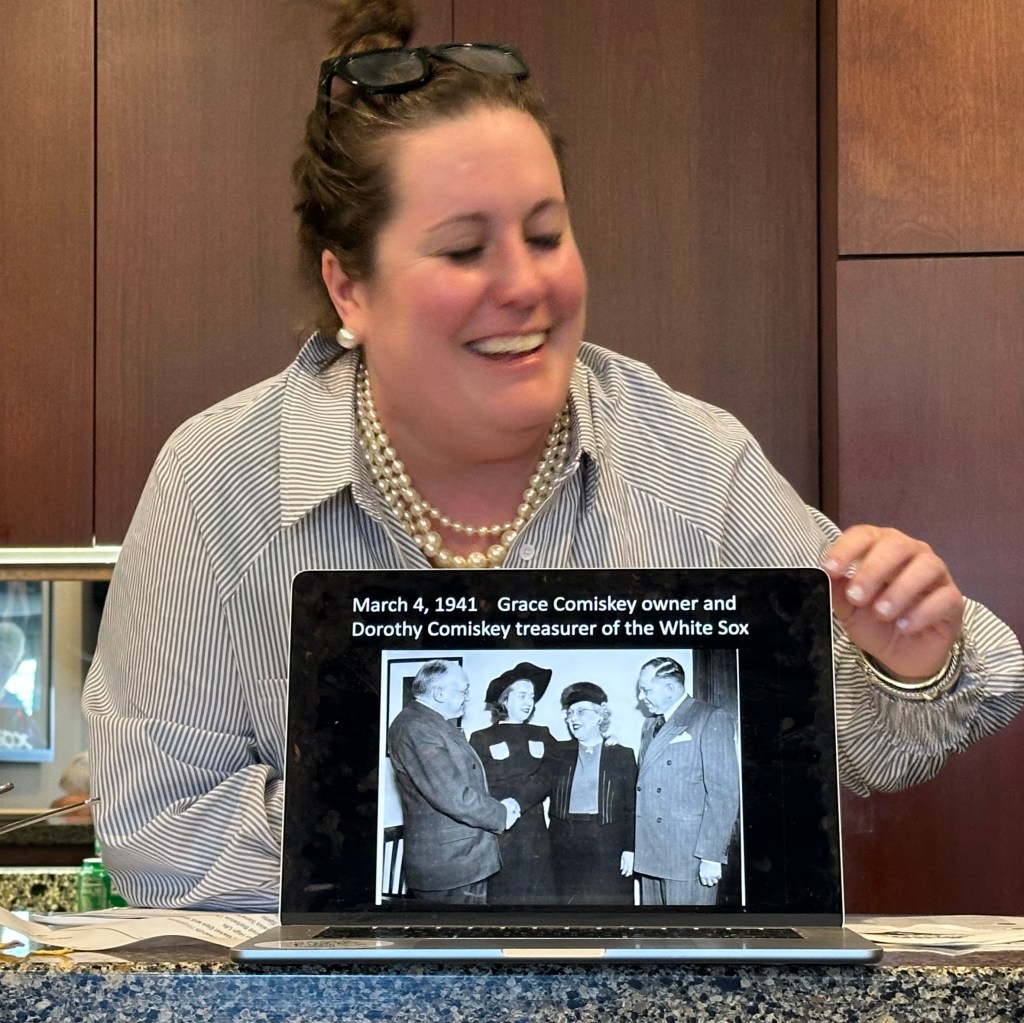
A tremendous SABR Chicago event starring Charles Comiskey researcher Mary O’Malley brought me to Rate Field, formerly known as Guaranteed Rate Field, formerly known as U.S. Cellular Field, formerly known as Comiskey Park (but not THE Comiskey Park), for my second White Sox game of the year.

Mary O’Malley regales Suite 224 with an outstanding presentation on the Comiskey family

Though the Sox blew a 9th inning lead and 9th inning comeback, it was hard to remember a better day at the ballpark. Apart from the game action, which was as dramatic as it was inevitable, the “bonus content” was almost too much to fathom. For one thing, our suite enjoyed a visit from Charles Comiskey’s great-granddaughter Patti Bellock, who couldn’t have been a warmer guest or better storyteller.

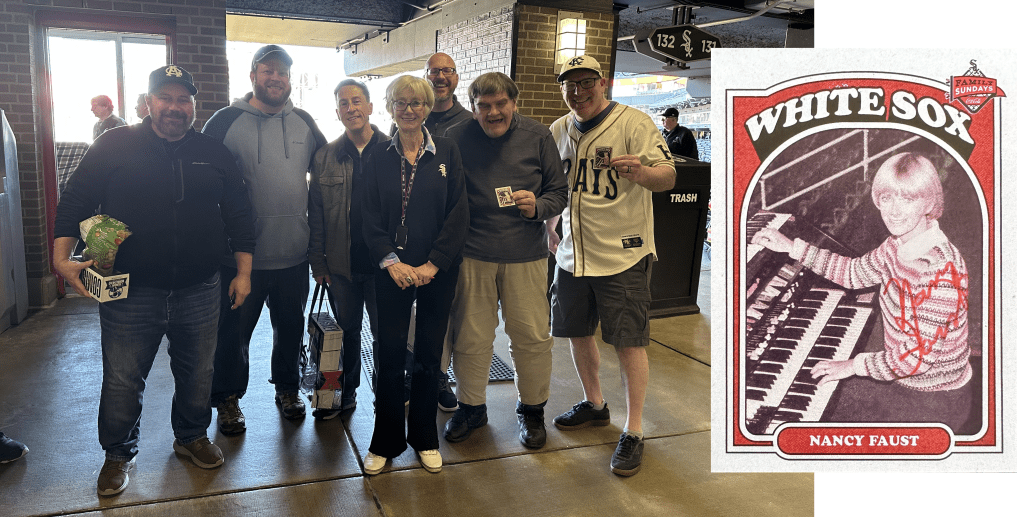
There was also a meet-and-greet with legendary organist Nancy Faust after the game, complete with signed trading cards!

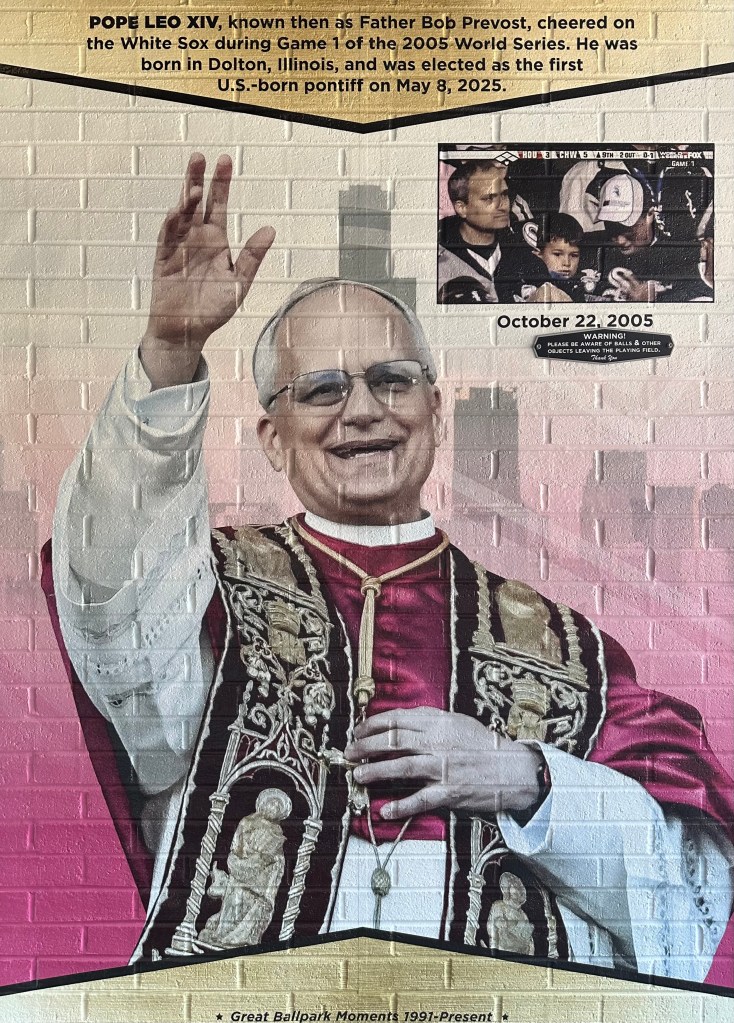
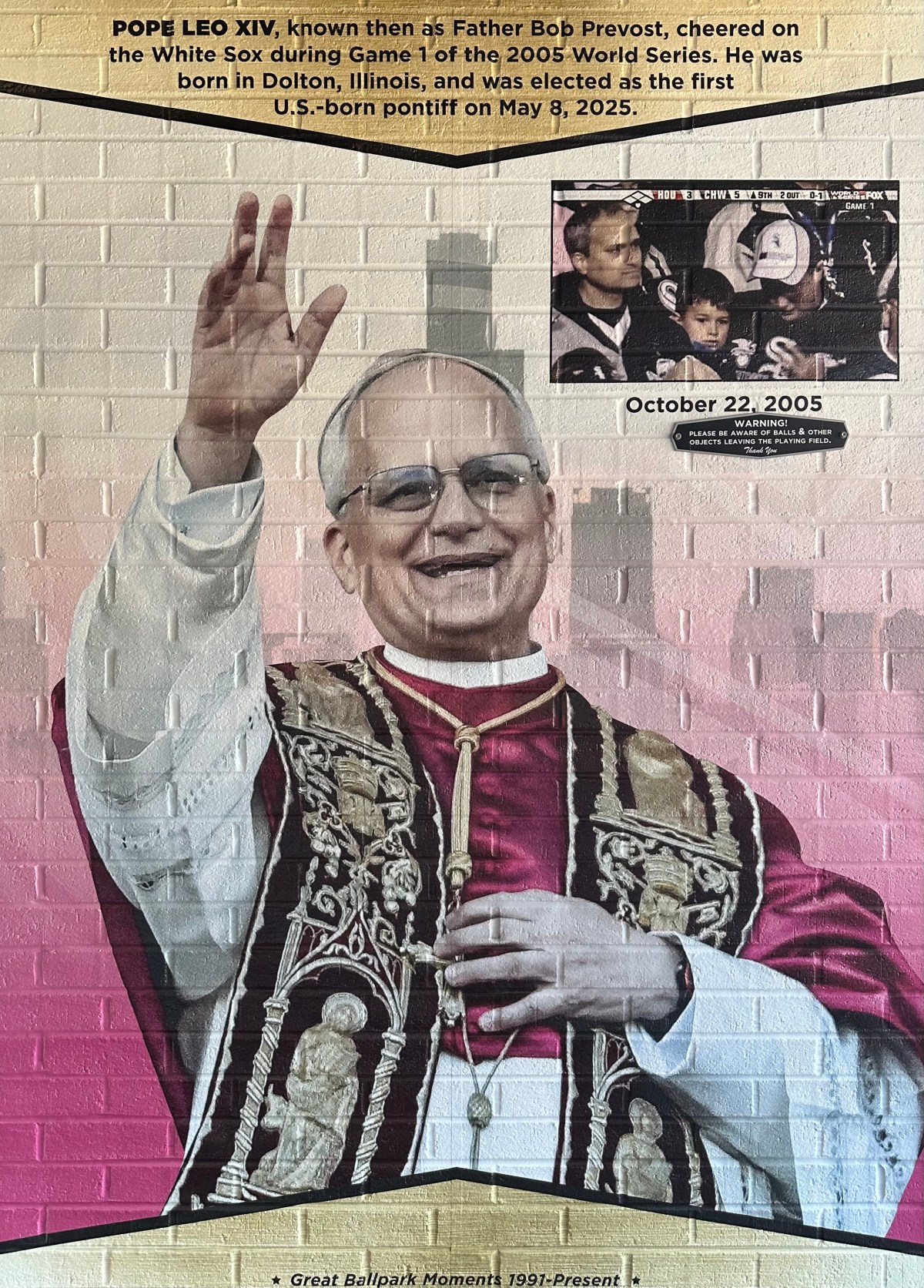
Finally, the game afforded a chance to visit the ballpark’s most newest, albeit unofficial, SABR Landmark, a mini-mural of the world’s most famous White Sox fan, Pope Leo XIV.

The installation is the latest in the Rate’s “Great Ballpark Moments, 1991-Present” series, somehow not yet rebranded as “First Rate Moments” to go with the stadium’s new name. As a testament to the new Pope’s popularity, a pre-game photo-op in front of Leo might have been the longest line of the day.

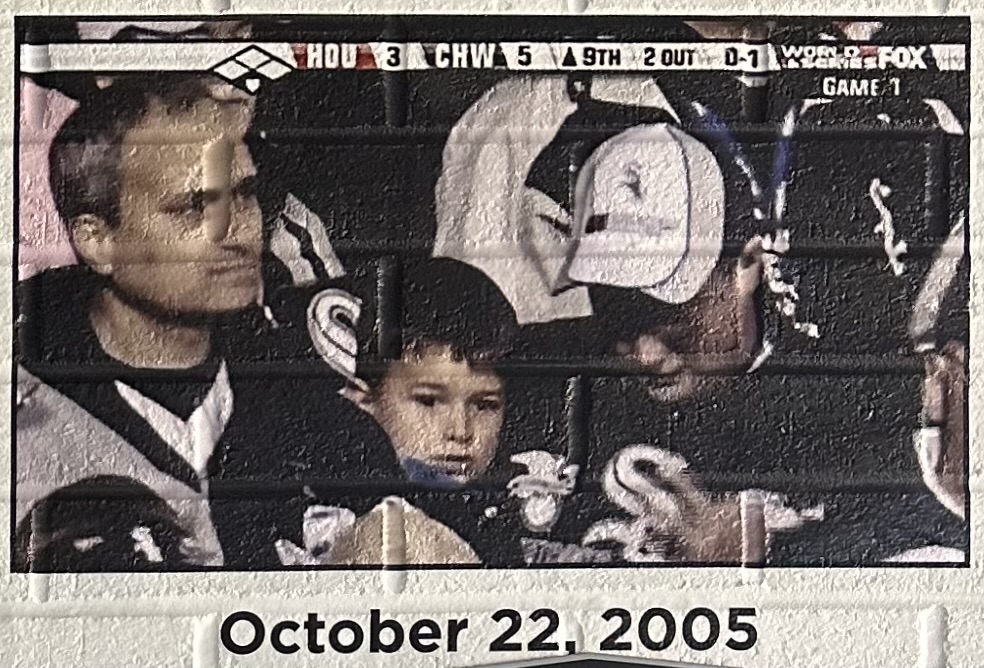
The mural’s placement, at the entrance to section 140, was selected to mark the former Father Bob’s seats at the 2005 World Series. A small inset graphic on the mural captures a moment from the first game of the series when Prevost was somewhat miraculously captured on camera.

Following an interview with the new Pope’s brother and the unearthing of this Fall Classic footage, there was no lingering mystery as to whether Leo was a Cubs fan or a Sox fan. However, that’s not to say the World Series image is wholly (or is that Holy?) without mystery. Beneath Pope Leo’s jacket, he appears to be wearing a jersey, but here’s the question: Which one?

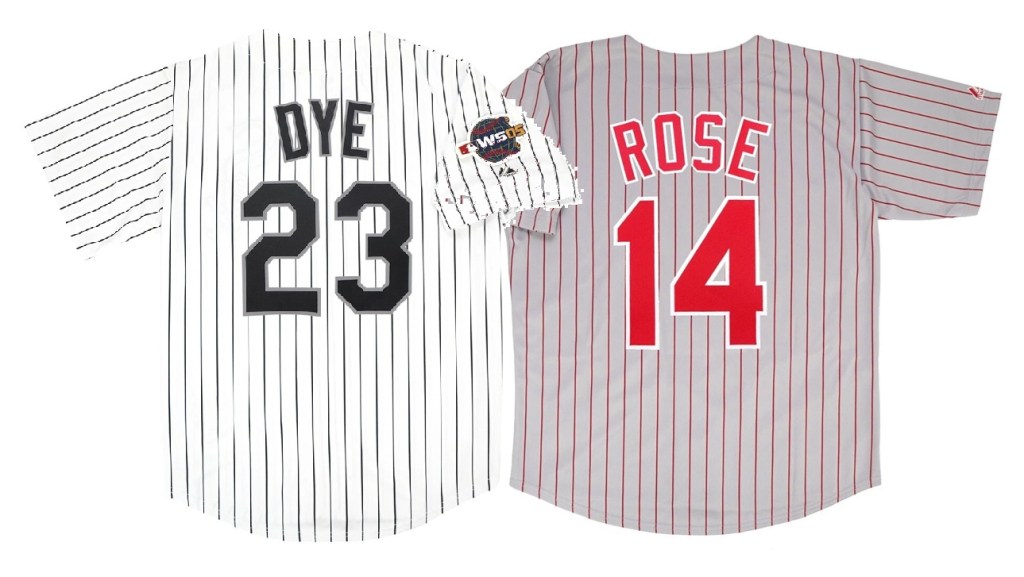
Though today Leo may issue any number of Papal Bulls, a Greg Luzinski jersey is out of the question given that the four-time All-Star retired several years before the Sox donned the black pinstripes. Besides, if the Pope was looking to go throwback, would he not choose Don Pall? Similarly, Frank Thomas seems unlikely. After all, how could one reconcile the Pontiff’s pleas for peace and compassion with a hero known as the “Big Hurt?”

Given that Leo is not just Leo but Leo the Fourteenth it would be fitting indeed if he was rocking a Paul Konerko #14 jersey. Of course, how could Leo have known back then that he would someday be Pope? Lacking such prophecy, perhaps his fondness for the Apostle’s Creed might would instead have led him to a number 24 jersey.

Potentially, Prevost might have gone double duty with a 23 jersey, paying homage not only to Michael Jordan but to key Sox pickup Jermaine Dye. Provided he could forgive Baseball’s greatest sin, could the clergyman rep Easter weekend any better than Dye on Friday, Rose on Sunday?

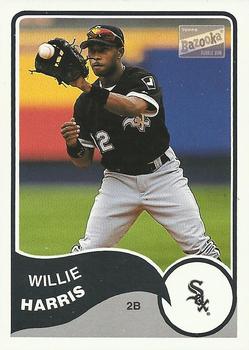
As with much in this world, we may never know the answer. About all we can do is petition the Lord in prayer. “Willie Harris?” you might ask, but you tell me: Is the Pope Catholic?!

Ten Baseball Cards to Visit Before You Die

While many who enjoy travel have bucket lists with the likes of the Galapagos or Santorini, I believe Kendrick Lamar put it best: They Not Like Us. I mean, blue-footed boobies are great and all, but remind me again what they have to do with baseball! And as for Santorini, take it from Yogi: “Nobody goes there anymore. It’s too crowded.”

Yes, for those of us with more refined appetites for travel, we prefer—really, demand—only the sorts of adventures that can (or should!) be found on the SABR Baseball Map. Not to be snobby or anything, but c’mon, are we really gonna waste our time sipping a Mai Tai or hang gliding across the Straits of Gibraltar when there’s baseball to be enjoyed?

Now, as to where the enthusiastic hardball voyager might land, here are ten destinations that are less recommendations than destiny. One might even say visiting them is “in the cards!”

10.

Destination: Roberto Clemente Statue, PNC Park, Pittsburgh, PA
Card: 1998 Topps Jose Guillen

Note: The Guillen card shows the statue’s former location at Three Rivers Stadium.

9.

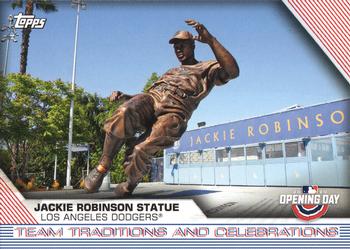
Destination: Jackie Robinson Statue, Dodger Stadium, Los Angeles, CA
Card: 2020 Topps Opening Day – Team Traditions and Celebrations

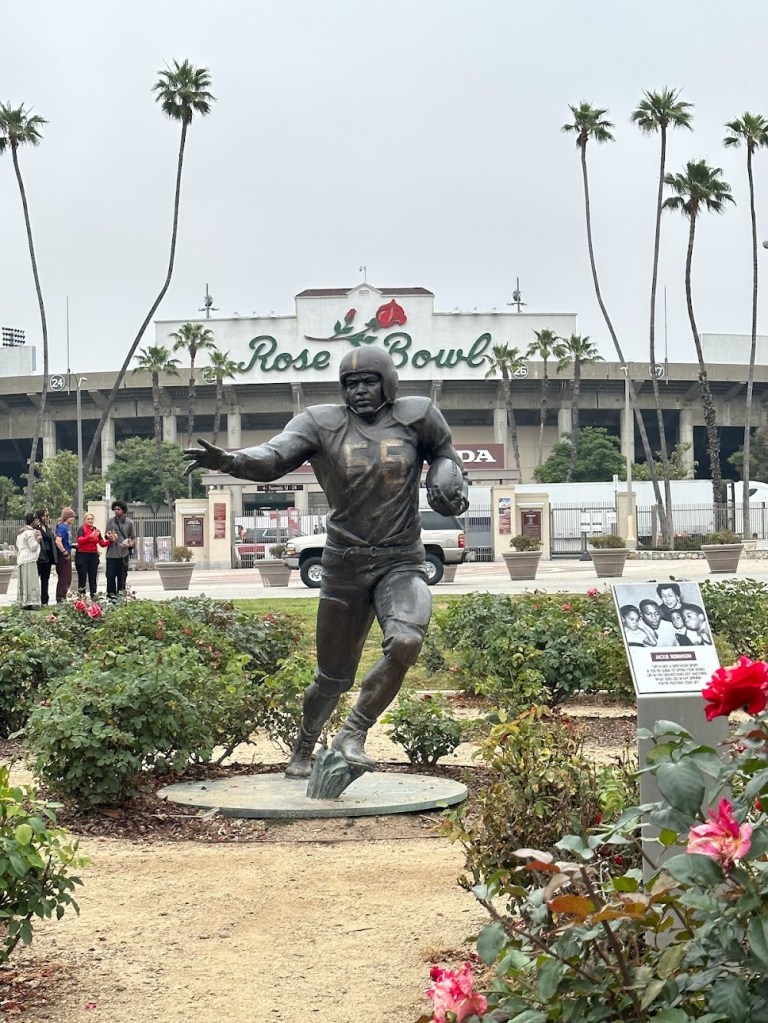
Note: While you’re in the neighborhood, why not also check out the Jackie and Mack Robinson statues across from Pasadena City Hall and the Jackie Robinson football statue at the Rose Bowl!

8.

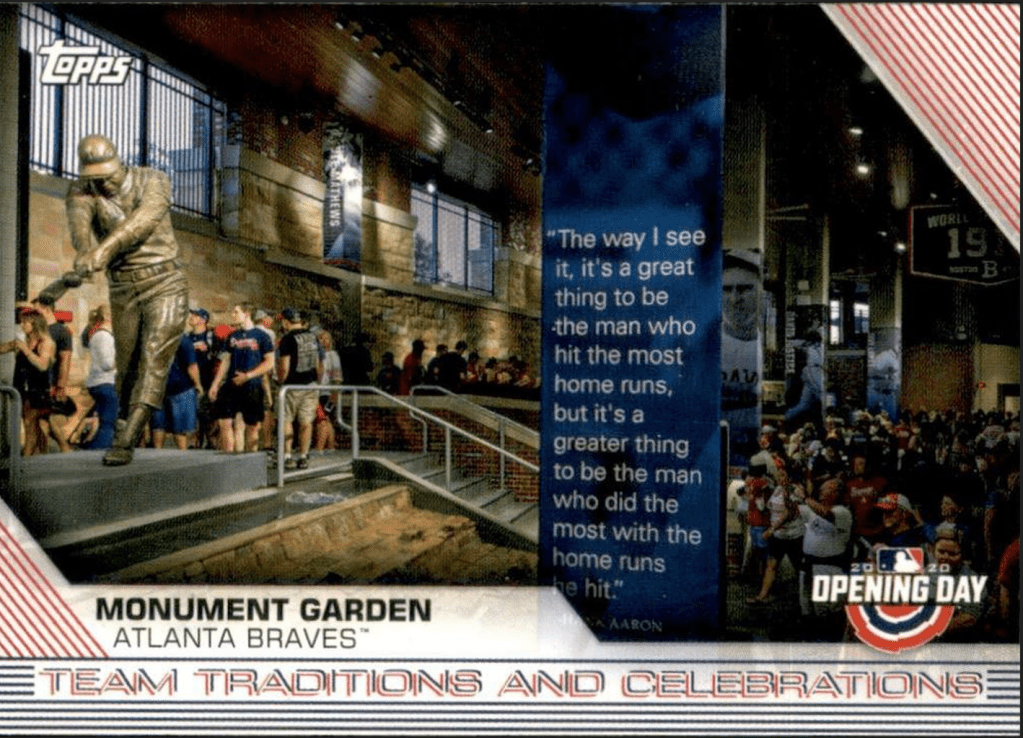
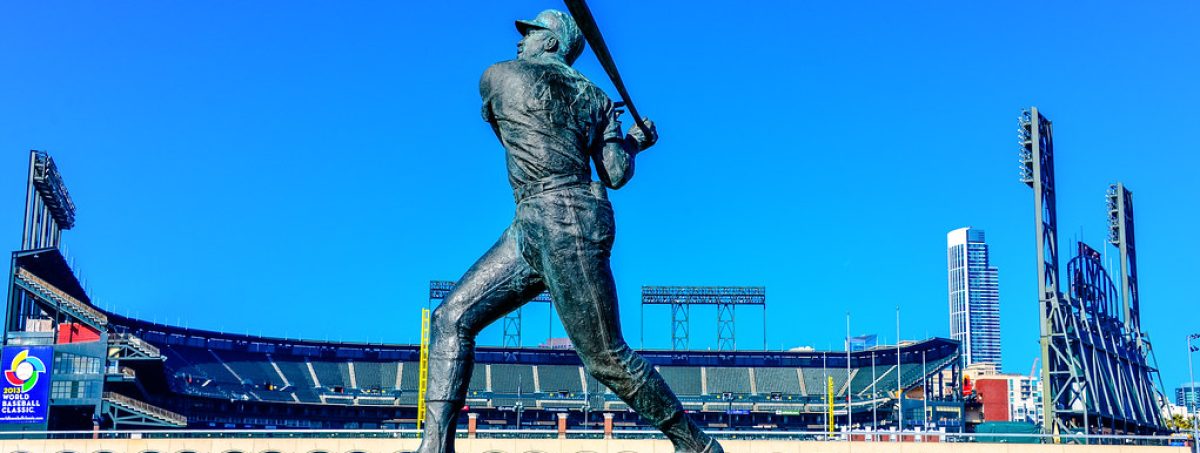
Destination: Hank Aaron Statue, Truist Park, Atlanta, GA
Card: 2020 Topps Opening Day – Team Traditions and Celebrations

Note: The real-life model for the statue was C.J. Stewart, a former Cubs minor leaguer who even has his own baseball card!

7.

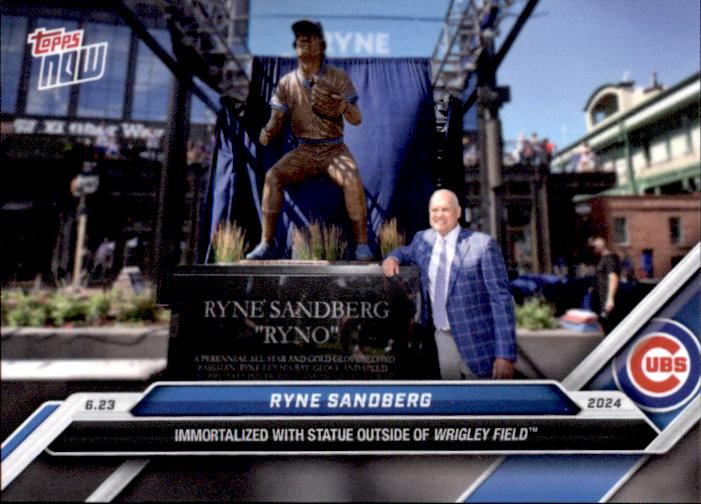
Destination: Ryne Sandberg Statue, Wrigley Field, Chicago, IL
Card: 2024 Topps Now

Note: Also find statues of Cubs legends Ernie Banks, Fergie Jenkins, Ron Santo and Billy Williams just to the left of Ryno, not to mention Harry Caray on the nearby corner of Sheffield and Waveland. But alas, still no Hack Wilson!

6.

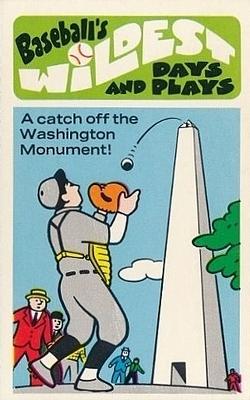
Destination: Washington Monument, Washington, D.C.
Card: 1974 Fleer Laughlin “Baseball’s Wildest Days and Plays” Gabby Street

Note: We know the Washington Monument isn’t an actual SABR Landmark (yet!), but who doesn’t love a great Bob Laughlin card! (And here’s a more modern card for Washington Monument lovers.)

But speaking of monuments…

5.

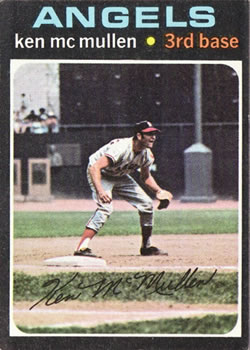
Destination: Monument Park, Yankee Stadium, New York, NY
Card: 1971 Topps Ken McMullen

Notes:

  • No need to head onto the playing field anymore to visit Monument Park. In fact, we recommend you definitely don’t do that!
  • Thanks to Shlabotnik Report for nominating this terrific card.
  • And thanks to Matthew Glidden for this card, which offers a close-up of the Gehrig monument.

4.

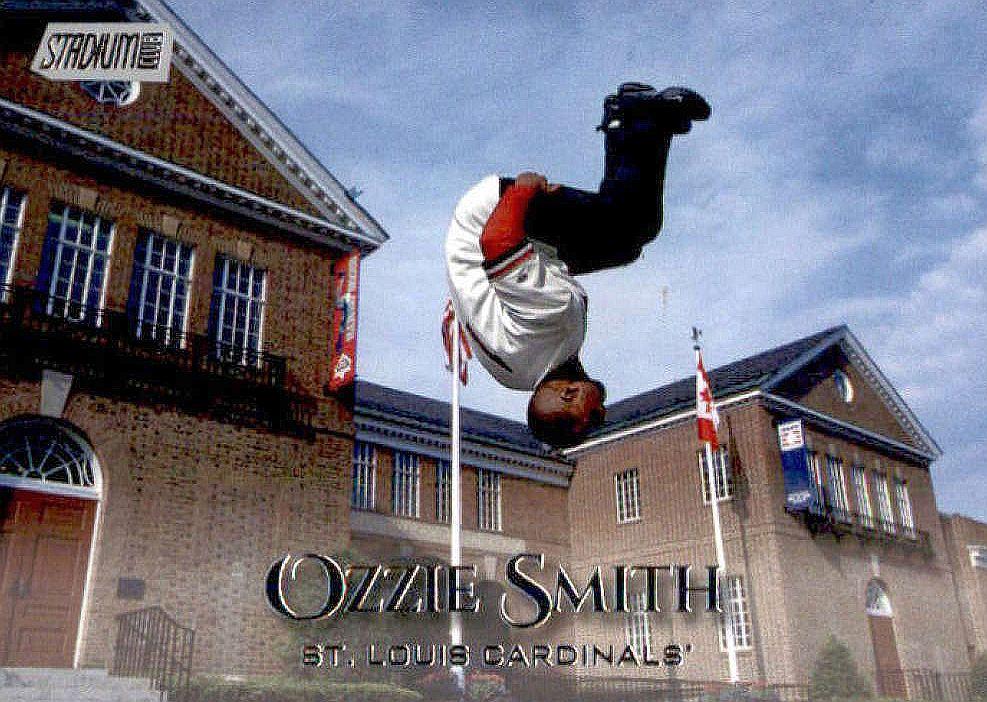
Destination: National Baseball Hall of Fame, Cooperstown, NY
Card: 2019 Stadium Club

Note: The perfect card for collectors AND flippers!

3.

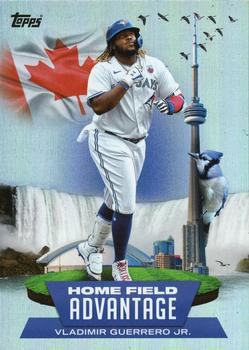
Destination: Niagara Falls, NY / Rainbow Falls, ONT
Card: 2022 Topps Homefield Advantage Vladimir Guerrero, Jr.

Notes:

  • The U.S. side of the Falls is just three miles from Sal Maglie Stadium in Niagara Falls, NY.
  • The body of Hall of Famer Ed Delahanty was recovered from the bottom of the Falls following his mysterious death in 1903.

2.

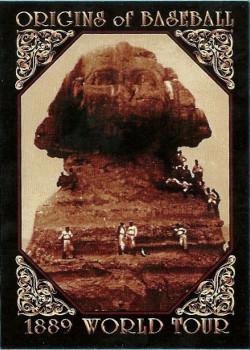
Destination: The Sphinx, Giza Plateau, Egypt
Card: 1994 American Archives “Origins of Baseball” 1889 World Tour

Notes:

  • Yes, there’s a SABR Games story for this!
  • The same set is chock full of landmarks, including the Elysian Fields.
  • Thanks to Chris Kamka for the tip here.

1.

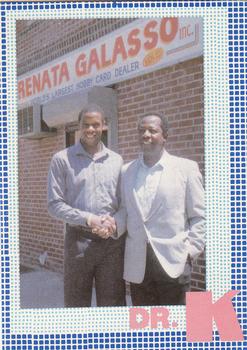
Destination: Renata Galasso headquarters, 6305 10th Ave, Brooklyn, New York
Card: 1985 Renata Galasso Dwight Gooden #16

Note: RGI is long gone, and the place looks a lot different now. Still, who wouldn’t want a photo op in the exact spot Dr. K and Henry Aaron hung out!

Between the Moon and New York City

I’ll admit when I think of the Landmarks Committee and the SABR Baseball Map, what I love most is the mapping and chronicling of the obscure, out of the way spots that–like the brush dabs of a Monet–are so easily overlooked but collectively amount to a the masterpiece that is the geography of our National Pastime. Drive three hours south to see the pedestal a Jim Bottomley statue once stood atop? I’m there! An abandoned ballpark where minor league history was made? Count me in! A home plate inside a hospital? Why not!

Forgive me then for writing about the absolute least off the beaten path landmark of them all: Yankee Stadium. “Ah, you almost had us, Jason. Surely you mean the footprint of the old Yankee Stadium, the original House that Ruth Built!” Nope. “Good one then. Old Hilltop Park, home of the Highlanders? Nice!” Nope again. I’m talking about the Yankee Stadium the actual New York Yankees play in right now. “Sublime! We can’t wait to read about the obscure features and history only a top notch SABR researcher like yourself might uncover!” Oh, how I wish!

No big reveal awaits, only one fan’s reaction to visiting the most famous baseball site in the world for the very first time. The occasion was Game 3 of the 2024 World Series between (of course) the New York Yankees and my beloved Los Angeles Dodgers. Having never been to a World Series, much less one matching these two titans, some prodding from a friend convinced me this would be the year to cross off the ultimate baseball bucket list item. Plan A would naturally be to fly to Los Angeles, crash with friends, and cheer for my team surrounded by my fellow Dodger fans. However, various family and work commitments meant that Game 3 in New York was my only option. Framed differently, however, my rigid schedule was actually a blessing since it meant I’d also cross off a second bucket lister, Yankee Stadium itself.

Though I landed in Newark clad head to toe in Dodger Blue, I was not entering enemy territory. Apart from its sports teams, I am a New York super fan. I love everything else about the city, and most of all I love its people. In the same way that tourists used to visit the Los Angeles I grew up in and get excited if they saw a celebrity, I get excited just looking out the window of a cab (a New York taxicab!) or walking down the street and seeing ordinary New Yorkers and their unmatched mix of class, cool, and attitude. 

My friend found us a hotel near Central Park and West 94th Street, about 4 miles from the Stadium. It wasn’t much to look at inside or out, but that was no matter. Our total stay in New York would be less than 24 hours before I’d head back to Chicago and she’d head back to L.A. Rather than take the subway right by the hotel, which would involve a transfer we might screw up, we opted to walk half a mile and catch the “B” line, which had its 161st Street exit right outside the Stadium. 

As you might expect our train was filled with other fans heading to the game, though none in Dodger gear. The baseball nerd in me loved seeing various jersey numbers and guessing the player. Of course, most were gimmes like “2” and “99.” For most of the quick ride made conversation with a dad who was taking his two kids to their first World Series. As excited as I was for this game, I can’t even imagine how magical it would have been to me as a kid when even a meaningless Dodgers-Astros game in May was the kind of thing I looked forward to for a month and couldn’t stop talking about for months afterward. Lucky kids. 

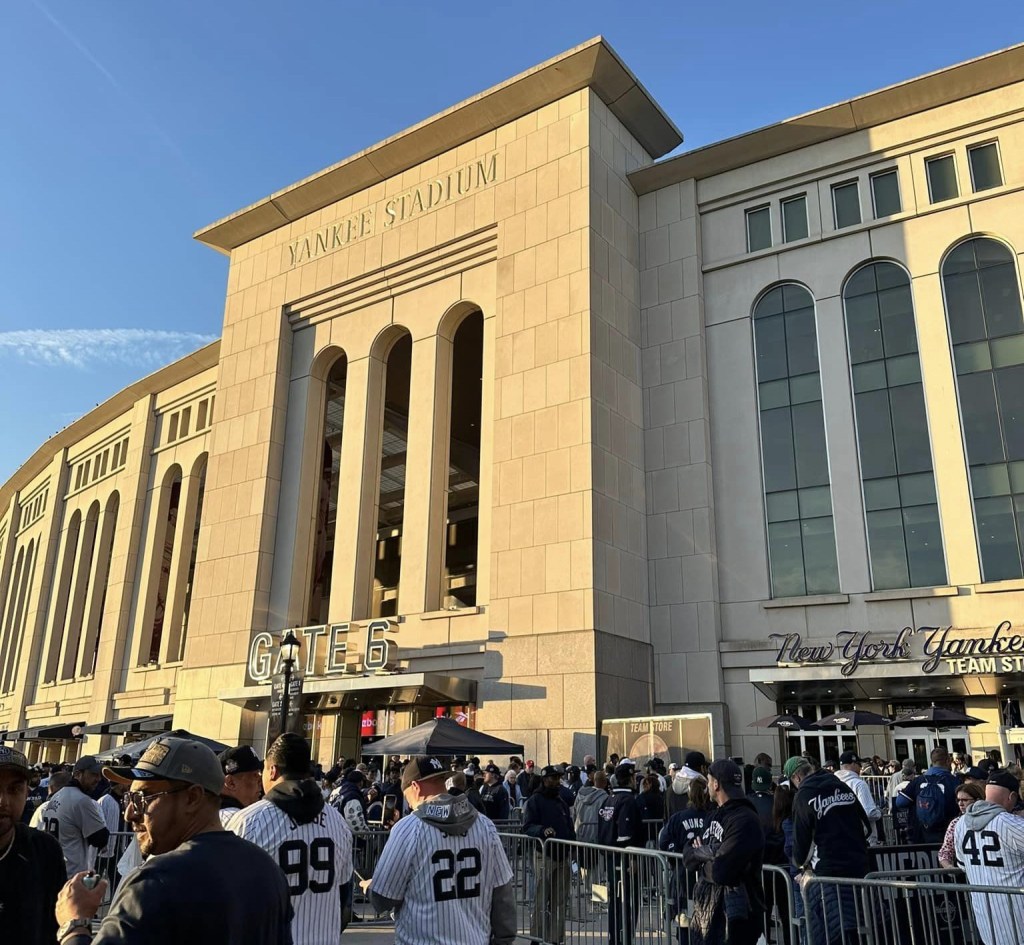
I believe our train was underground the entire time, so there was no real scenery to speak of beyond the sea of pinstriped jerseys. However, this was a feature, not a bug, as it meant we had no approaching view of the ballpark. Rather, when we exited the station and stepped into the light for the very first time, the majesty of Yankee Stadium hit us all at once. Bam! It was awesome, and I don’t really have words for its full frontal assault on the senses. Let’s just say the ballpark 100% makes its presence felt.

We entered through Gate 6 to a vista without subtlety. On banners above us there were Yankee legends lined up as far as the eye could see. Even knowing the history of the franchise, I stood there in disbelief at the number of absolute legends who have worn the pinstripes. This is literally a team where a healthy debate could be had as to whether Joe DiMaggio belongs on its Mount Rushmore. Joe DiMaggio.

As we made our way to Monument Park, we passed all the things you expect to pass at any modern ballpark: restrooms, sushi stands, gift shops, etc. However, like much in New York, the ordinary took on a magnitude not found elsewhere. This wasn’t just a men’s room. This was a MEN’S ROOM AT YANKEE STADIUM!

The fans were spectacular too. The jerseys I saw most were of the modern greats: Jeter, Judge, and Mariano, and they served as a reminder that the Yankees “big three” of this century alone could hold their own against the all-time big three of many baseball franchises. Of course, just to remind everyone that the Yankees had other great players too, there was the occasional 3, 5, or 7, not to mention deeper cuts like 15, 20, and 26. Oddly, I don’t recall seeing a single 44, which is THE jersey to wear if you’re looking to petition the baseball gods for postseason miracles.

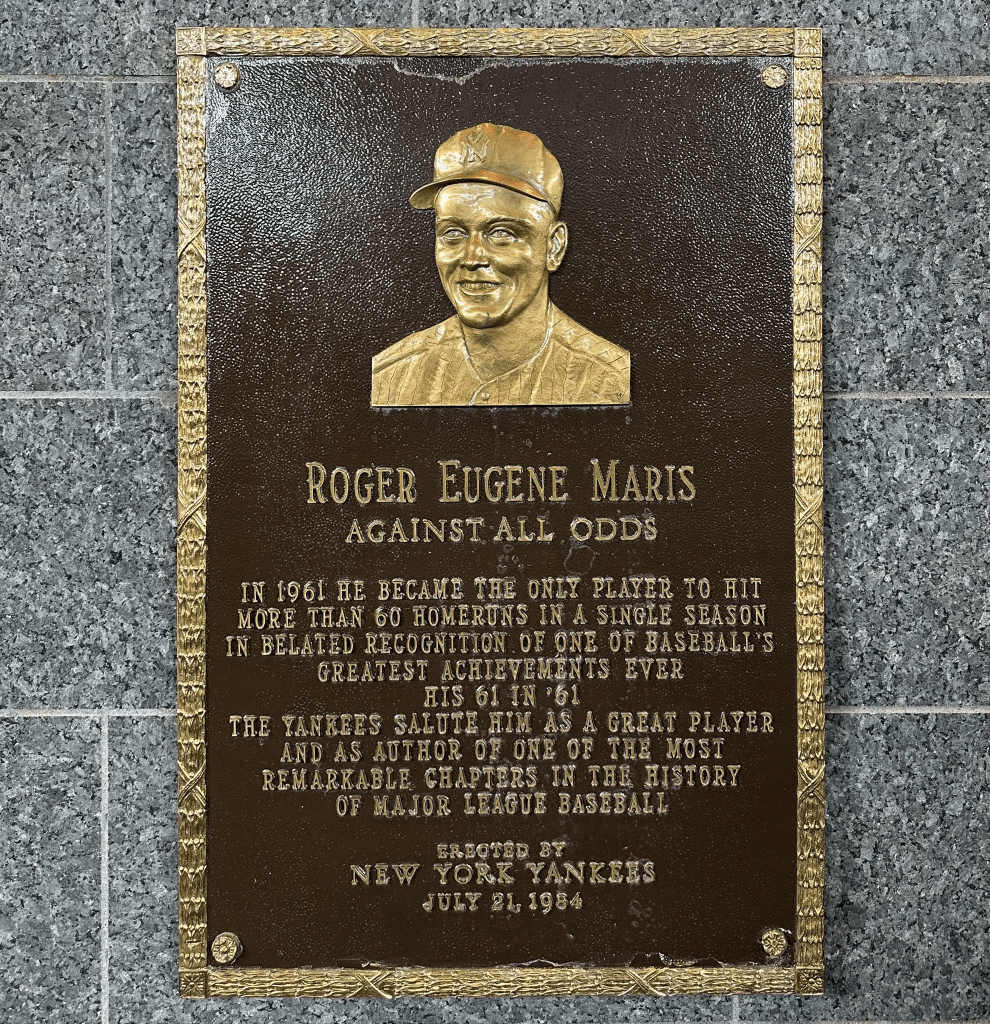
Monument Park itself was essentially where the random bombardment of Yankee greatness gave way to order. So famous is the Yankee pantheon that there was no reason to even read the plaques. Our very DNA as baseball fans is constituted from the stories and achievements of these men. Ask most fans to tell you about a player on their team who won five World Series and they quickly realize there aren’t any. Ask a Yankee fan, and they ask “Which one?” or “Only five?”

Roger Maris plaque at Monument Park

That said, Monument Park was not without welcome surprises, including plaques honoring Nelson Mandela, Stonewall, 9/11, and various Papal visits. However, an unwelcome surprise was that the largest monument by far belonged neither to Ruth nor Gehrig nor Mantle but to George Steinbrenner. Could there be any greater blasphemy in Baseball’s holiest temple? I get it that the Yankees won some titles under his tenure, but what Yankees owner hasn’t won titles? Yankee fans will have to let me know what they think of this. I suppose the Dodger equivalent would be a statue of Walter O’Malley four times the size of our Jackie Robinson and Sandy Koufax statues. I just don’t get it.

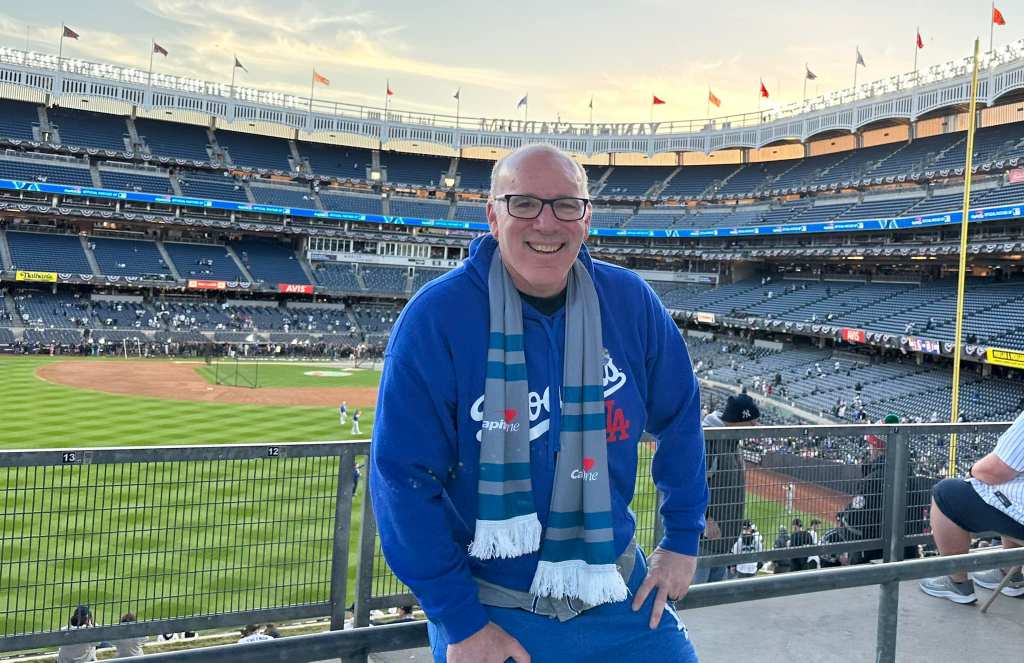
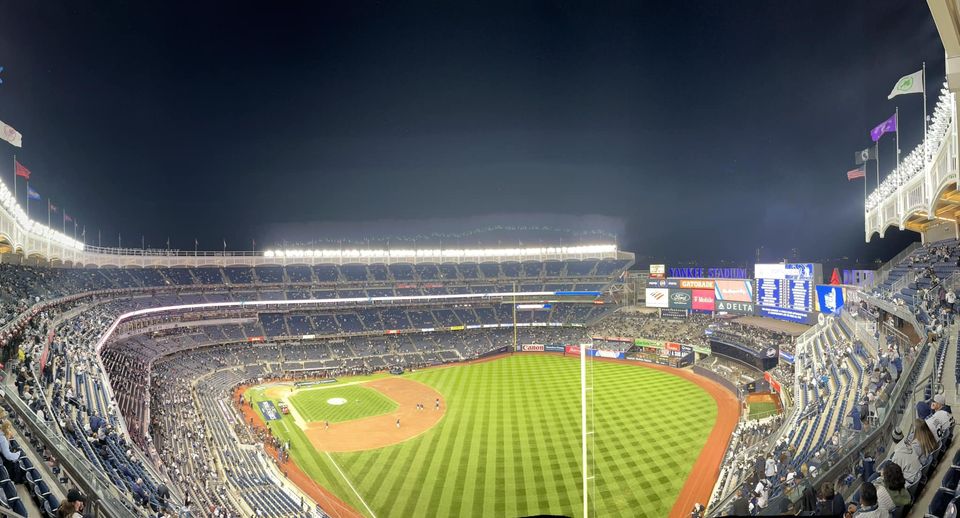
Our next stop might have been the Yankee Museum, but we opted instead to grab dinner and head to our seats, which were by no means close. We were in Section 408, which technically qualified as in the ballpark but equally felt halfway to the Moon. Had the Goodyear blimp made a flyover, we might have had to duck. We would have sooner been struck by a comet or asteroid than a foul ball.

View from our seats
Without a doubt the ballpark had seats with better views of the playing field, but I’m not sure any had better views of the Stadium itself. I sure wasn’t going to complain. I was at Yankee Stadium for the World Series. If this wasn’t living the dream, it was at least living the movie, specifically “Arthur.” For one thing, the film came out in 1981, the last time the Yankees and Dodgers met in the Fall Classic. For another, its theme song was essentially an ode to our seats.

When you get caught between the moon and New York City
I know it’s crazy, but it’s true
If you get caught between the moon and New York City
The best that you can do
Is fall in love

And fall in love I did!

Hank Aaron’s Mobile: See It While You Can!

A wedding brought my family to Mobile, Alabama, for the weekend. While time did not permit many baseball adventures, we did carve out just enough of a Saturday morning to check out two landmarks of Hank Aaron’s Mobile.

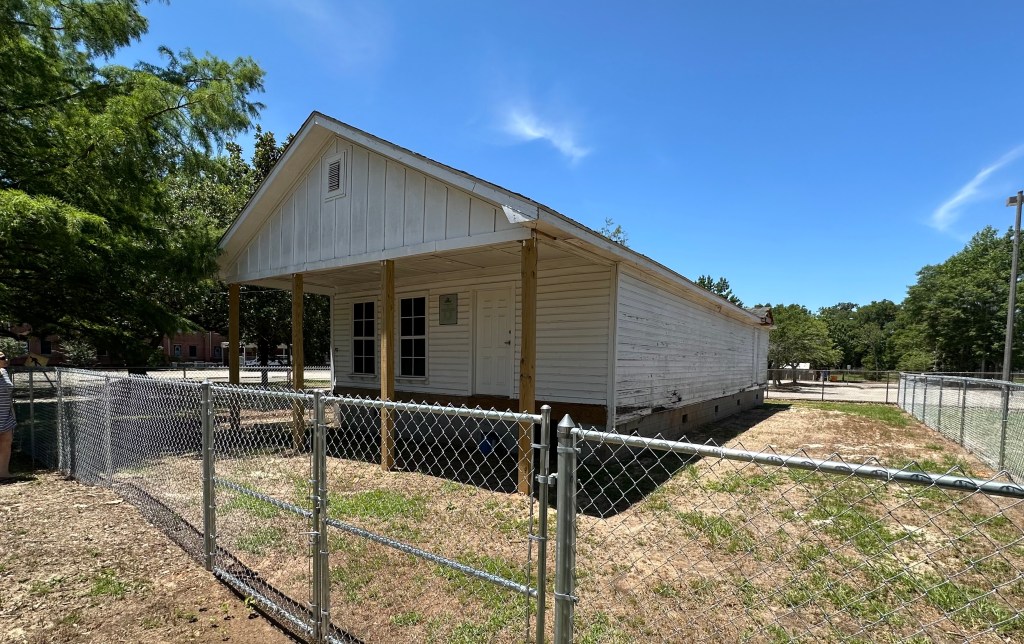
First up on our tour was the Hammer’s childhood home, which for several years doubled as a museum. Though the Baseball Map had this landmark located at Hank Aaron Stadium, Mobile’s minor league ballpark, I was glad to have queried SABR local Patrick Bone in advance.

In fact, the Aaron house no longer resides at the park but instead in the Aaron family’s old Toulminville neighborhood, outside the Mobile Police Department’s Third Precinct where it sits indefinitely closed and inaccessible to the public.

I don’t think this is the city’s permanent plan for the landmark. At the moment I think there is simply no plan. Personally I have no idea what it would cost in terms of dollars and time to give the museum a more permanent home and open it to the public. Still, I have to imagine some combination of private and public support would be out there the second the city asked.

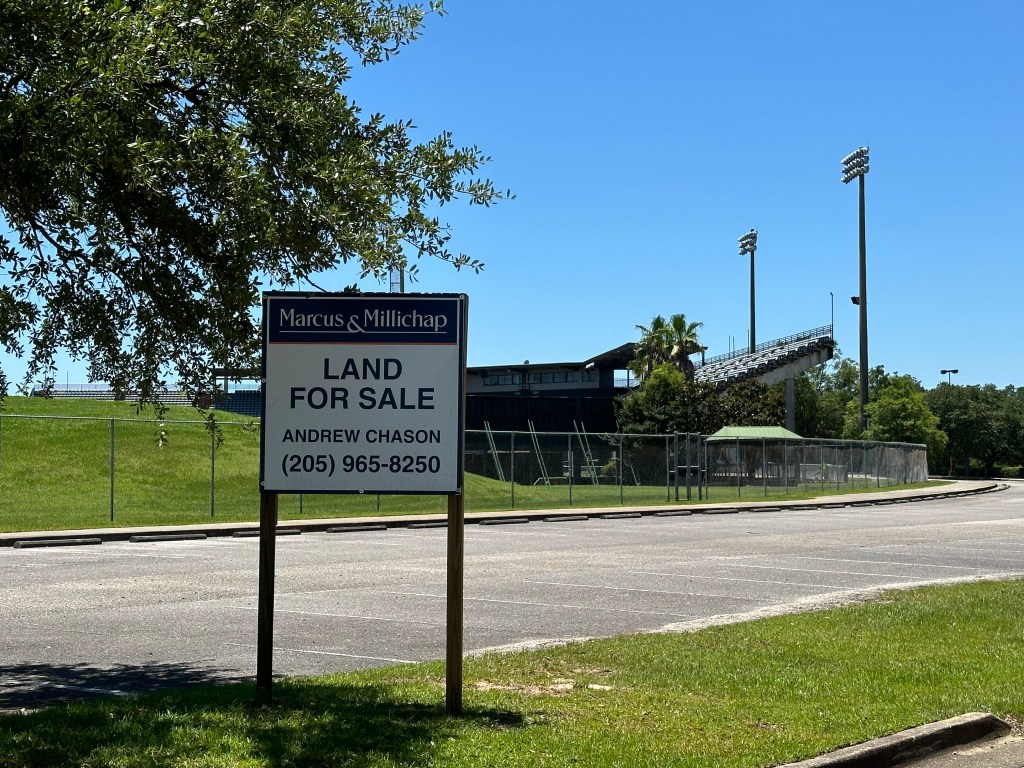
Anyone wondering why the house left its ballpark location in the first place would quickly find the answer upon pulling up to 755 Bolling Brothers Blvd.

The ballpark, like its former tenants, the Bay Bears, are no more. Instead we have the Rocket City Trash Pandas up in Madison, Alabama, and a whole lotta land for sale.

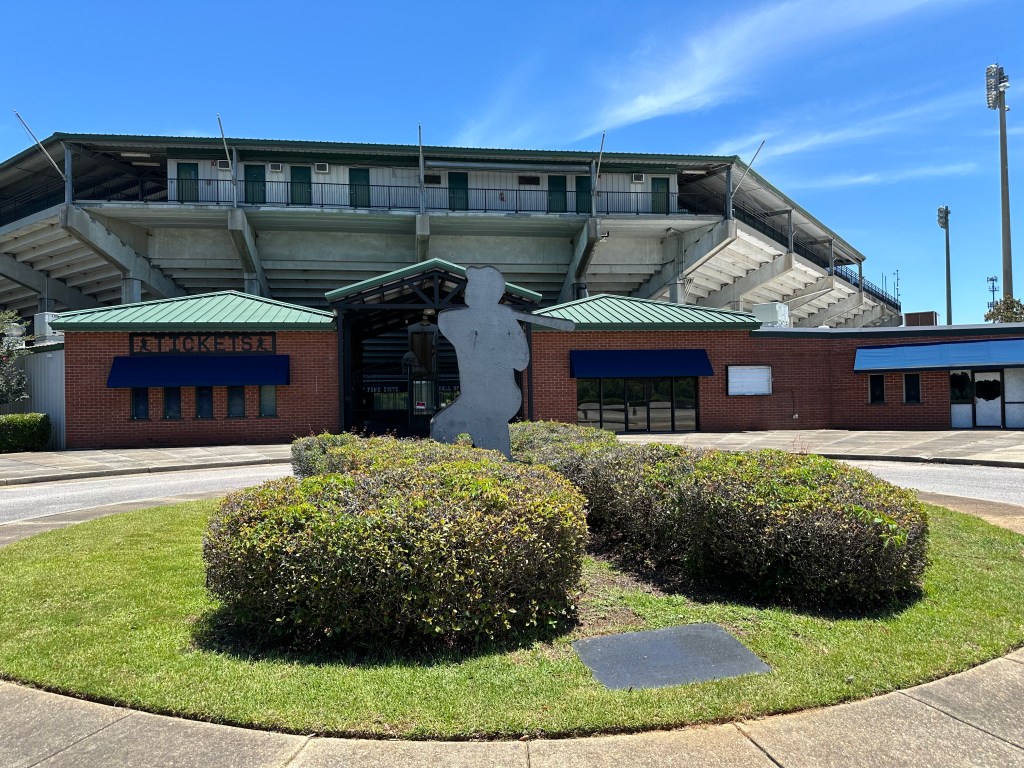
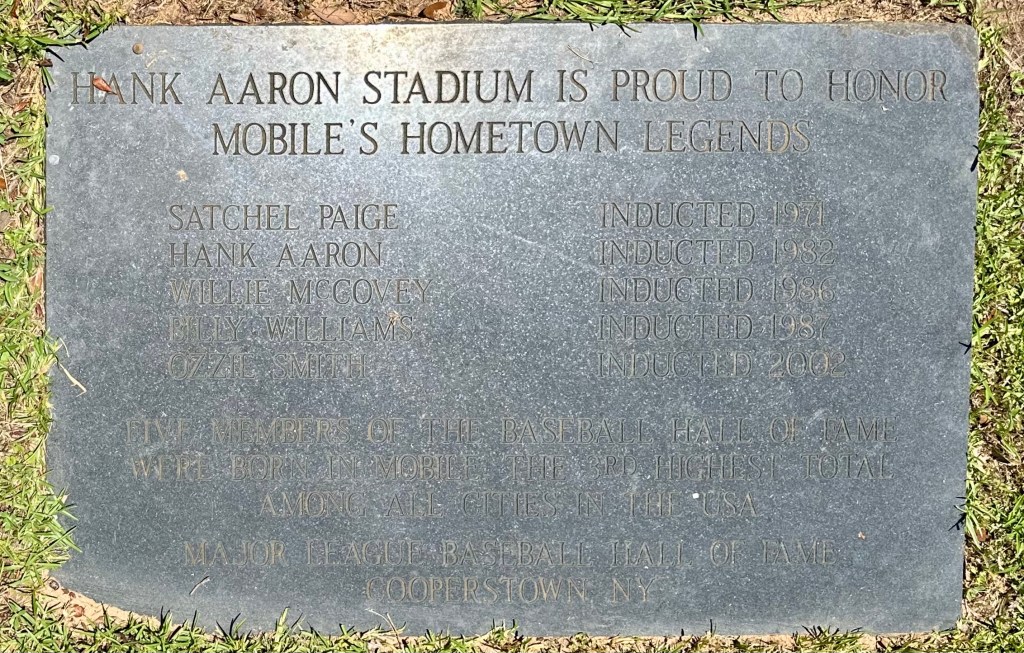
Fortunately, there are still some signs of the Hammer, for however short a time they’ll survive vandals, scavengers, or a next owner’s future plans. Though inaccessible by car, a short walk takes you to the front of the stadium where an Aaron stand-up and ground site marker are quickly found situated on a well manicured patch of grass.

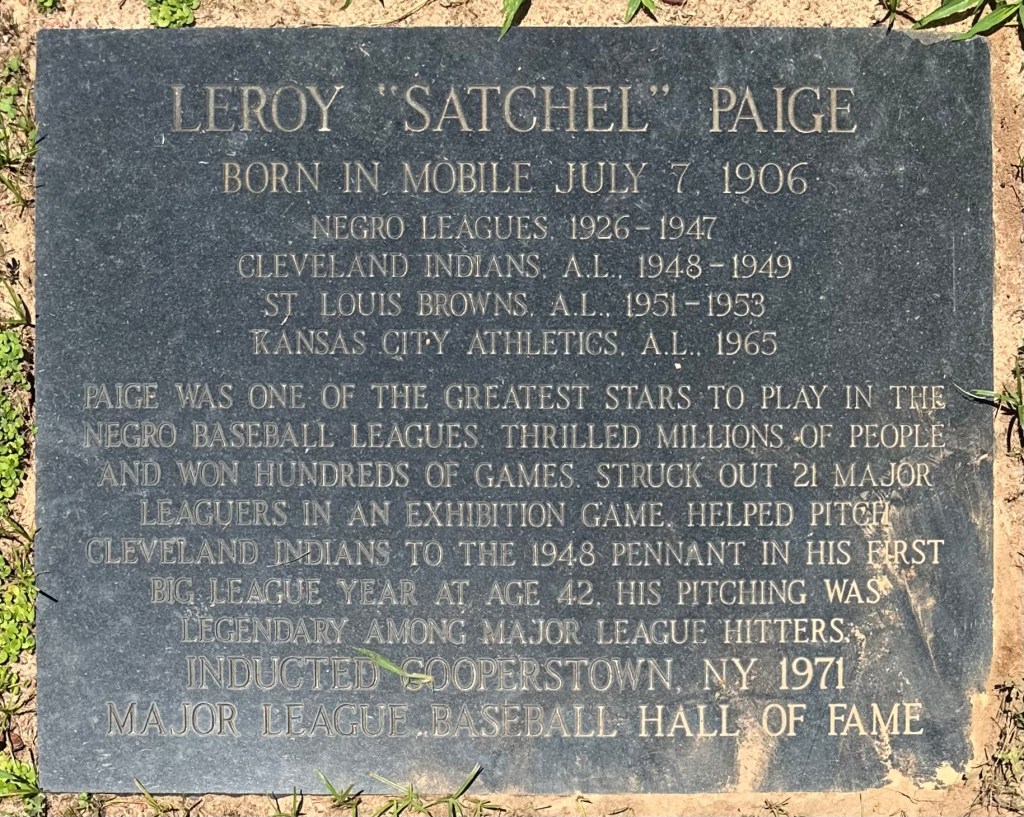
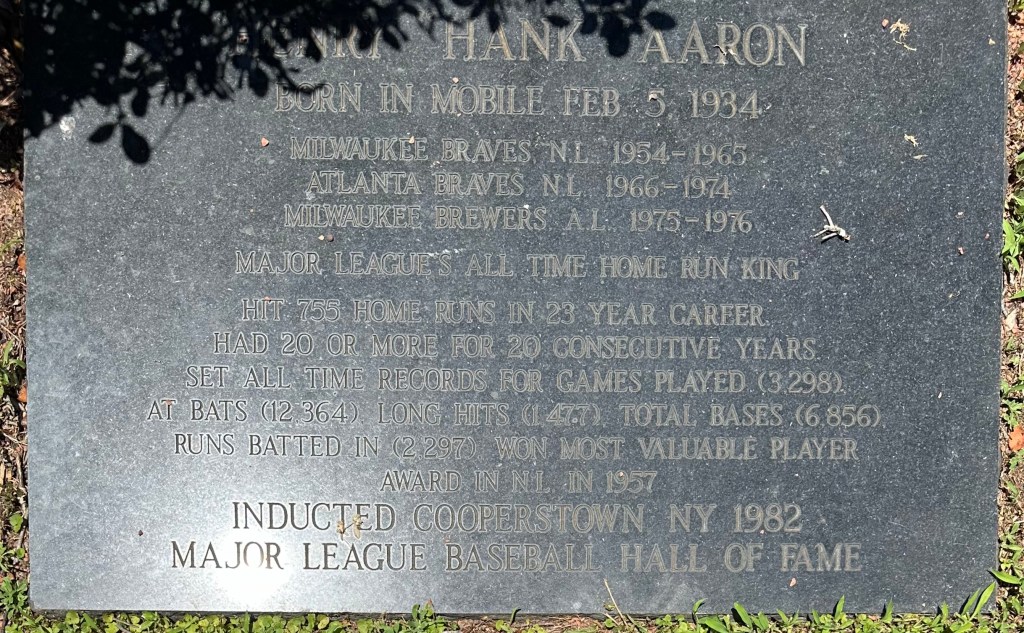
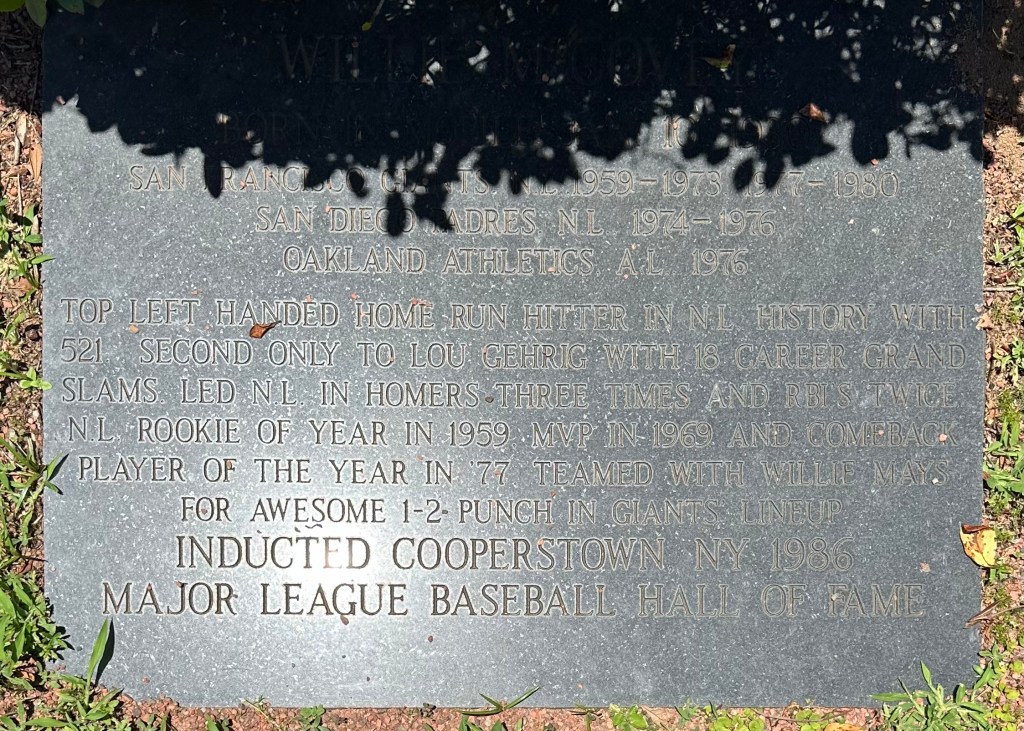
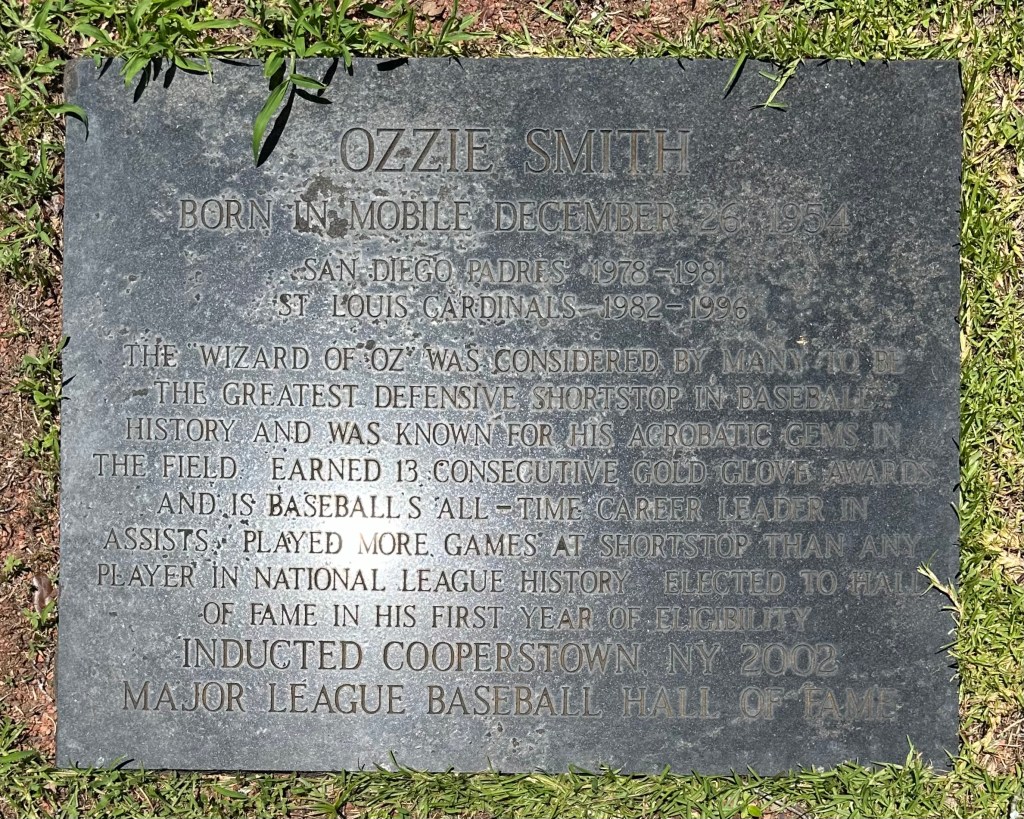
Here is a close-up of the marker itself, which honors the five Hall of Famers born in Mobile: Satchel Paige, Hank Aaron, Willie McCovey, Billy Williams, and Ozzie Smith.

On the other side of the circular patch of grass are individual plaques for these same five Mobile legends. (Though of interest to nobody but me, I can’t help but remark here that the first plaque honors Leroy Robert Paige, and the wedding that brought us here was that of Robert and Paige.)

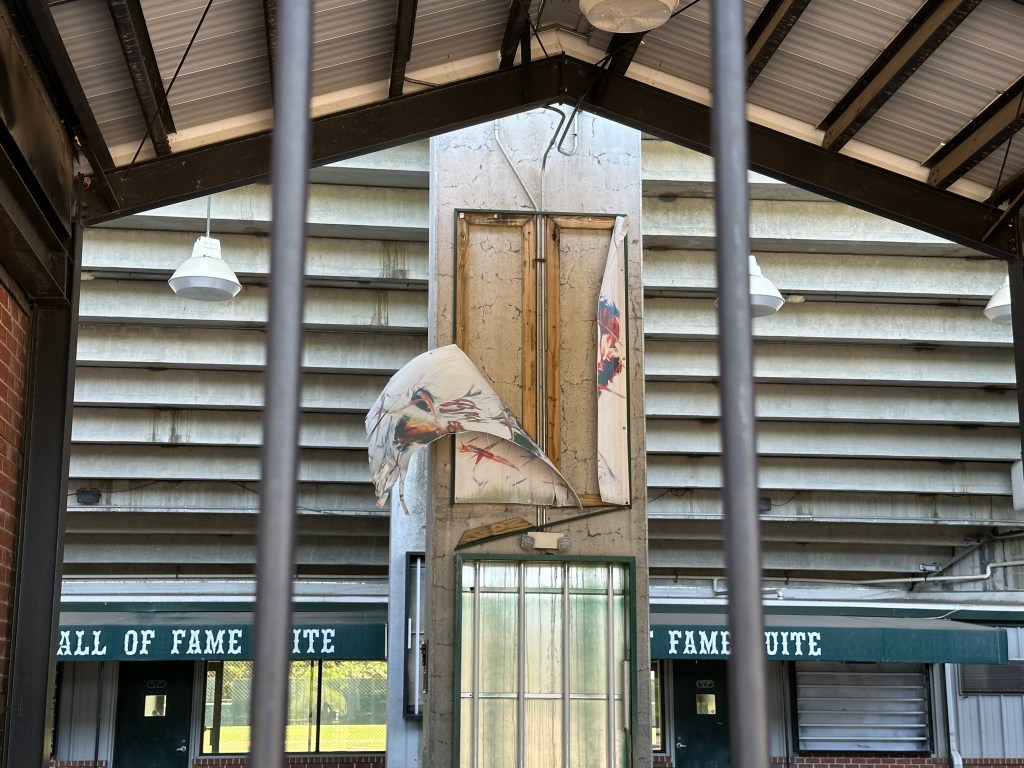
The landscaping of this patch of grass along with the excellent condition of the plaques definitely belies what becomes apparent upon approaching the stadium entrance. So much for the once grand Hank Aaron poster that greeted visitors!

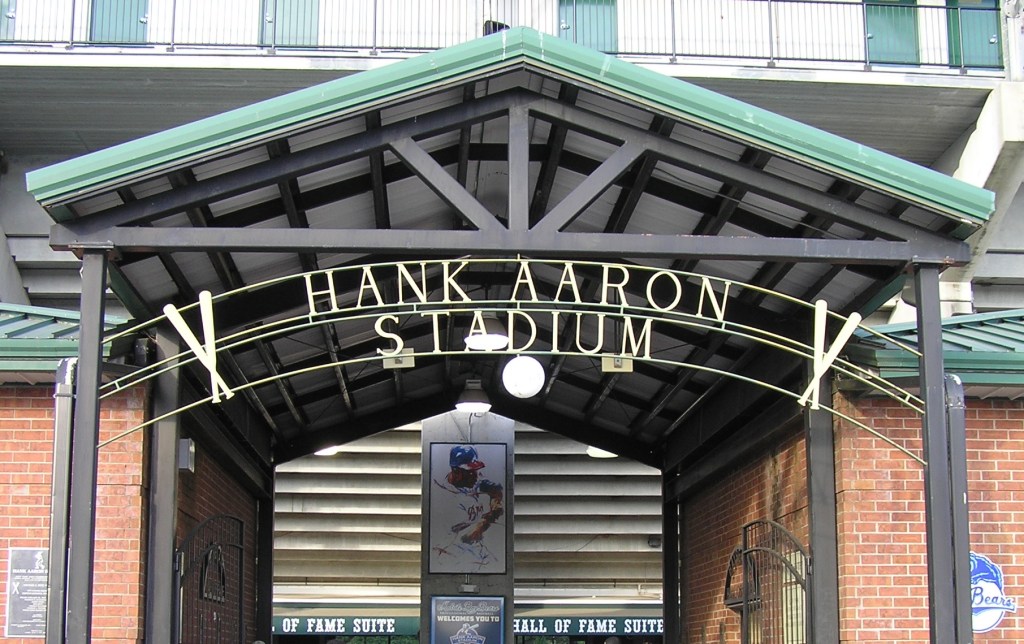
And what of the “Hank Aaron Stadium” marquee once perched above the entrance? My wife’s keen eyes spotted it unceremoniously ditched behind a gazebo.

Here are the poster and marquee in better days.


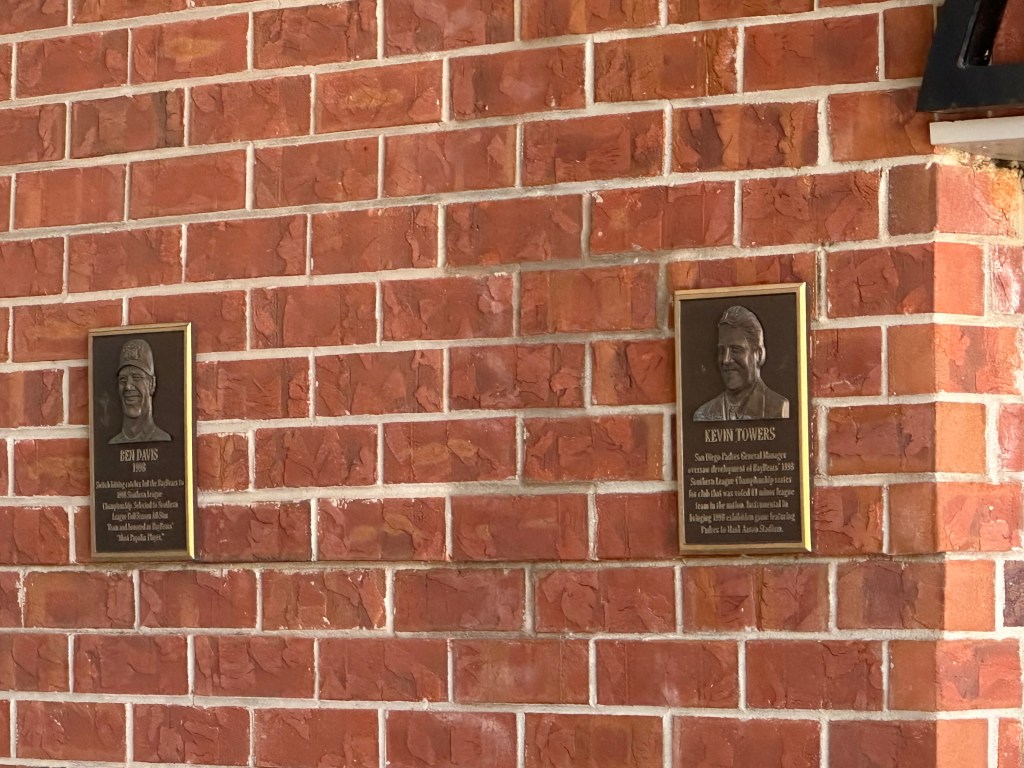
Landmark czars Racanelli and Kamka will have to let us know if the ballpark’s Hall of Fame keeps its status given that one can no longer enter but can peep some plaques through the fence. Here are the plaques for Ben Davis and Kevin Towers, for example. About eight such plaques are visible in all.

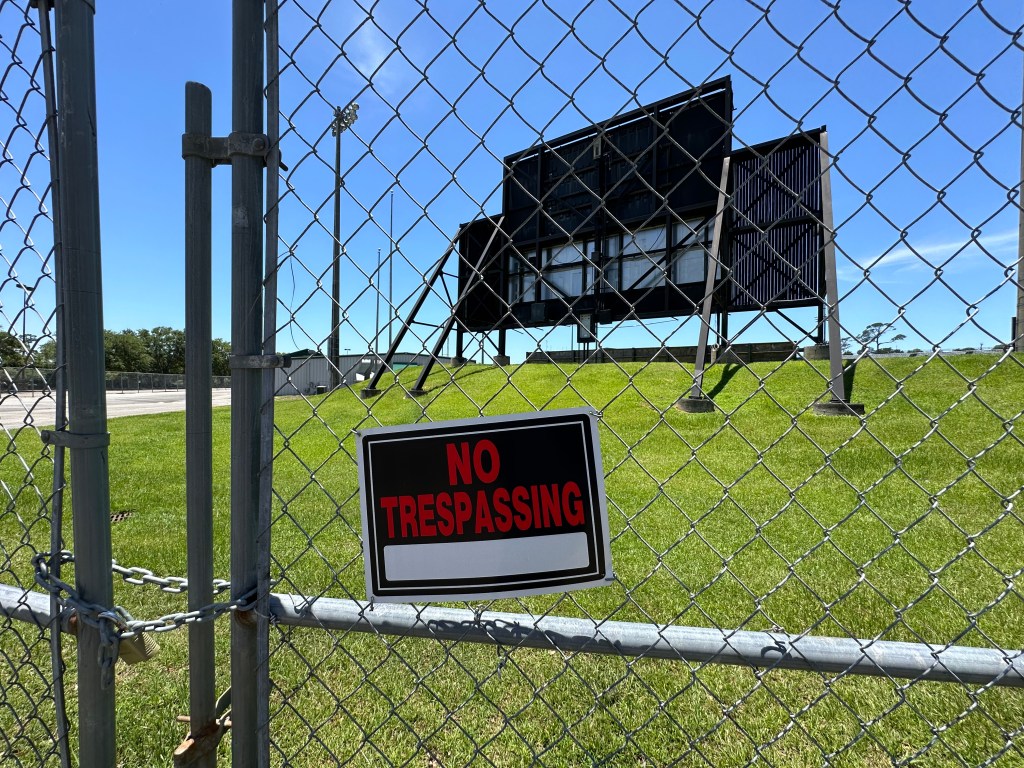
Continuing past the entrance, you are able to see the back of the stadium’s scoreboard, which I’ll regard generously as the last of the site’s highlights, before returning to the main road.

More or less going 0 for 2 on my pilgrimage to the birthplace of a baseball demigod, I couldn’t help but grapple with a single thought.

How do you put the Hammer’s name on something and let it die?

That evening we took our seats in the pew as Robert and Paige prepared to wed. Father Jones, in fairness just doing his job, reminded us we were all sinners. As Henry Aaron’s Mobile landmarks stood somewhere between dormant and dying, the truth of these words, for the very first time, hit me and left a mark.

Mr. Robinson’s Neighborhood

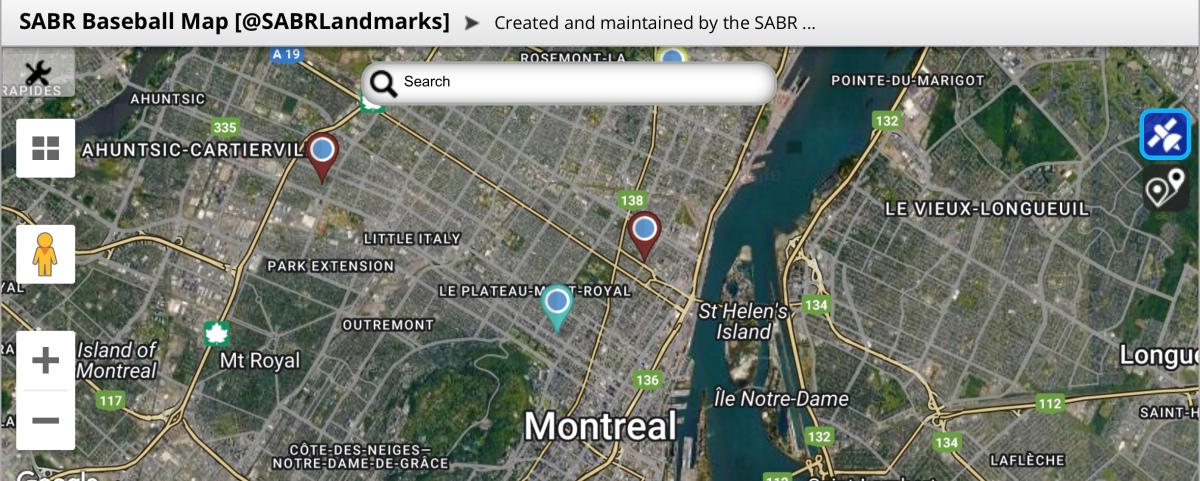
I was fortunate enough to spend the start of July in one of the world’s great cities, Montreal, home to the Expos from 1969 to 2004. Of course the baseball history (and baseball card history!) of Montreal stretches back much further than that.

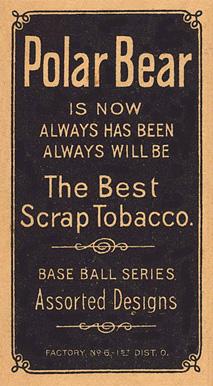
The Montreal Royals joined the International League in 1897 and went on to win seven league titles, all between 1941 and 1958. A Montreal Royal, James “Doc” Casey, is even represented in the 1909-11 American Tobacco Company “White Borders” (T206) set affectionately dubbed “The Monster.”

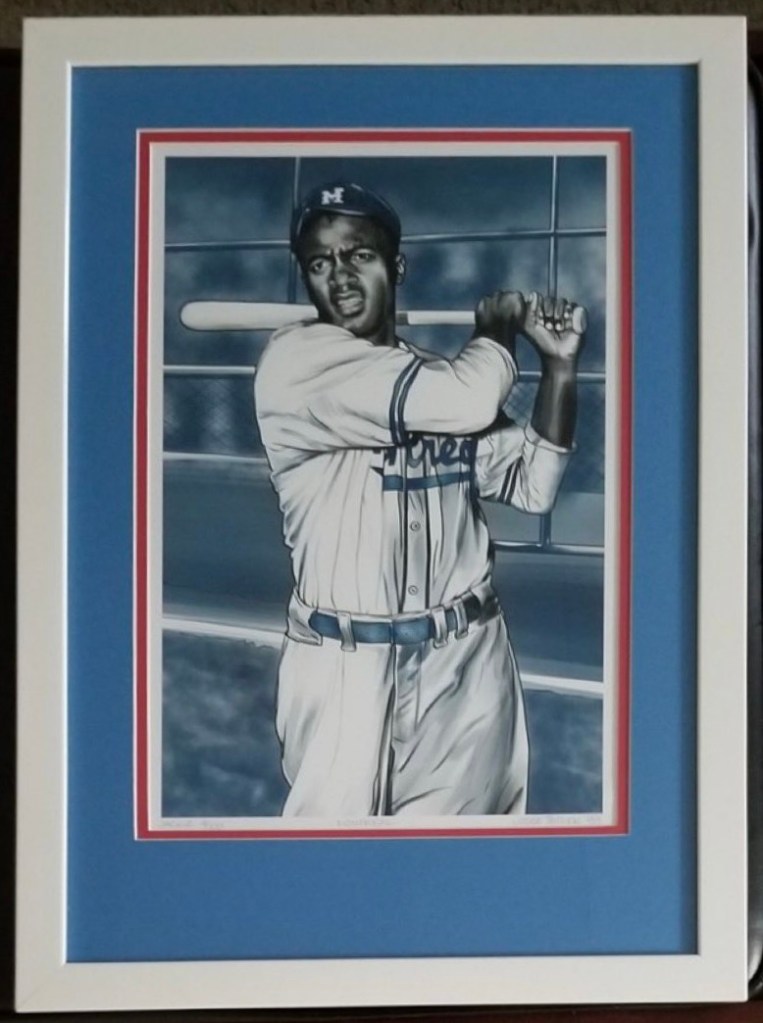
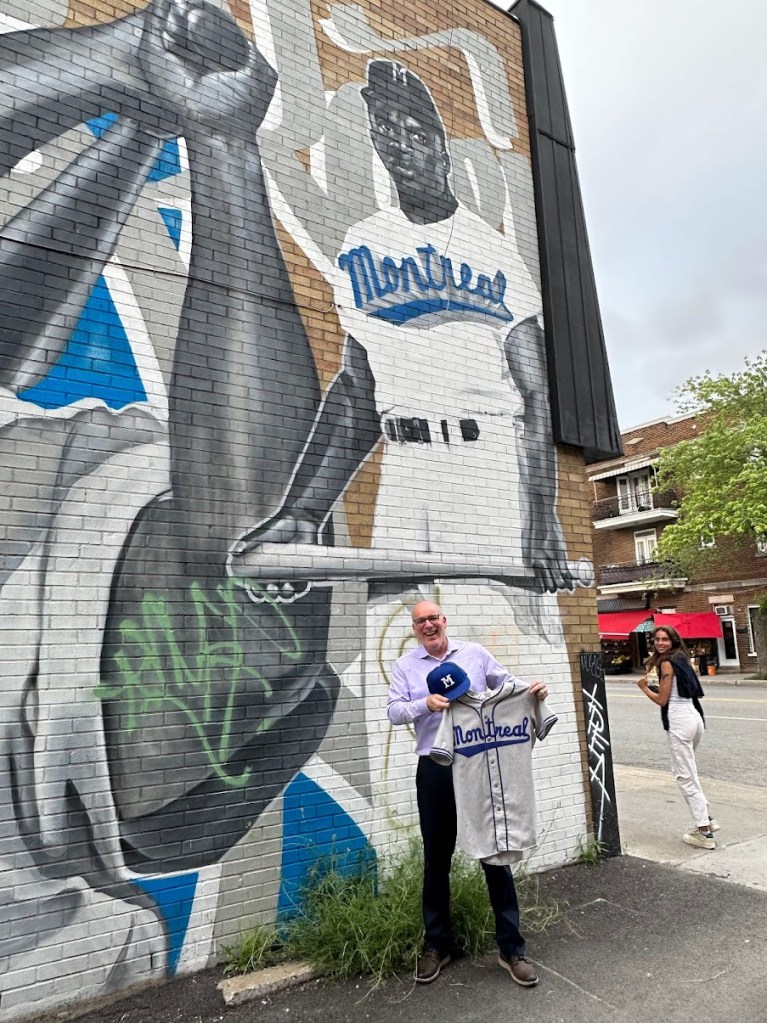
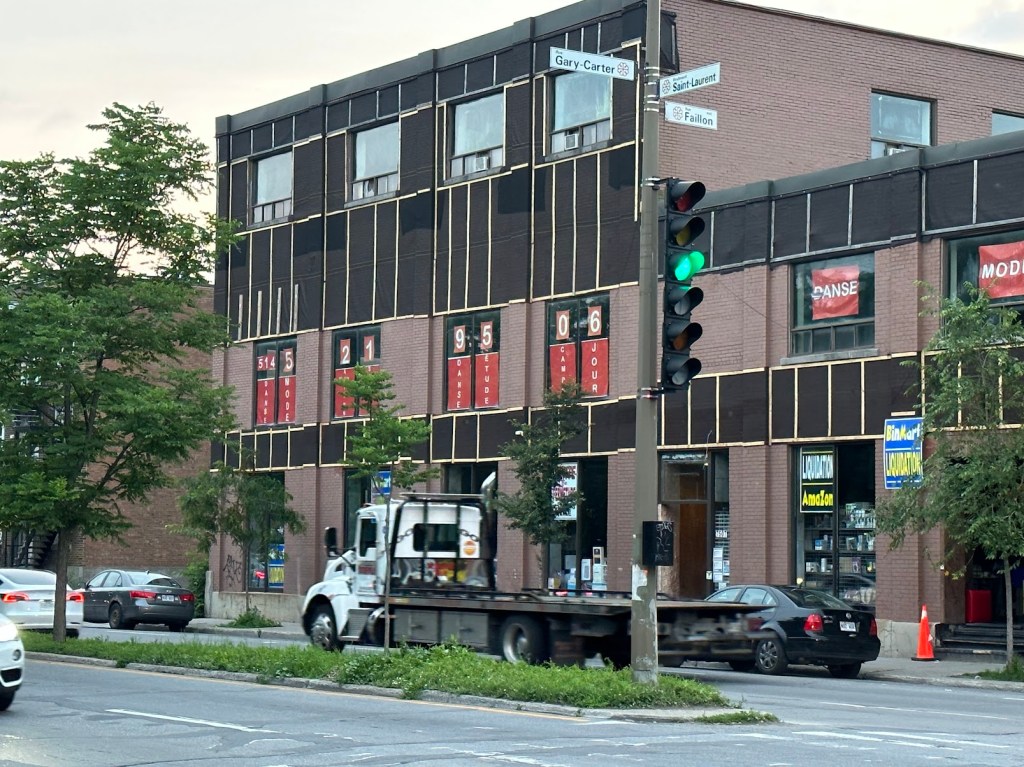
Of course, the most famous Royal of them all played for the 1946 Montreal squad, recognized as one of the top 100 minor league teams of all-time. A pleasant half hour walk through some fun and artsy neighborhoods brought me to his colorful mural at 3907 St. Laurent Blvd.

From there, I had two choices. Walk back to my hotel or walk another 30-40 minutes to hit another Jackie Robinson landmark. I chose the latter.

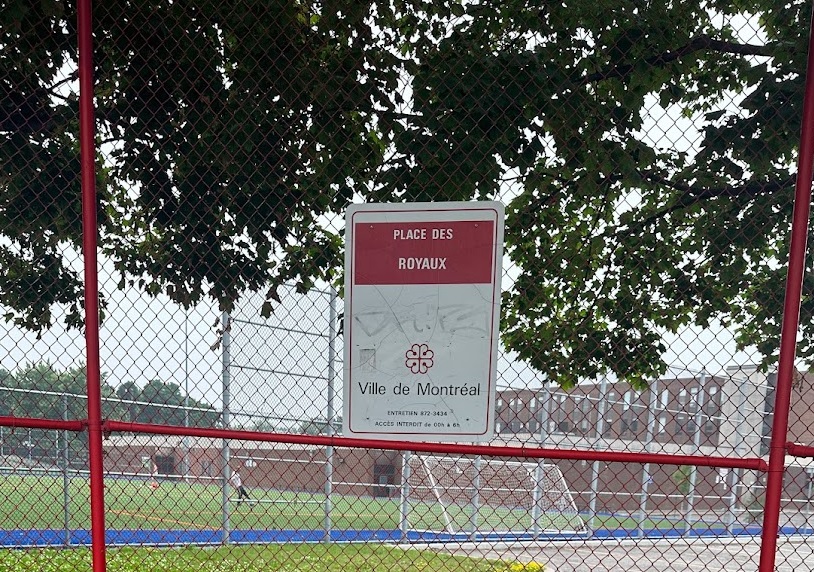
The Montreal Royals of Jackie’s time played their games at Stade De Lorimier (pronounced duh-lor-eem-yay). The ballpark is long gone, but the city has commemorated the “place of the Royals” with a…dingy metal sign?!

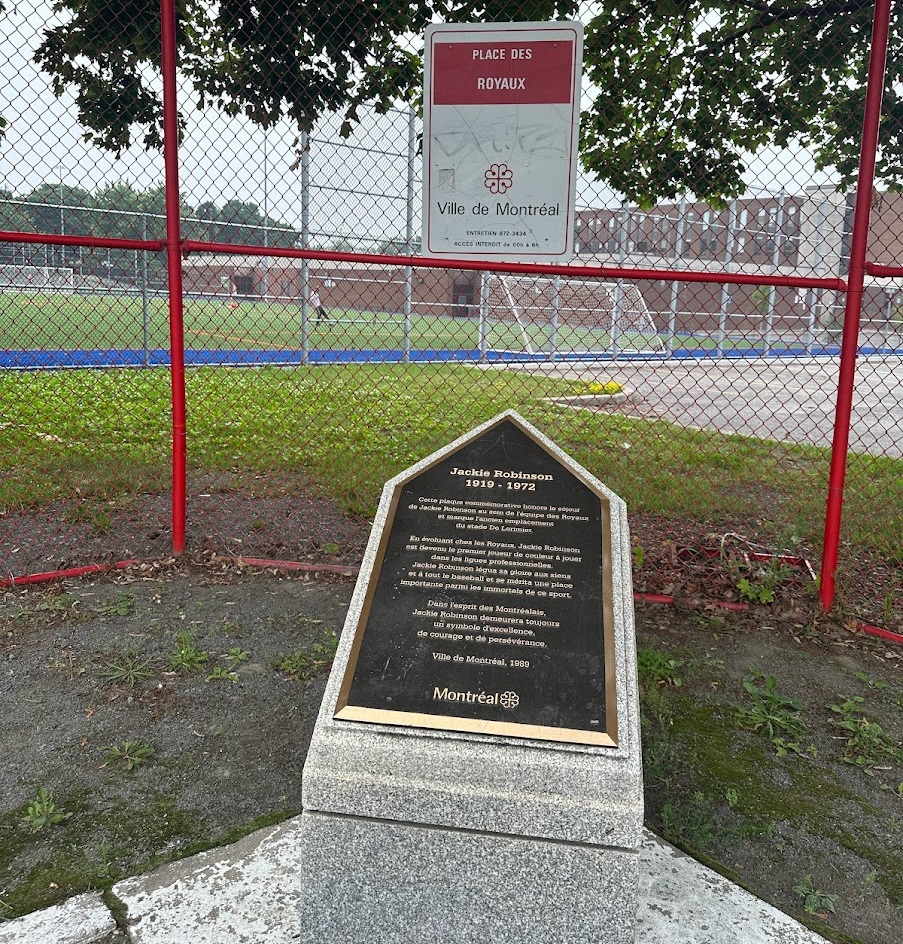
Okay, so that’s only half true. Yes, the marker could use an upgrade, but there is also an excellent tribute to Jackie Robinson just below it.

Loosely translated to English, the words on the sign read—

This commemorative plaque honors Jackie Robinson’s stay with the Royal team and marks the former location of De Lorimier Stadium.

By playing with the Royals, Jackie Robinson became the first player of color to play in professional leagues.

Jackie Robinson bequeathed his glory to his family and all baseball and earned an important place among the immortals of this sport.

In the minds of Montrealers, Jackie Robinson will always remain a symbol of excellence, courage and perseverance

City of Montreal, 1989

You may have noticed the plaque takes the form of home plate, and this is no coincidence. In fact, it is part of a larger mini-ballpark, complete with outfield grass and bleachers.

Though there were other landmarks I might have made by foot, I already had plans to tour them the next day with Montreal baseball artist Josée Tellier, whose wonderful Jackie Robinson artwork adorns the entrance to our guest room.

As this second day of landmarks was more distant from my hotel, we caught a cab to their general vicinity before setting out on foot. Our first stop was Jackie’s second mural in Montreal. If you look closely you’ll notice one of the locals totally not thinking what I’m doing is super dorky.

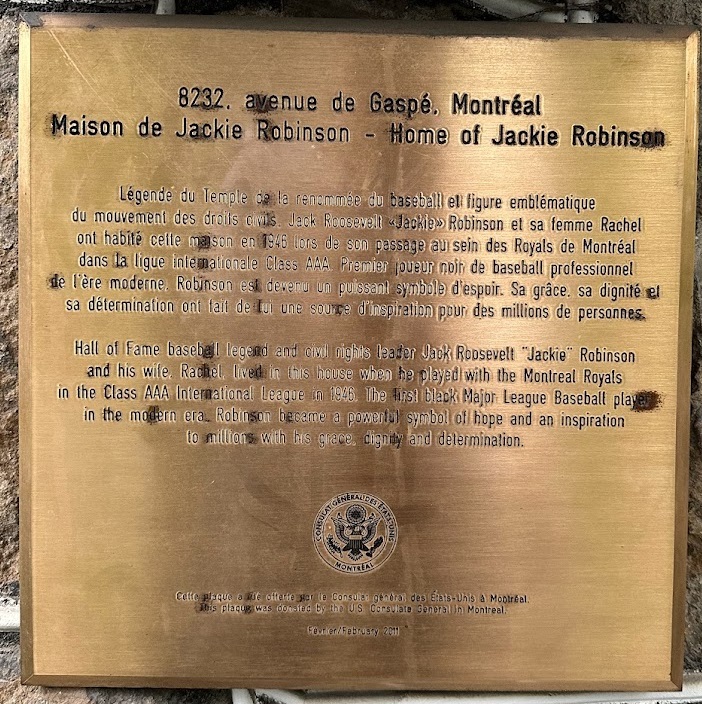
We were definitely in Mr. Robinson’s neighborhood now, or more correctly Mr. and Mrs. Robinson’s neighborhood. As proof, here is the house just a few blocks away that Jackie and Rachel called home in 1946.

Here is a closer look at the plaque by the door. (Note the bottom half presents the English translation.)

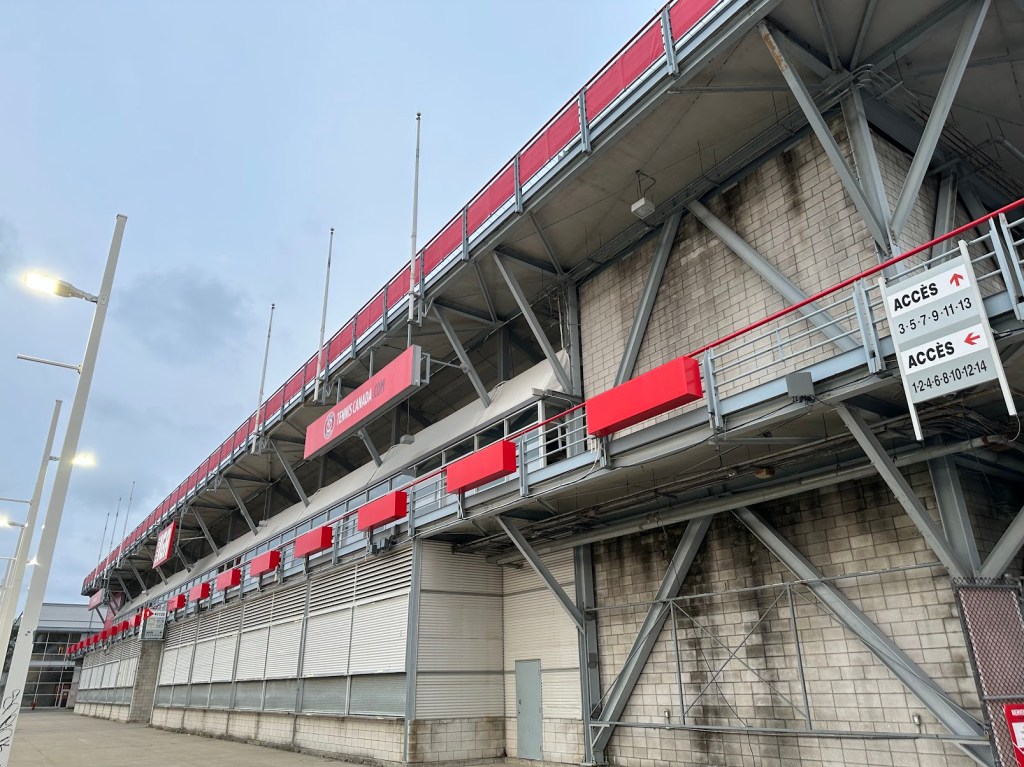
Our final landmark for the evening was nearby Jarry Park, home of the Montreal Expos from 1969-76. A small portion of the original stadium structure still remains as part of a newer tennis facility.

The street name equally serves to remind visitors that a beloved major league team once played here.

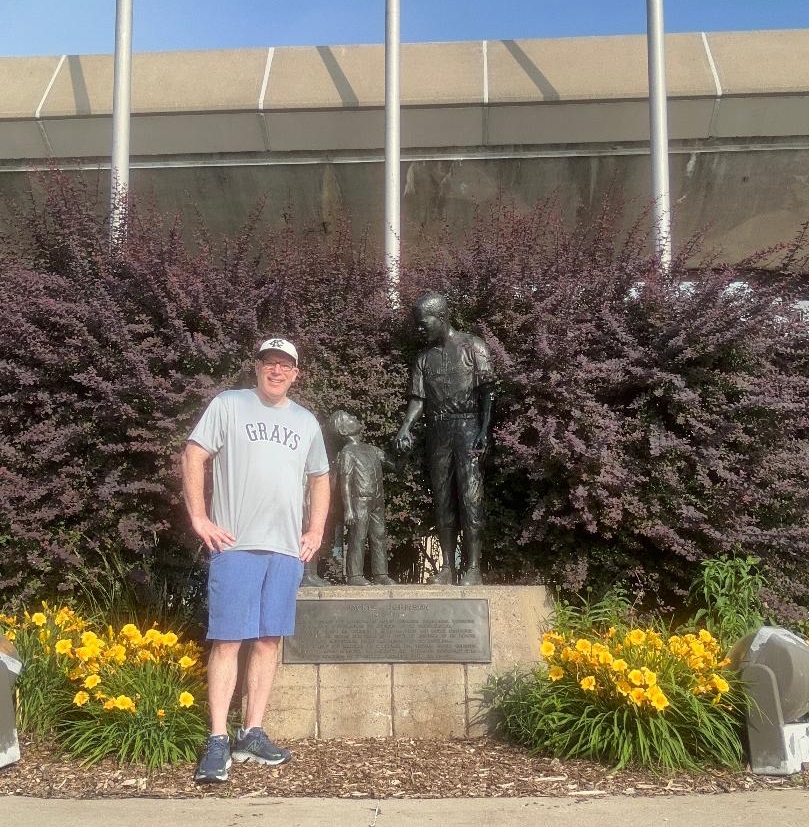
As we wrapped up this round of landmarks, Josée made sure I knew there was one more Jackie Robinson landmark we didn’t cover because it was too far away: the Jackie statue at Olympic Stadium. Lucky for readers of the Hardball Voyager, I got up the next day at 5 AM and decided a 7-mile walk wouldn’t be completely insane.

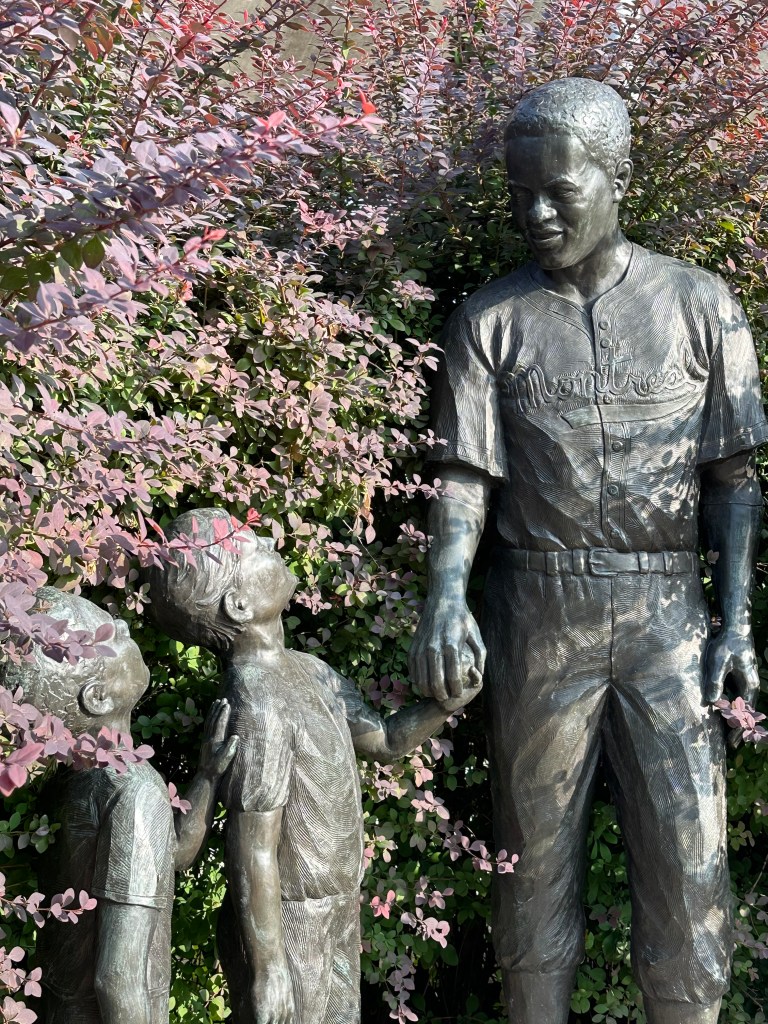
Here is a view of the statue without some guy blocking it.

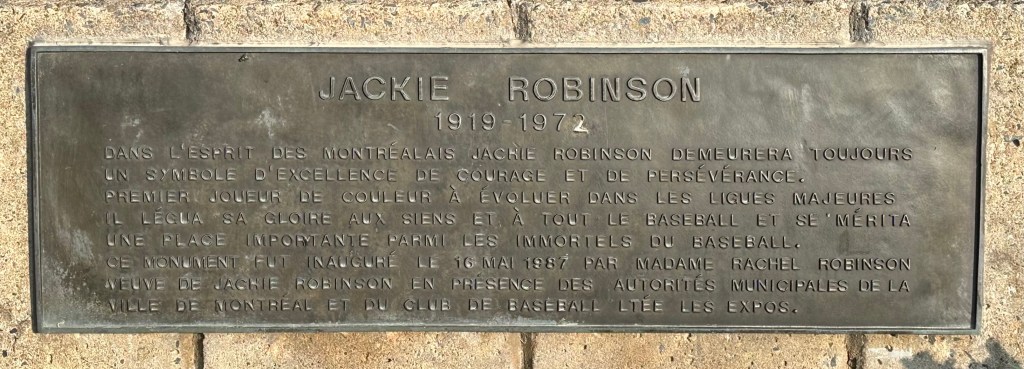
And here is a close-up of the plaque.

Finally, here is the statue from further away. Olympic Stadium is the giant flying saucer-looking thing behind it.

Olympic Stadium was of course home to the Expos from 1977 until 2004, after which MLB relocated the team to Washington, DC. (Boo! Bud stole the Expos!) Amid all today’s talk of expansion and relocation, there are high hopes in Las Vegas, Nashville, Salt Lake City, and Portland but only the dimmest of forecasts for a return to Montreal.

Still, right in front of this stadium without a team stands Jackie—in what now may be recast as an act of defiance—handing the ball to the next generation, refusing to let the game die. I guess time will tell, at least here in Montreal.

Are we there yet?

Along with my son and a good friend from high school, I had some time to kill in Pasadena. Well, what does a SABR member do with time on his hands and a rental car? Consult the SABR Baseball Map of course! So yeah, I probably should have done that!

Instead I went from memory that there was a Jackie Robinson statue at the Rose Bowl, which was only 3 miles from our Caltech starting point. Having grown up in Los Angeles, I knew that meant we were anywhere from 5 to 55 minutes away! Ten minutes later, there we were!

Sculptor: Brian Hanlon

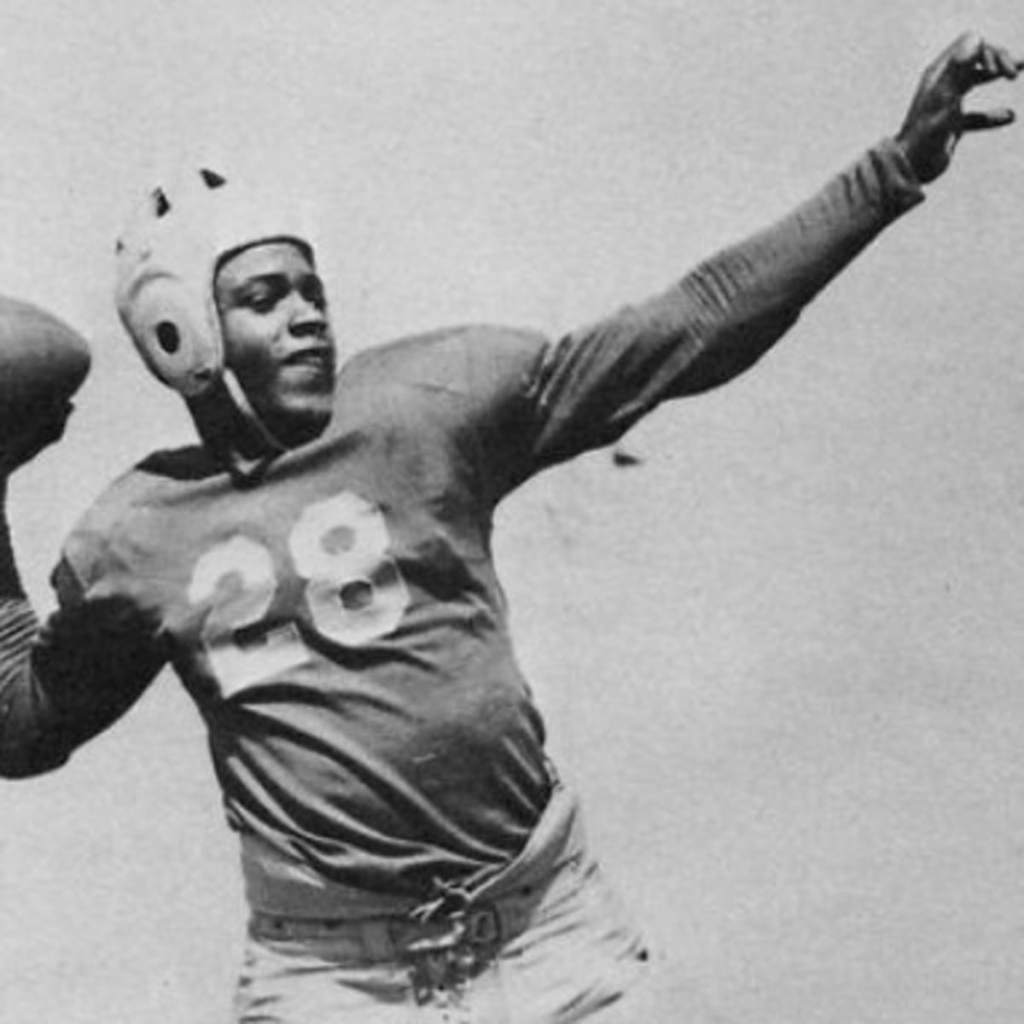
The observant baseball fan will quickly notice that the statue is of “football Jackie” rather than “baseball Jackie,” and this may be why the statue does not currently reside on our Baseball Map. What the observant football fan, my friend Abe for example, may notice is that the uniform number, 55, does not correspond to Jackie’s number as a UCLA Bruin.

Photo: Sports Illustrated

In fact, 55 was Jackie’s number when he starred for Pasadena City College.

Source: 1939 Pasadena City College yearbook

A final detail I’ll point out is the placard that stands to the right of the statue. The words read—

JACKIE ROBINSON

Life is not a spectator sport. If you’re going to spend your whole life in the grandstand just watching what goes on, in my opinion you’re wasting your life.

The photograph, perhaps curiously chosen, reflects Jackie as a family man. The scene itself comes from a celebration of son David’s first birthday (1953). Daughter Sharon, wife Rachel, and older son Jackie, Jr., are also shown with him.

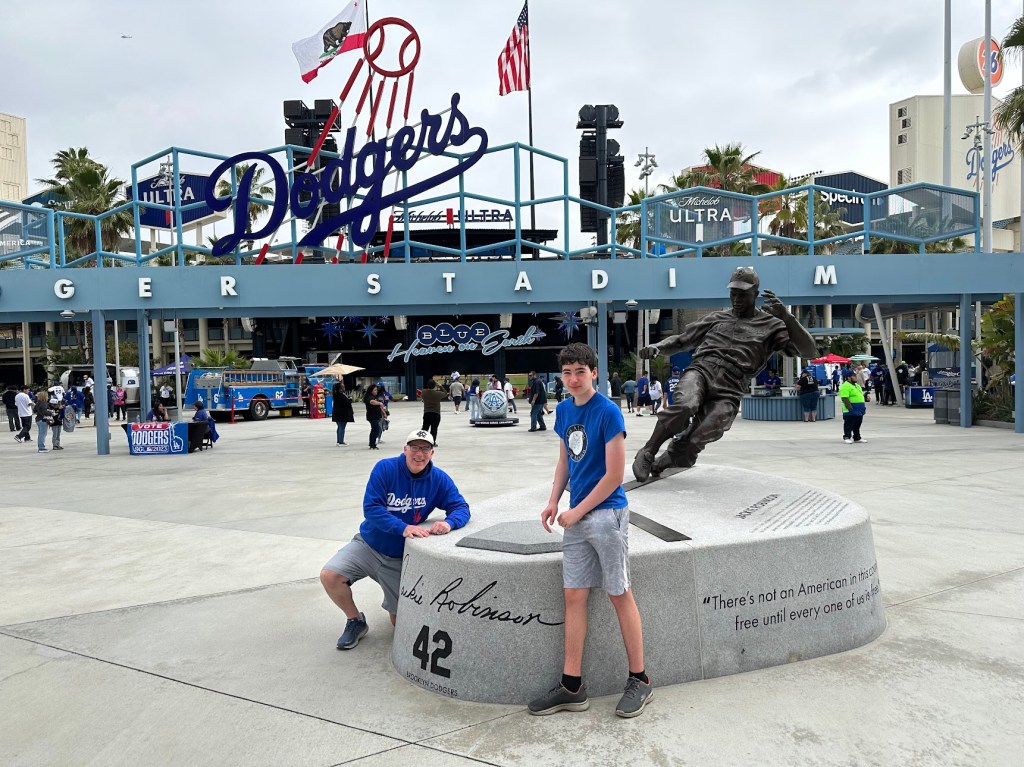
All very cool, but as they say, “football, schmootball.” Isn’t there any cool baseball stuff around here? After grabbing a late lunch and killing an hour playing chess in the park, we made our way to Dodger Stadium where Clayton Kershaw would be taking the mound against the White Sox. Our entrance was just a stone’s throw from yet another Jackie Robinson statue, this one of the baseball variety.

Sculptor: Branly Cadet

Like the football statue, a famous Jackie Robinson quote is featured. This time the words hit a little harder.

There’s not an American in this country free until every one of us is free.

“Are we there yet?” is more or less the official question of every family road trip, baseball or otherwise, and here Jackie is telling us—unmistakably—”No. No, we’re not.”

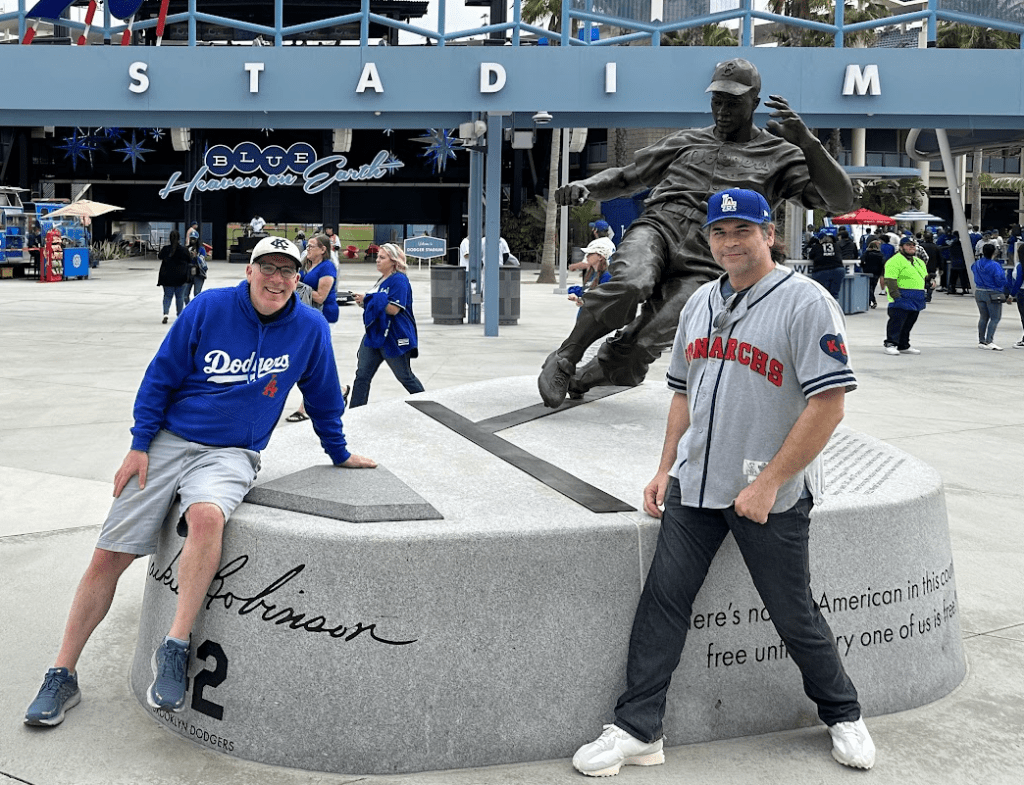
Friends with mismatched caps

At this point, a formerly incidental detail of the statue takes on relevance. In our mind’s eye, Jackie is scoring this run. In reality, he leans there frozen, short of his goal as if to tell us the rest is up to us.

Accidental Rickwood

A recent work trip took me to Alabama…Prattville, specifically. If you don’t know exactly where that is, you’re much like I was when it was time to book my travel. About 15 minutes north on 65 from Montgomery, it turns out.

“Schwartz,” I said, as I handed my license to the clerk at the rental car counter. I didn’t imagine it to be an everyday last name in this part of the country.

“And you’re sure you have a car here?”

Like all modern travelers these days I took out my phone to search frantically through emails for my confirmation. Relieved it have found it quickly, I handed my phone to the clerk who would no doubt be a little embarrassed to have lost track of such an organized traveler.

“Sir, this is out of Montgomery.”

“Okay…?”

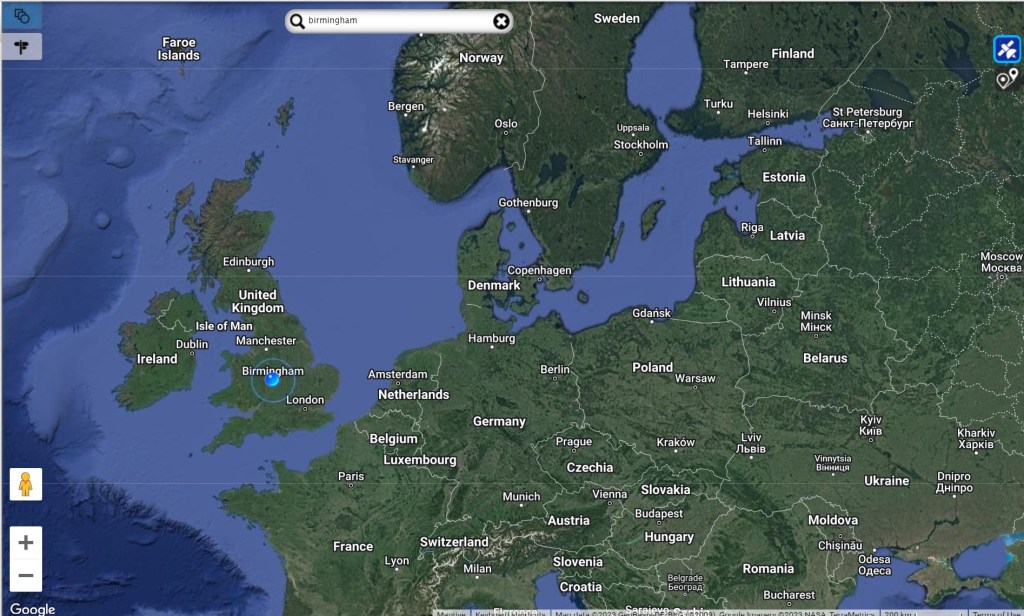
“And you’re in Birmingham.”

It was at this point that something I’d known intellectually for decades but had never really processed hit me like a ton of bricks. Montgomery and Birmingham, whatever their similarities, are in fact different cities.

Having forfeited all chances to play it cool, I asked the obvious.

“Nope, not far. You could get there in about two hours…”

Long pause.

“…if you had a car.”

“I take it you’re out of cars then?”

“Yep. Whole airport’s out.”

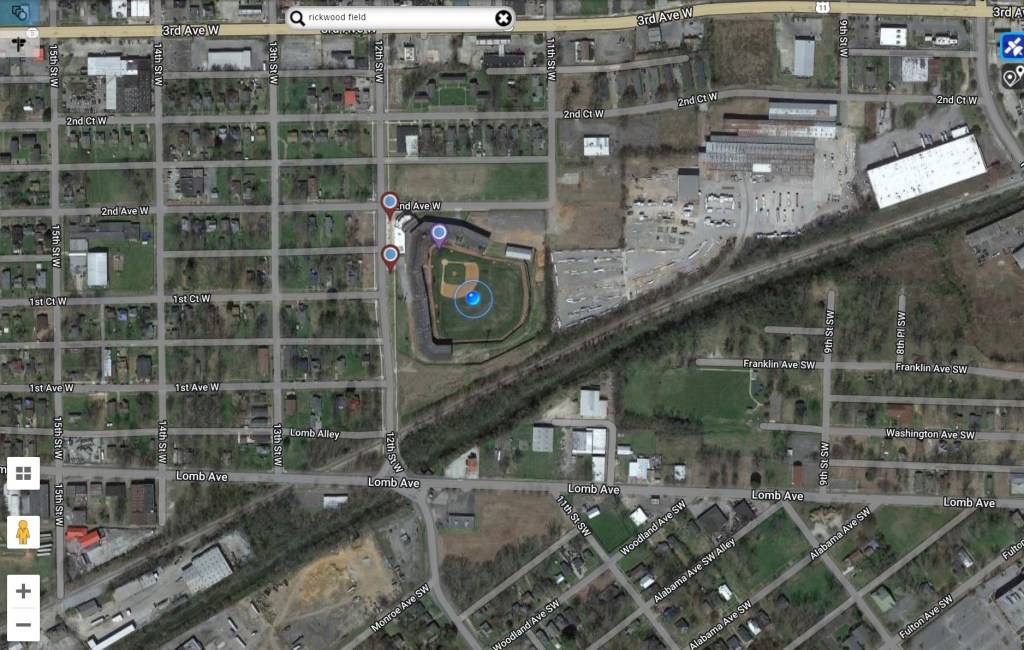
Taking a Lyft into town I was able to procure wheels from an Enterprise with one vehicle remaining, a rather large Dodge Ram pickup, and checked the map—the SABR Baseball Map that is!

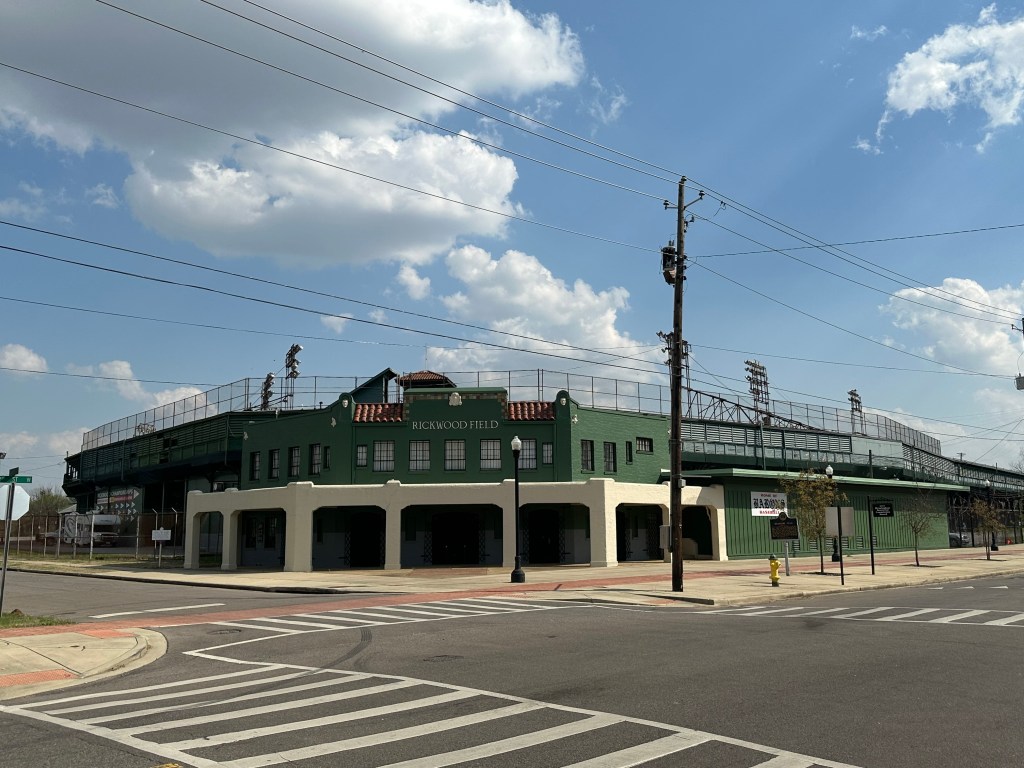
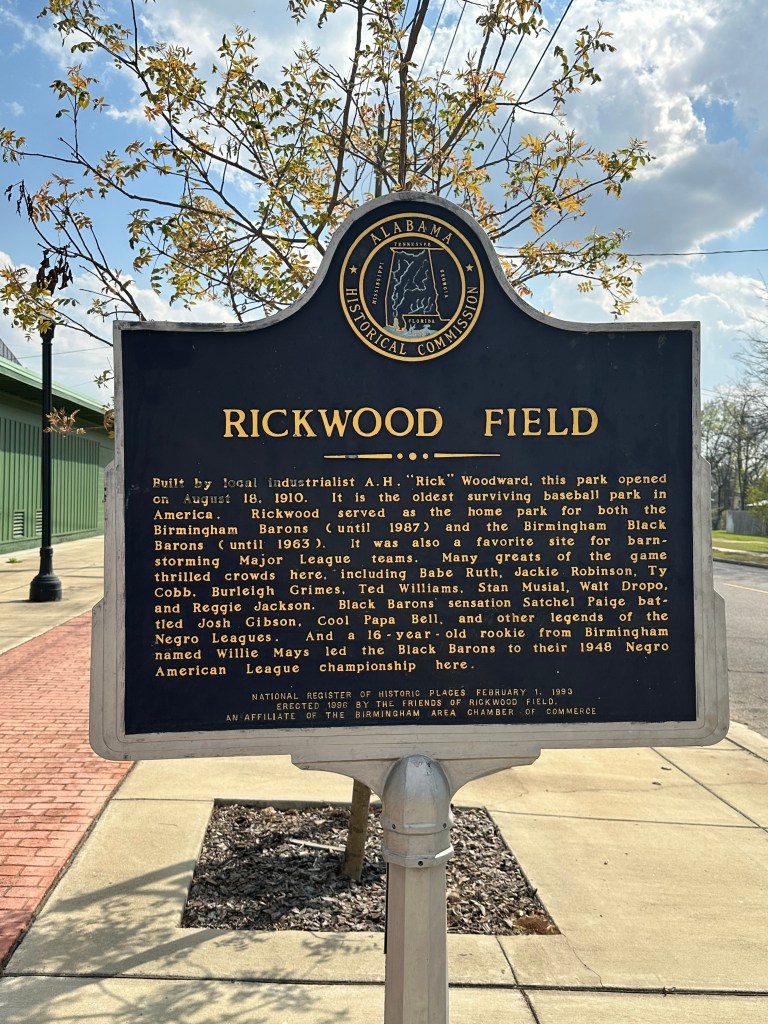
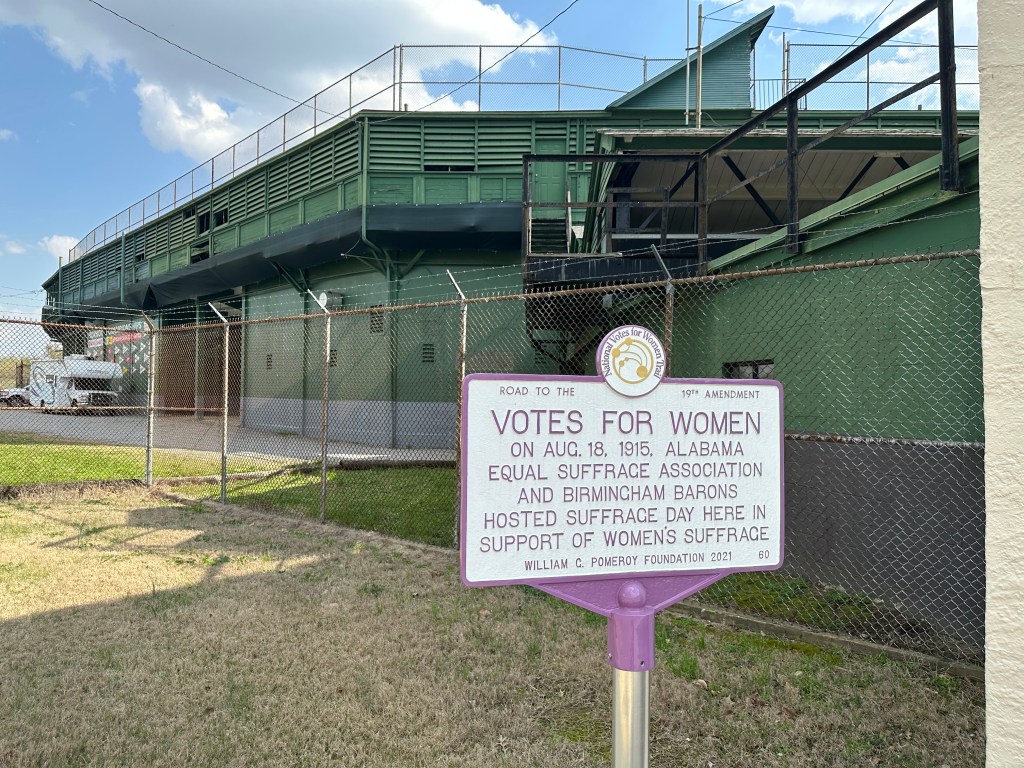
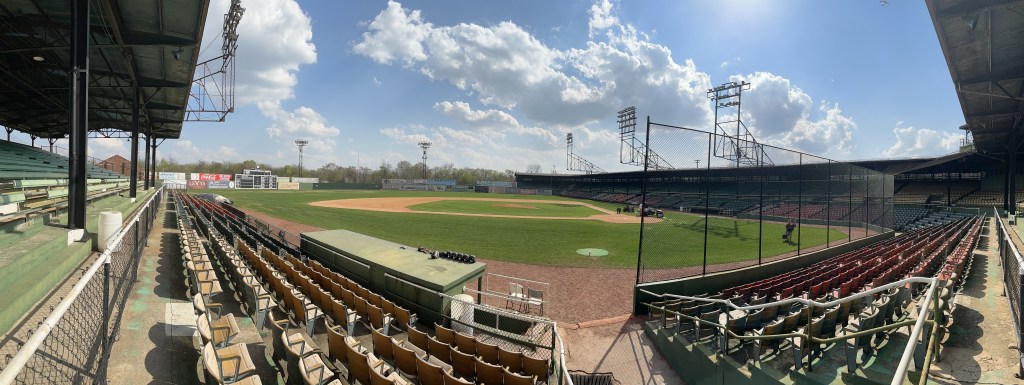
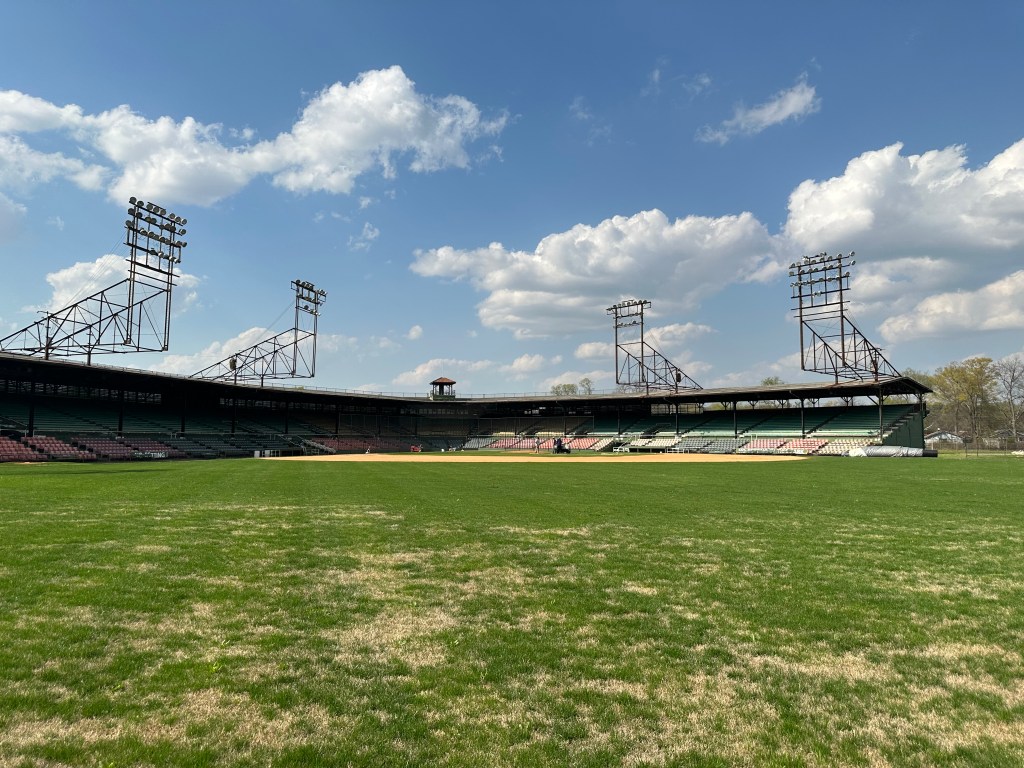
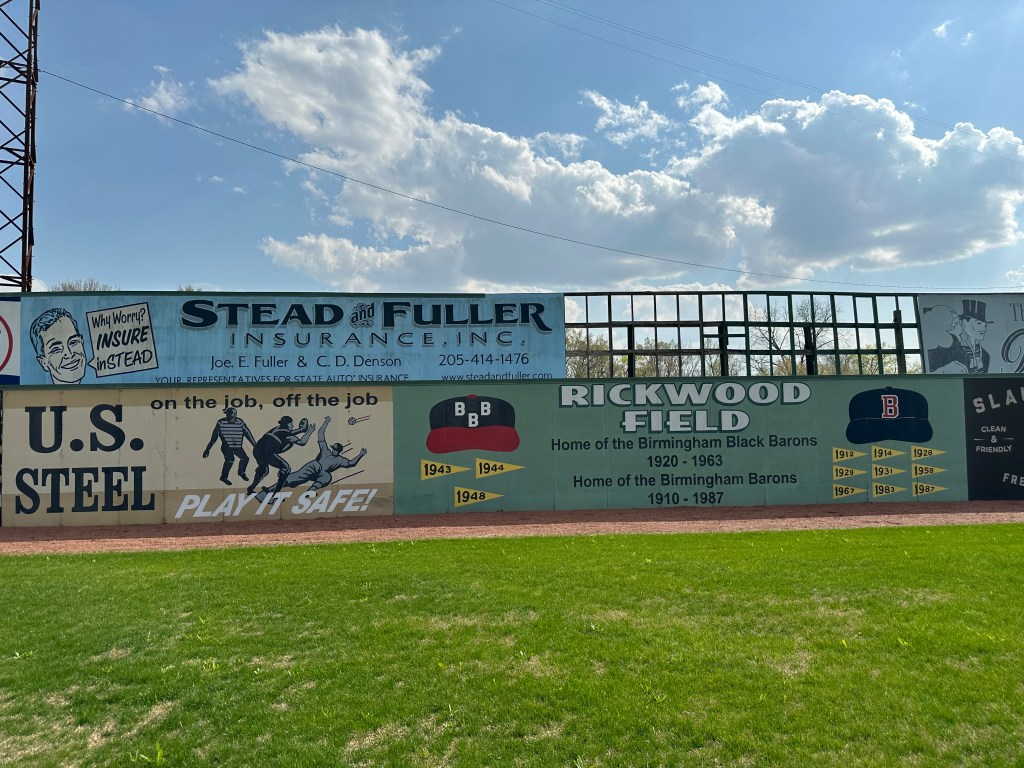
Ten minutes later, there I was. The marker says it all: “The oldest surviving ballpark in America.”

I asked a guy packing baseball equipment into his truck if it was okay to go inside. “Yeah, sure thing. Have fun.”

“Satchel Paige faced Josh Gibson here,” I thought to myself. “I will definitely have fun.”

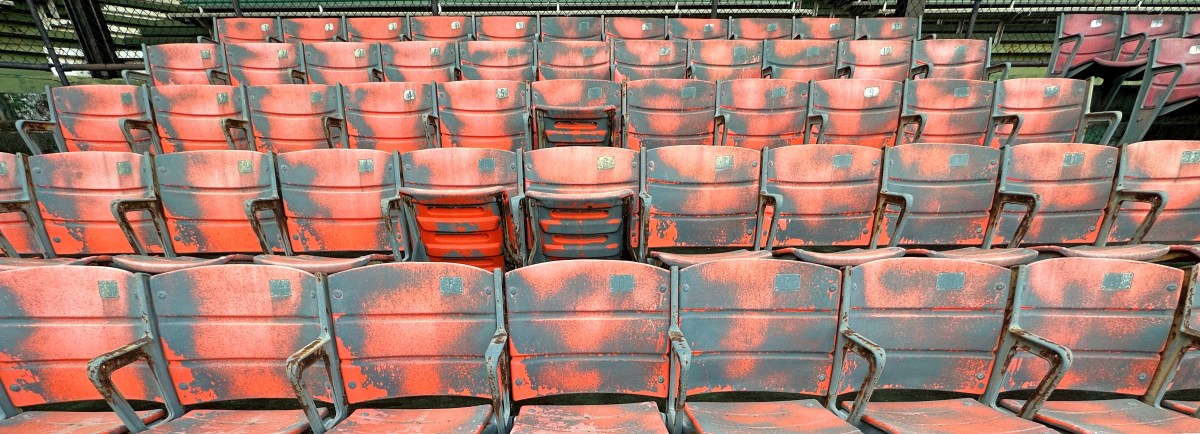
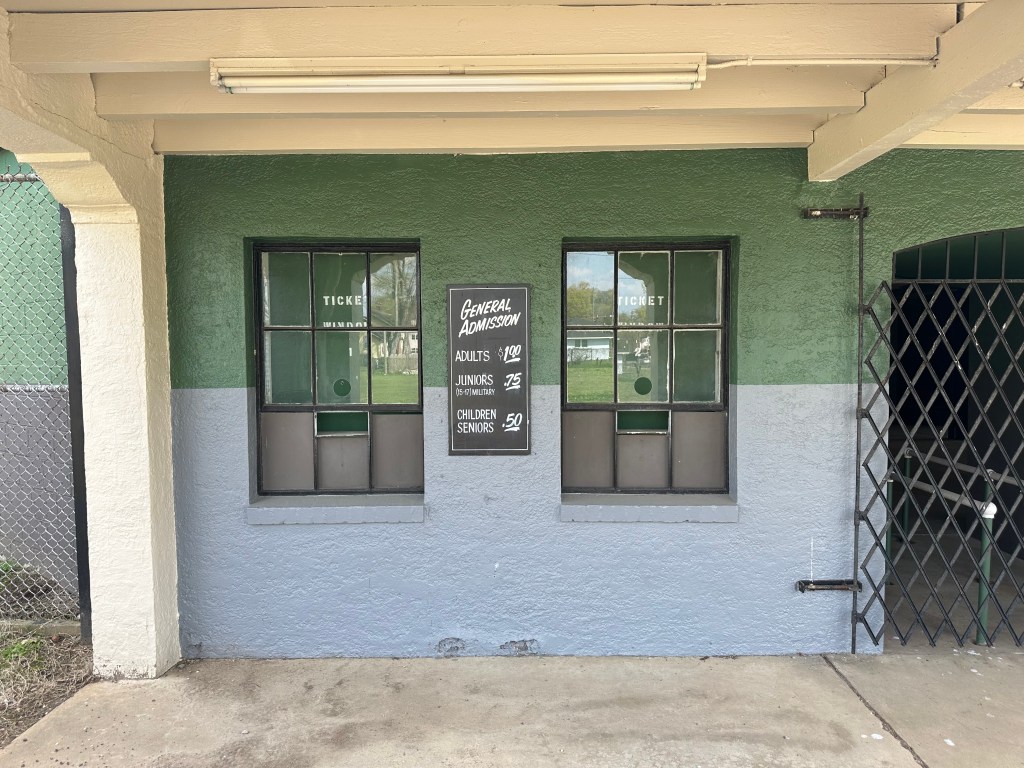
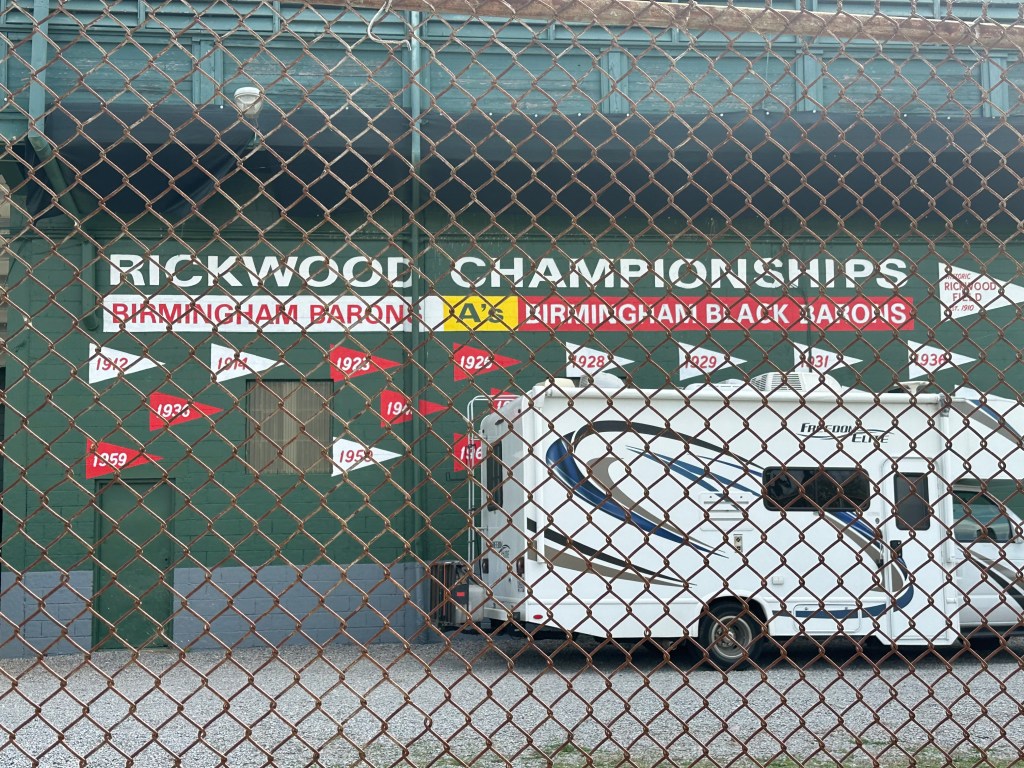
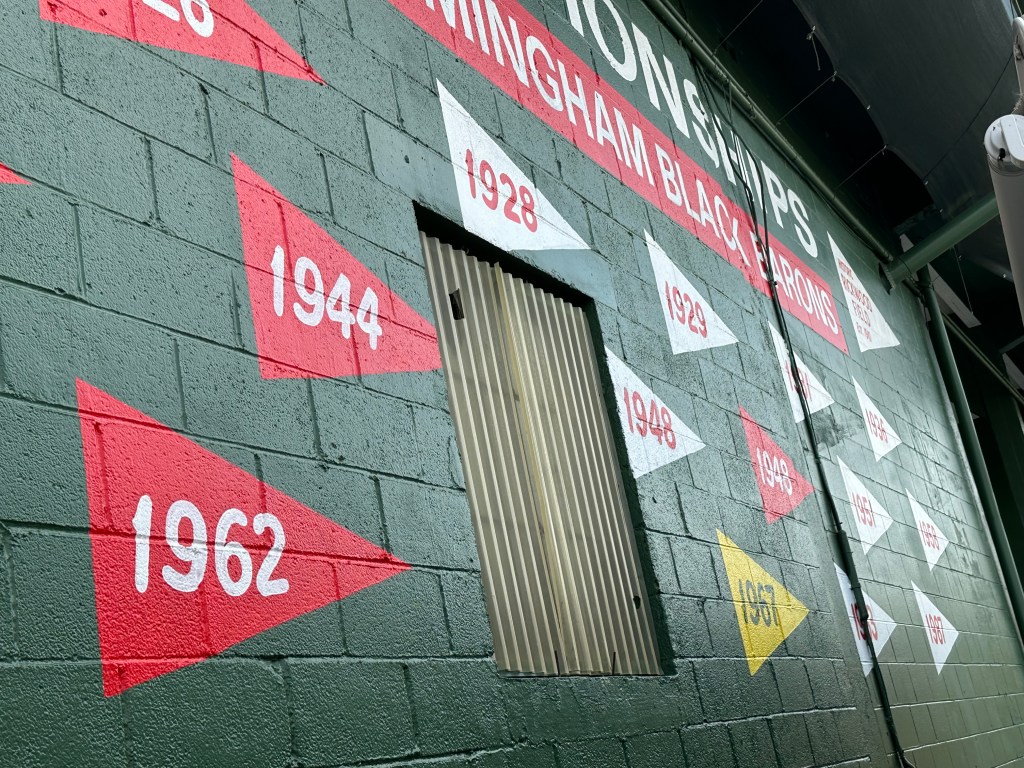
At first I simply stared out at the field. It was a site that shouldn’t exist anymore: a ballpark 113 years old being worked on for a game the same evening. So let me try again. This was a site that should exist. Living history.

The groundskeeper was fine with my walking around the field but asked that I avoid the infield dirt.

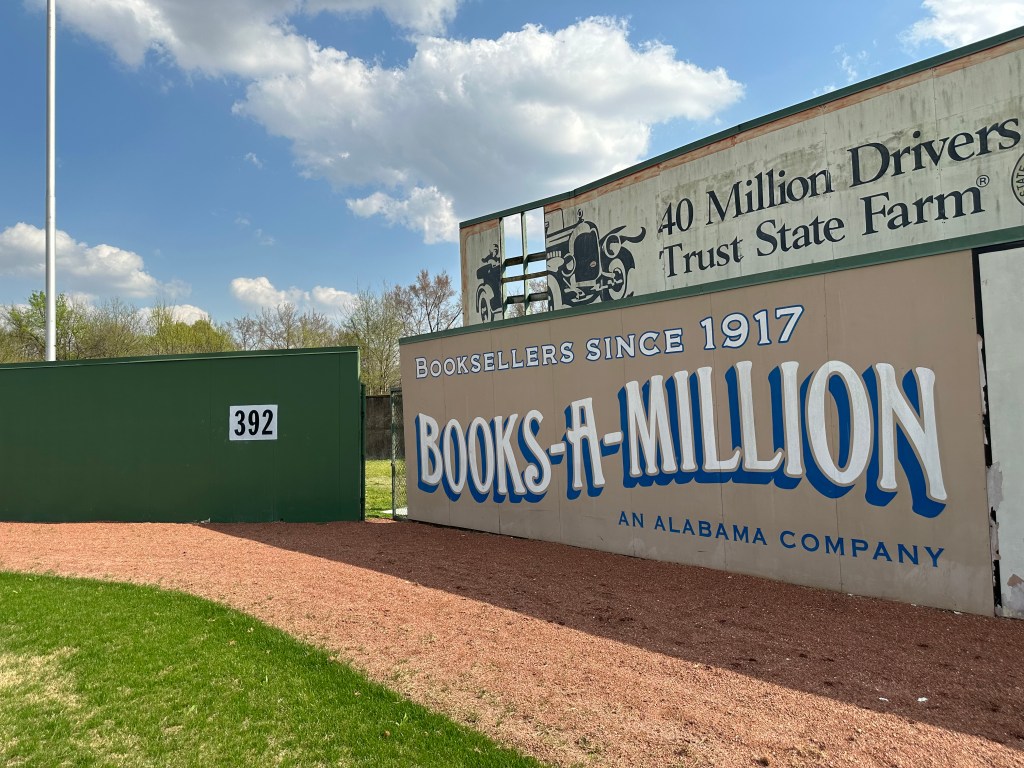
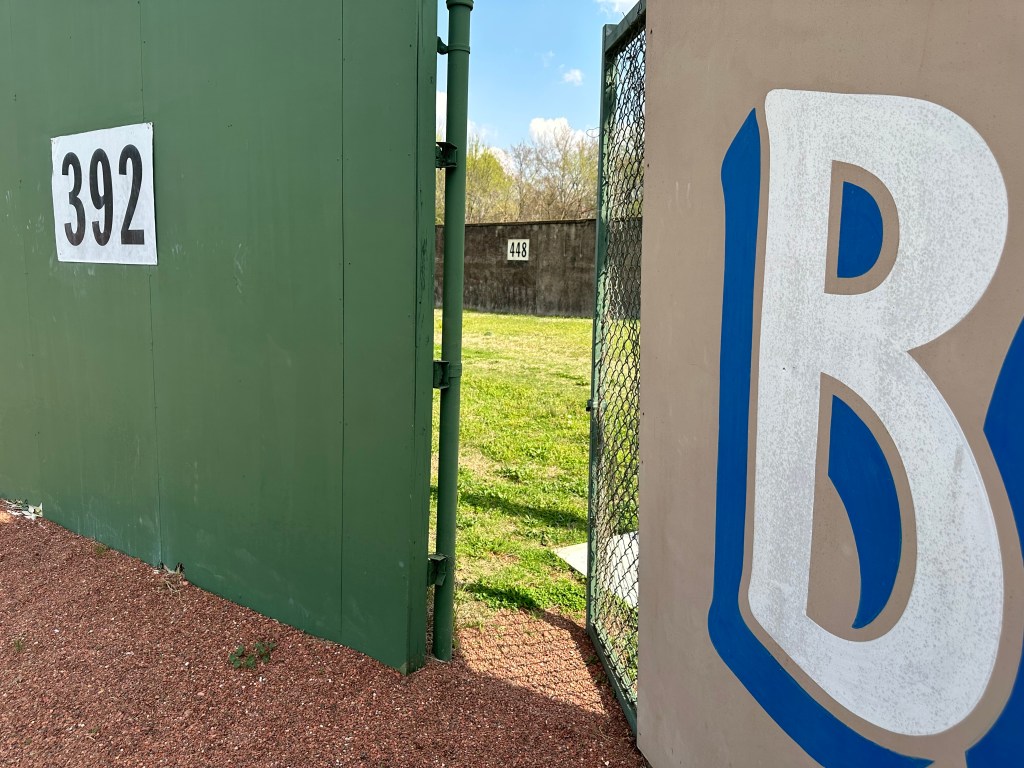
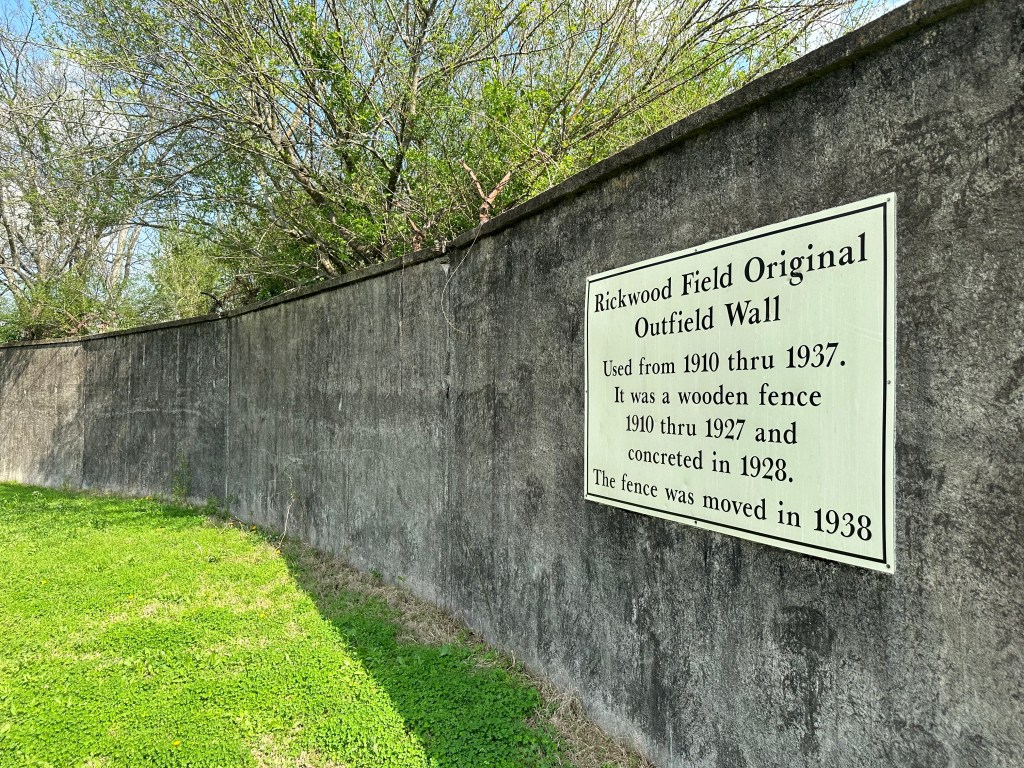
He also gave me a tip I might have missed on my own. “Go through the gate by the 392 marker to see the original wall.”

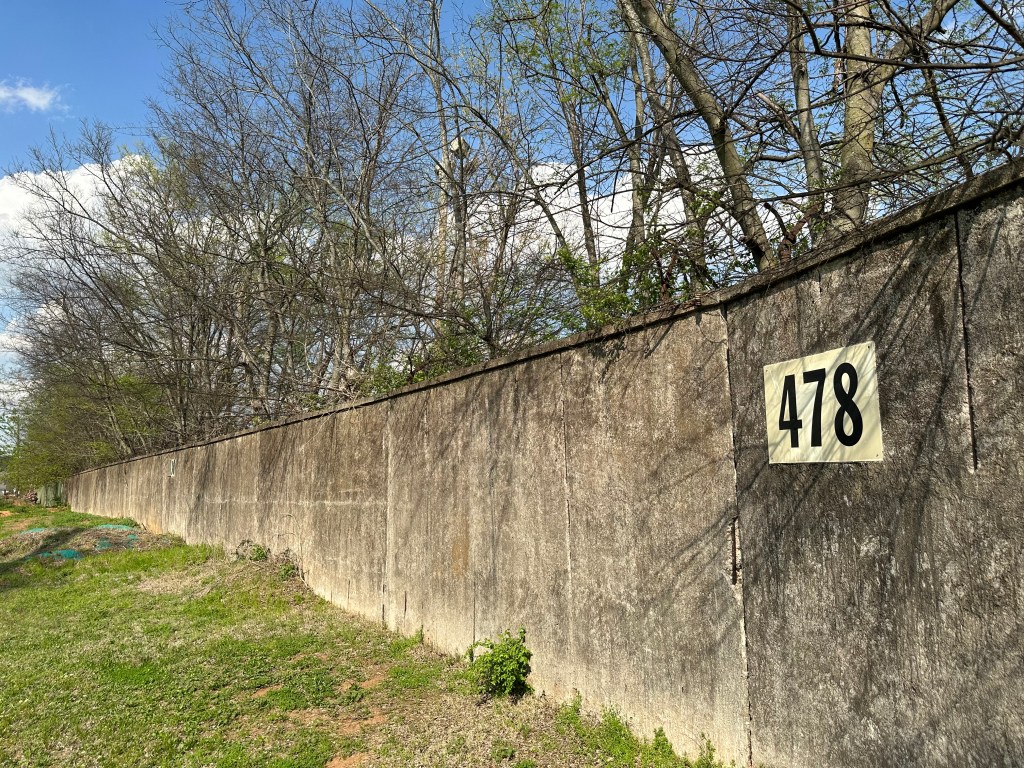
It was here I said goodbye to the spray charts of mere mortals and hello to those of Babe Ruth, Josh Gibson, Willie Mays, and Reggie Jackson. I was venturing into the land of 478-foot homers. Holy f*ck.

If I had all day I might have wandered this stretch for hours, rummaging for old toothpicks I might decide were Oscar Charleston’s or, as if it were possible, a baseball or two. Unfortunately I had to pick up some colleagues at the airport. And that would be Montgomery, not Birmingham. Different cities it turns out.

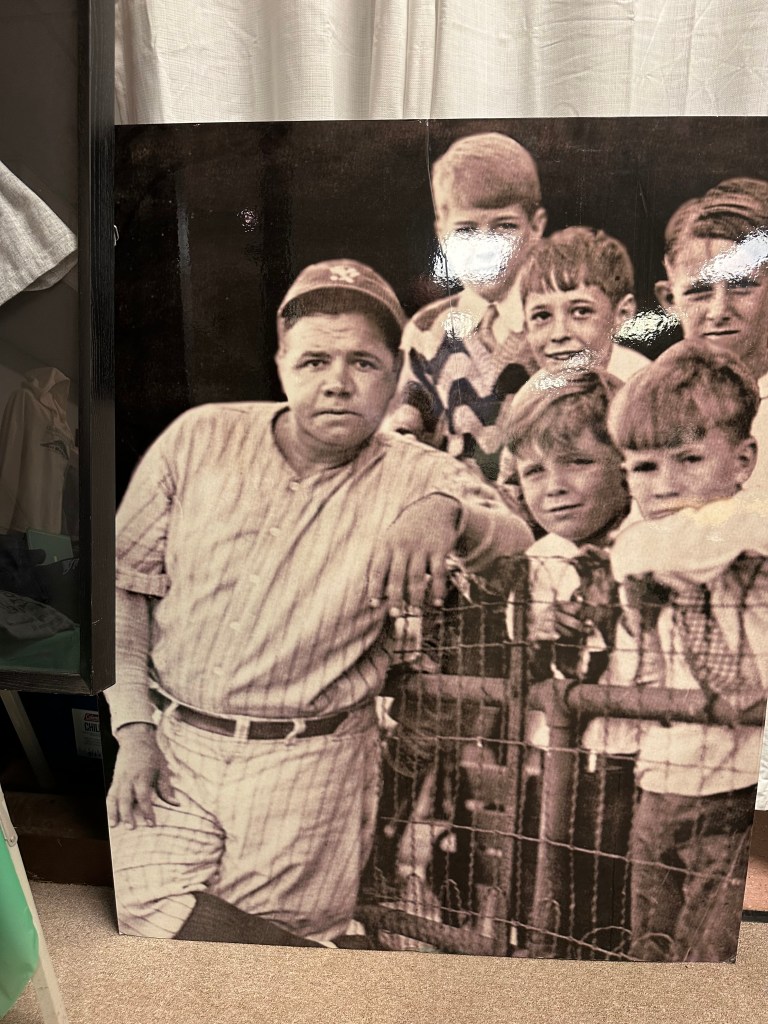
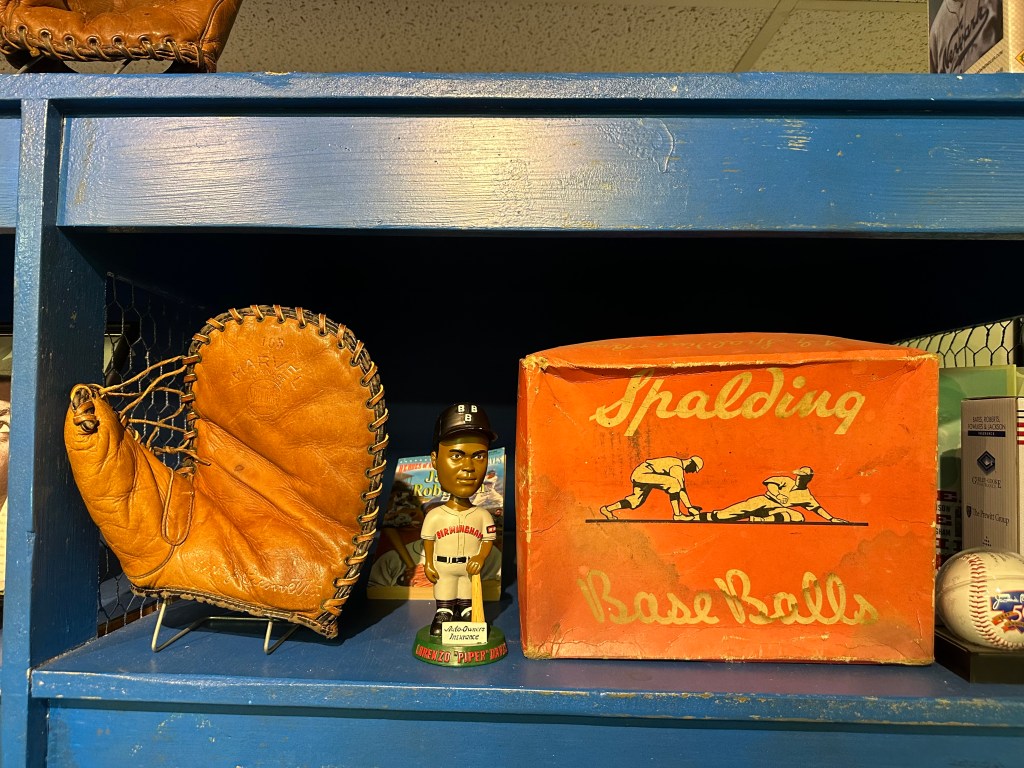
Still, I made some time to visit the gift shop, which doubled as mini-museum.

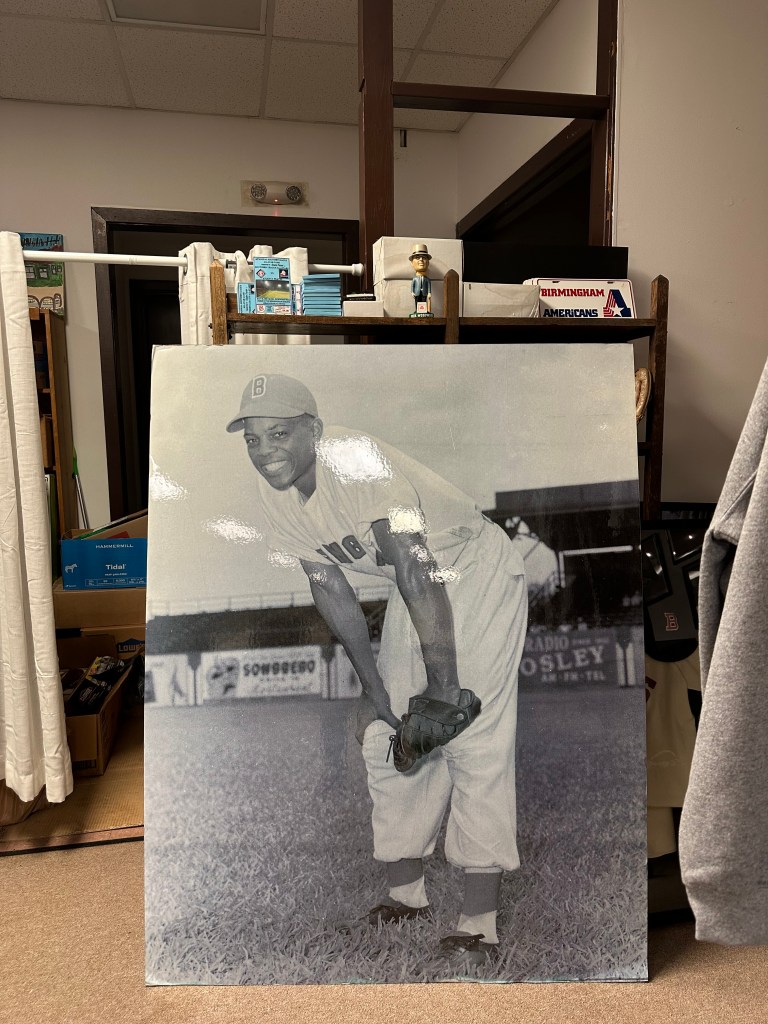
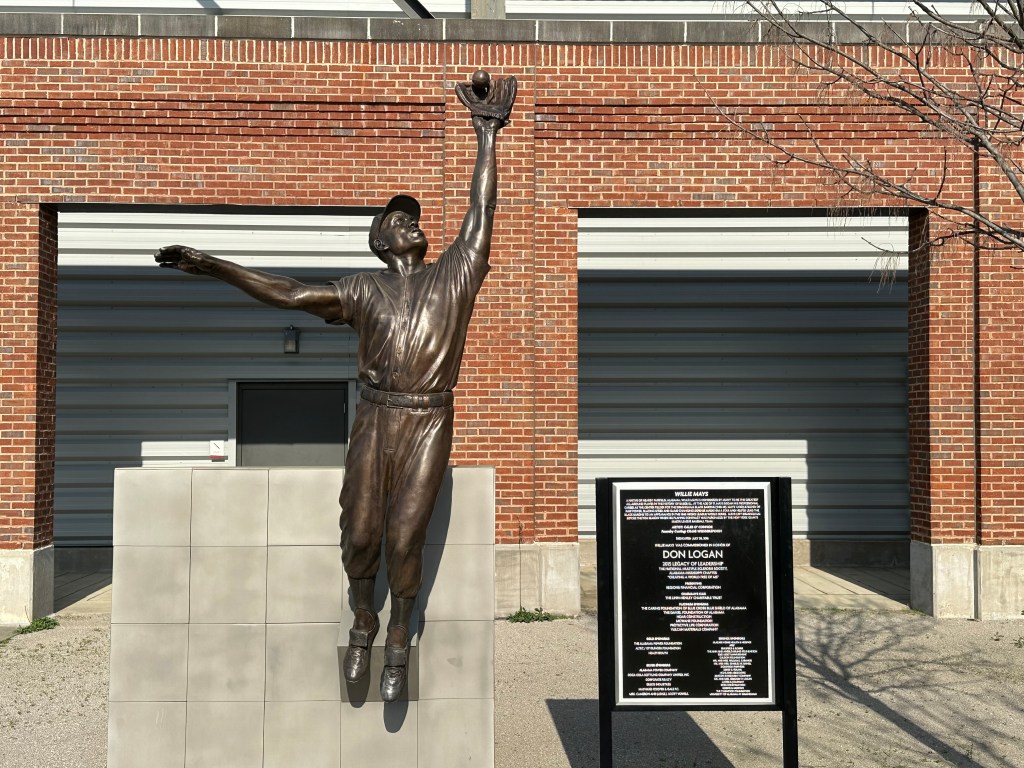
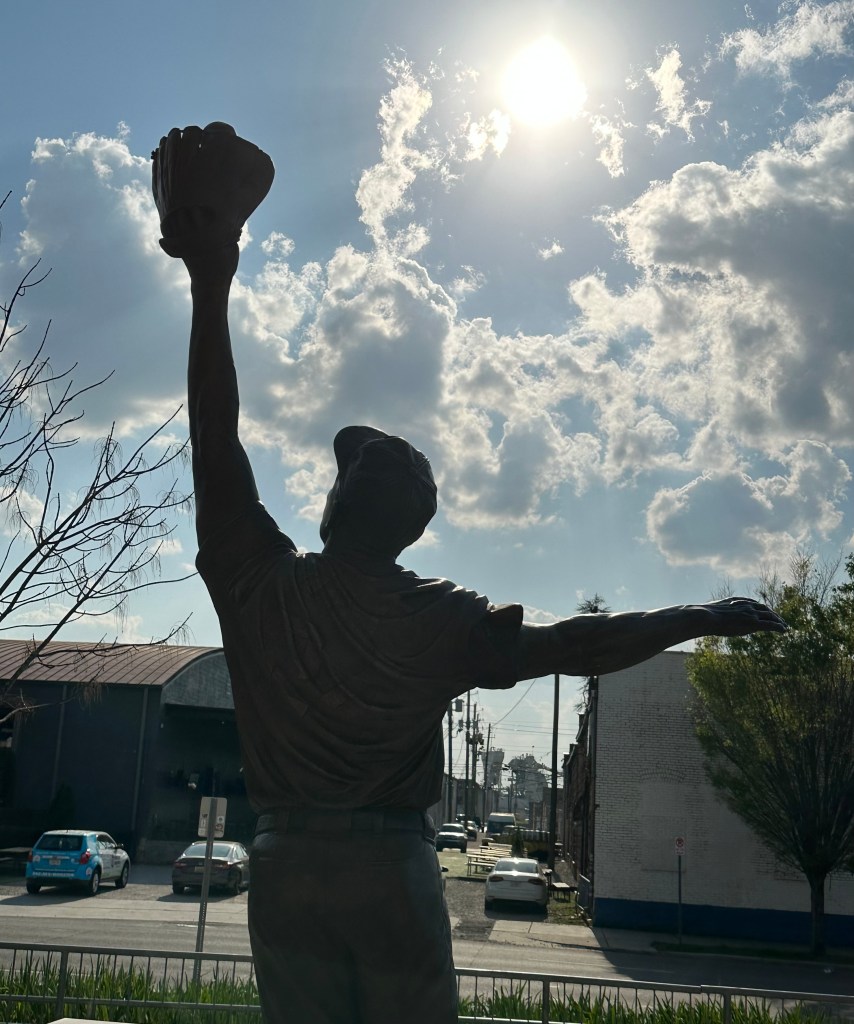
Checking the baseball map, I also found I had time for a brief stop at the Willie Mays statue outside nearby Regions Field.

And with that, it was time to hit the road. It was a dumb mistake to fly into the wrong city, but it was a smart one too. Plus, it could have been worse. Far worse.

The beautiful uncut hair of LaGrave

Business brought me to Fort Worth this past week, though a tight schedule prevented me from planning any baseball detours as part of the trip. Too bad since I’m currently working on the SABR Games story that took place in Fort Worth in 1952 and would have benefited greatly from even a few extra hours in town. But then I looked at the map. 🤔

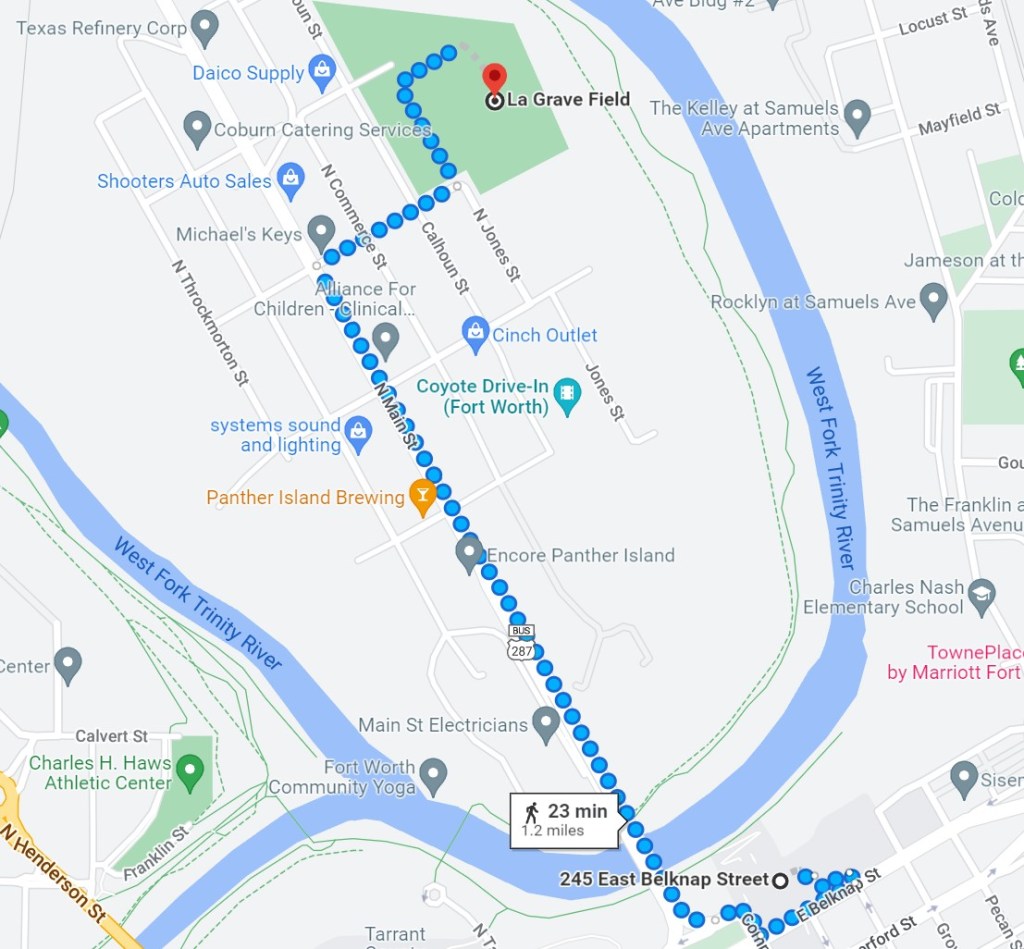
Wait a minute! My meeting (at Tarrant County College) is only a mile from LaGrave Field?! Maybe, just maybe, I can pull this off.

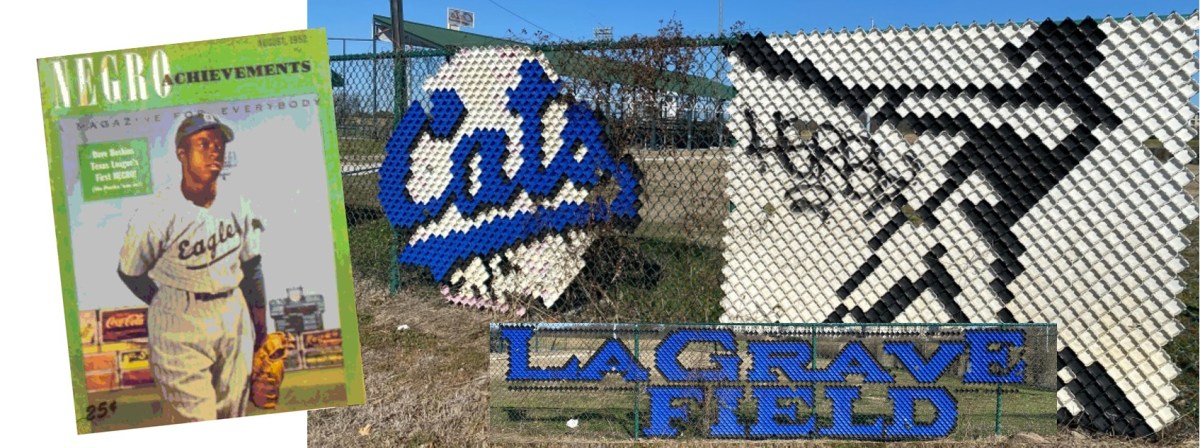
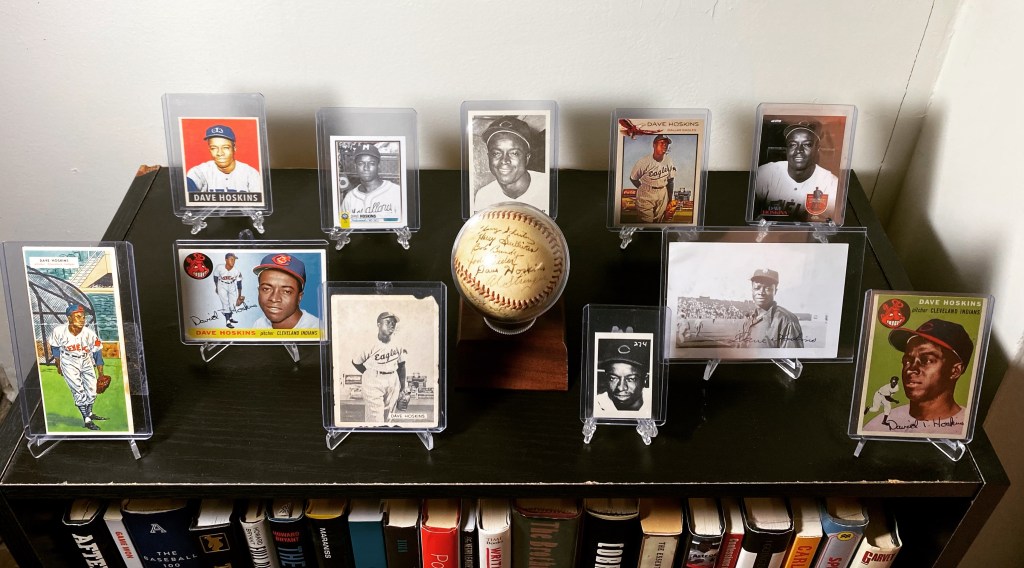
Luck was with me as my event ended almost an hour early, so after saying my goodbyes and packing up my gear I set off on my mile-plus walk to the site of the Texas League’s first of two Dave Hoskins Nights. (If the name is unfamiliar, Hoskins was the two-way sensation who not only broke the Texas League’s Color Barrier in 1952 but was also the circuit’s top draw, top pitcher, and third best hitter. Previously he had starred in the Negro Leagues as part of the Homestead Grays Murderers Row!)

1952 Globe Printing baseball card

While the second Dave Hoskins Night was hosted by the ace’s home fans in Dallas, this first tribute, on August 28, came from the fans of his team’s crosstown rival, the Fort Worth Cats. Hoskins for his part pitched well enough to reward celebrants with a shutout and his 20th victory of the season. He even banged out two hits for good measure.

So this Dave Hoskins history was what was on my mind as I began the short walk to the ballpark, though Hoskins was hardly the most renowned player to take the field at LaGrave. Two of my favorite Dodgers, for example, were Fort Worth Cats en route to the big leagues: Duke Snider and Maury Wills, the latter breaking the team’s Color Barrier three years after Hoskins integrated the league.

The walk itself started out simple enough but got a bit dicey halfway through. Google’s walking directions had me take Main Street, which for several blocks became more highway than street. That there was no sidewalk over this stretch added adventure if not danger to this part of the journey. To boot, wearing a suit and carrying two travel bags wasn’t exactly optimal for dodging traffic, so I was fortunate that there weren’t many cars at this time of day. I was definitely happy to reach the stretch where the sidewalk resumed.

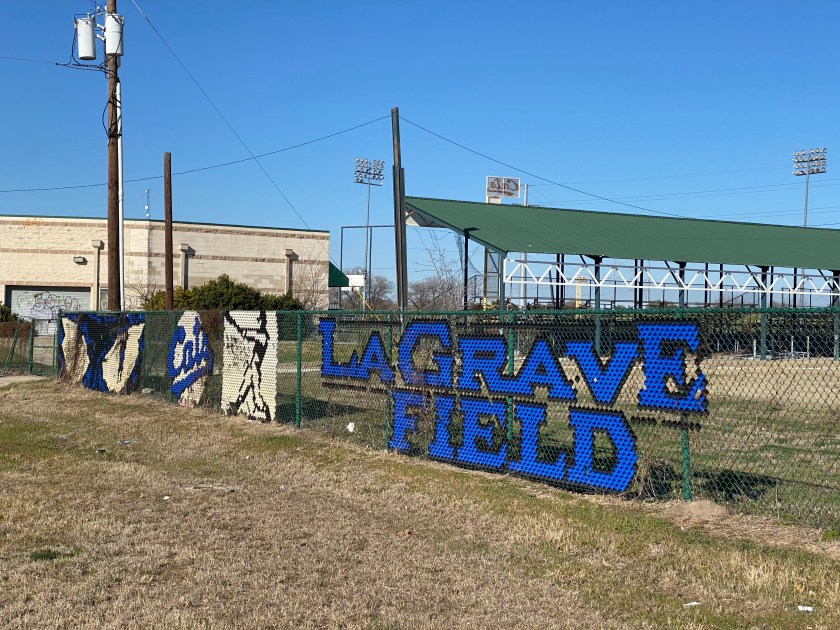
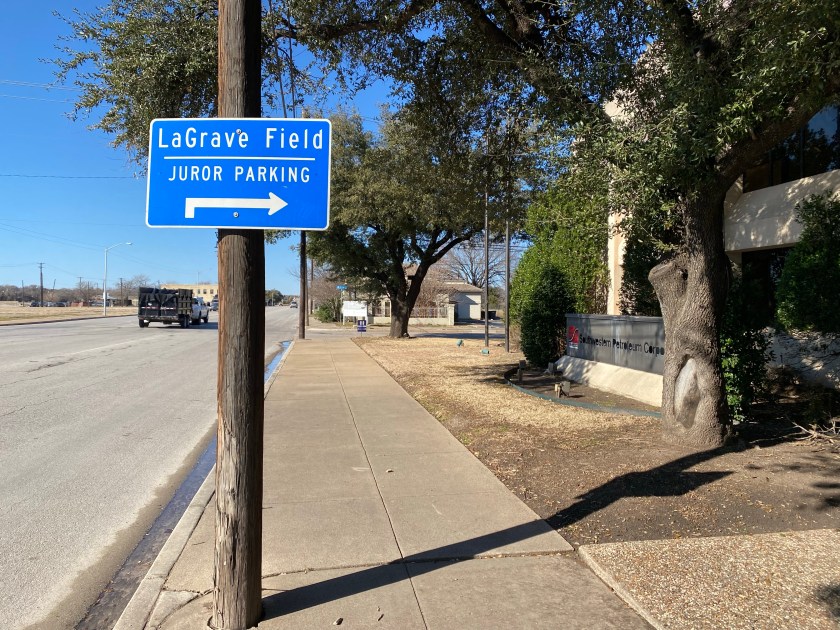
Abandoning the Google directions, I followed this street sign and turned off Main St. early to take a shortcut through a parking lot. I was quickly rewarded by a view of the ballpark. While taking my first photo, a car pulled up to me and asked if I was trying to get onto the field. Before I could respond fully, the driver warned me that the field was patrolled by a security guard whose car I could now see.

Just seeing the old shuttered ballpark, from any angle, made the walk worthwhile, but I had a second goal. To qualify for SABR Landmark status, abandoned ballparks, no matter how historic, need markers. Would my walk around the perimeter lead me to one?

Bingo!

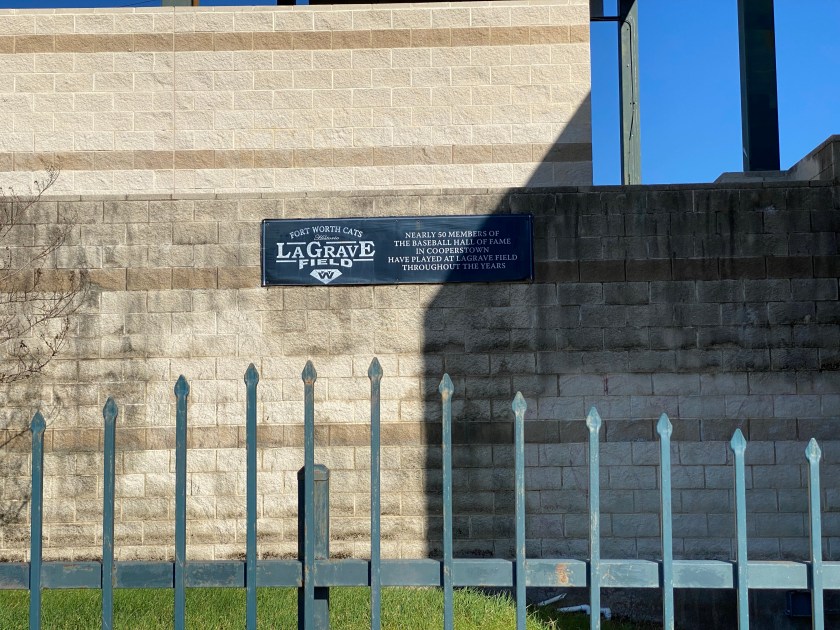
Shadows didn’t permit a clean shot of the marker, but I could still make out the words.

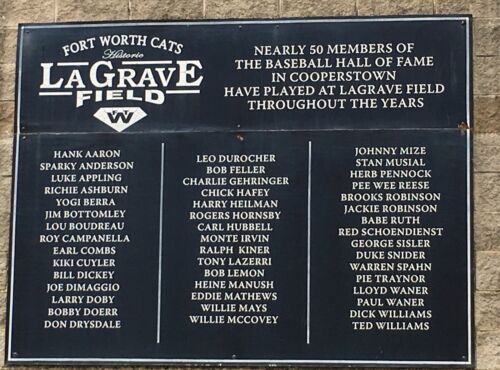
FORT WORTH CATS HISTORIC LAGRAVE FIELD – Nearly 50 members of the Baseball Hall of Fame in Cooperstown have played at LaGrave Field over the years.

In better days there was actually a bottom half to the sign, which named the Hall of Famers. In fact, the sign sells the old ballpark short as Satchel Paige and many other Negro League greats played here as well.
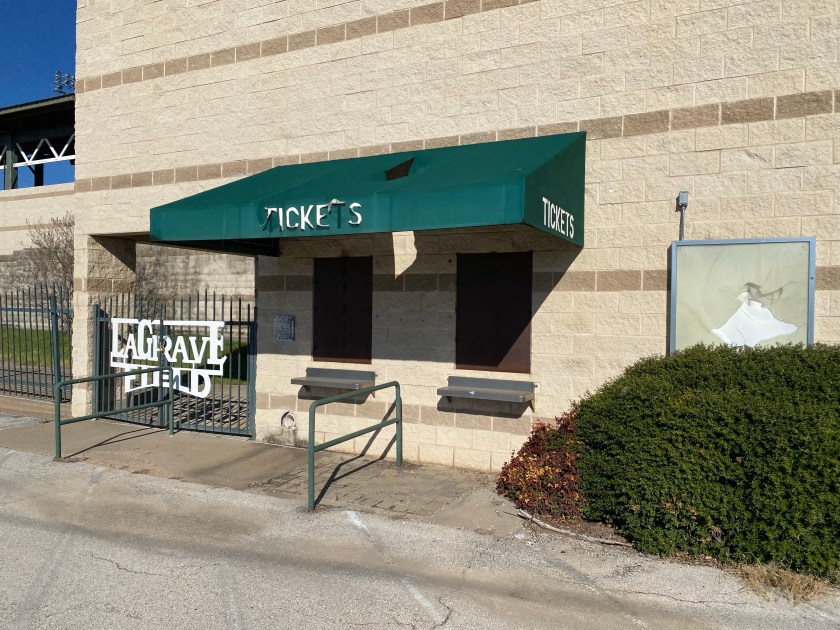
Having nabbed a picture of the marker, I also managed a picture of the old ticket office just before the aforementioned security guard interrupted my hardball voyaging.
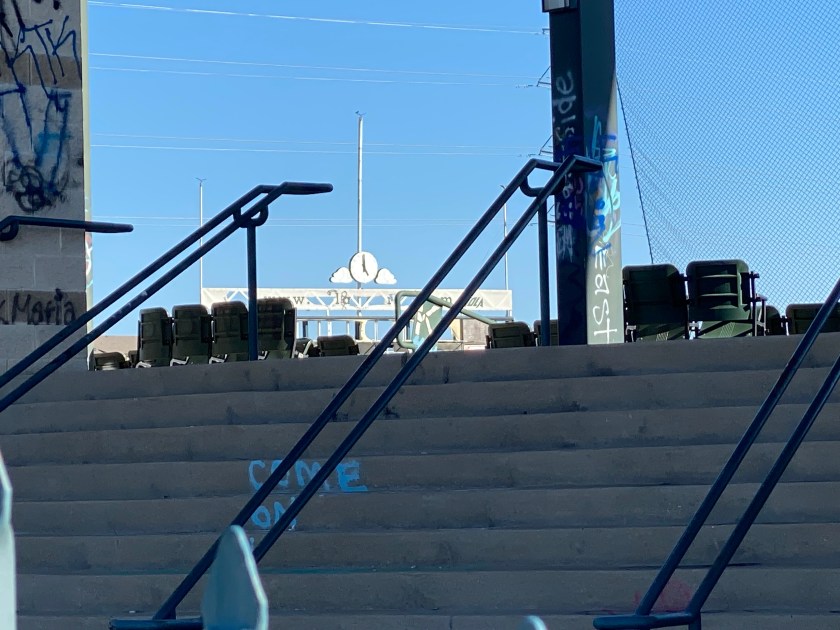
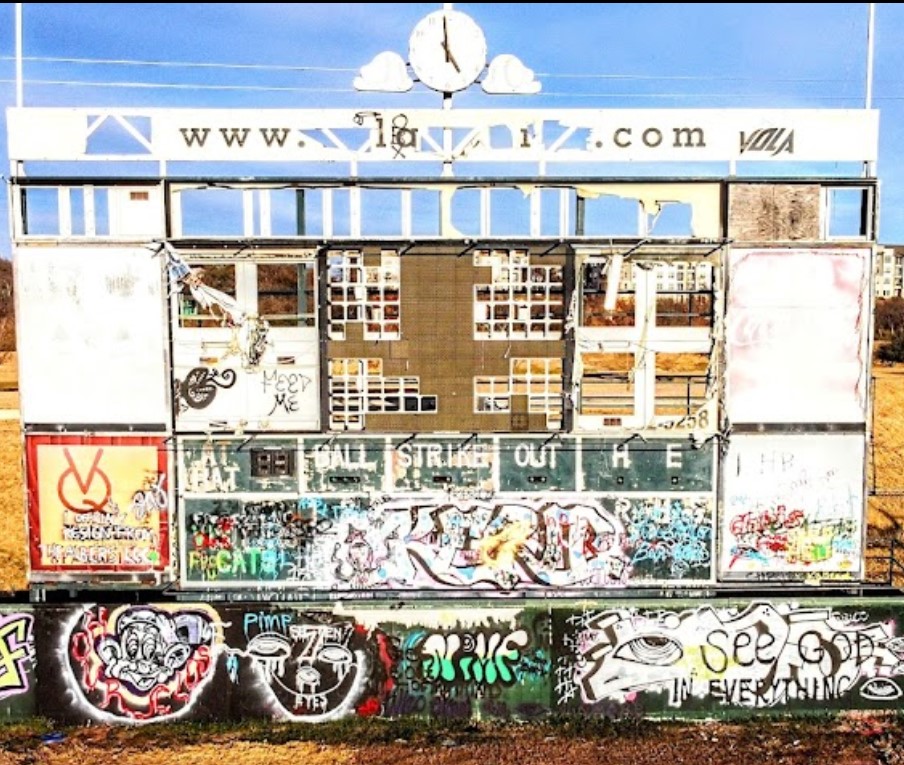
The concerned watchman let me know they really didn’t like people walking around the ballpark, but he softened his stance somewhat when I told him I was from the Society for American Baseball Research. He asked how much longer I needed to be there and I told him I maybe needed just one more picture from a different spot. Reluctantly, he assented, and thanks to his largesse you are now looking at a shot of the centerfield scoreboard, complete with clock.
Here is an image from Google Maps that shows a much better view while testifying to the overall state of neglect and disrepair to which the ballpark has fallen victim. Graffiti runs the gamut from “Pimp” to “See God in everything.” (Click here for a photo not nearly as depressing.)

Between the watchful eyes of security and a plane to catch, my visit to LaGrave came to a quick end, though not without some humor. Having taken the most direct path to a spot I thought Uber could retrieve me, I sent my driver a helpful note.

“It’s Jason. I’m on Main and 7th, right across the street from…wait, what?!”

I enjoyed my short trek to LaGrave but also left saddened at the current state of the ballpark and its even more uncertain future. It’s easy to picture that even a year down the road, the history I was able to visit will be gone entirely, and with it, I believe, no small part of the cultural wealth and heritage of Fort Worth itself.

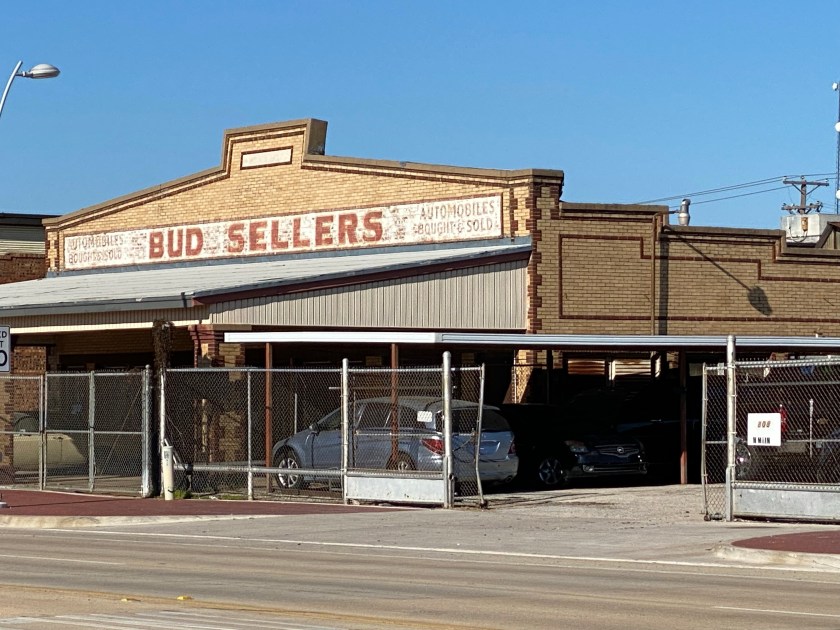
Baseball can be played in many places, but that isn’t to say they’re interchangeable. Some places are sacred, and I believe this is one of them. Walt Whitman sung of grass as “the beautiful uncut hair of graves.” Taking some liberty with his verse, here’s hoping the uncut hair of LaGrave might once again provide fans and yawpers alike with “the thrill of the grass.” Until then, if you’ll pardon the “potty” humor, I guess there’s always Bud Sellers. 🤣

The author’s Dave Hoskins collection

Second home

However much baseball has changed in my lifetime one aspect that has always stayed the same is the notion of a home team and an away team. This is true even when the two squads share the same ballpark (e.g., Dodgers/White Sox Spring Training) or play at a neutral site such as Mexico City or the Field of Dreams. After all, someone has to bat first.

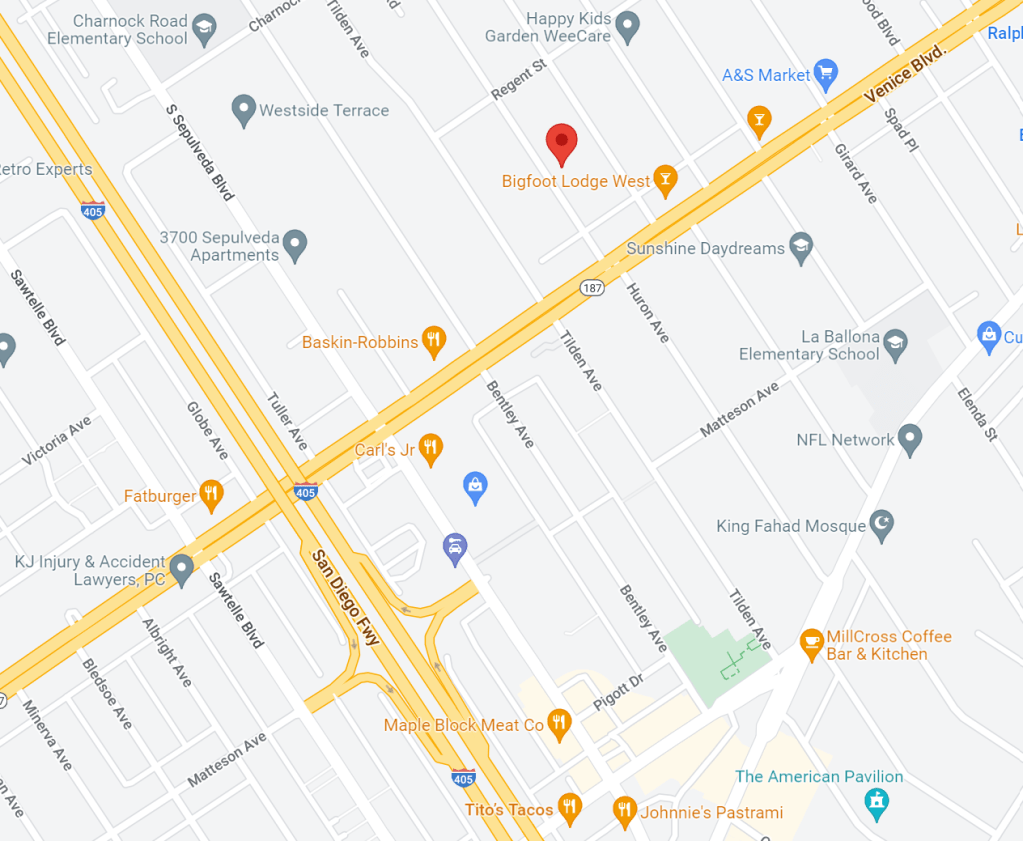
The same is true with people and places. As we find ourselves in different spots over the course of our lives, we are sometimes at home and other times visitors. As a kid, I knew one home and that was the Palms/Mar Vista area of Los Angeles. Until halfway through the eighth grade, I’d spent my entire life in the same house on the same street in the same neighborhood. (Why this house has since been re-branded “Bigfoot Lodge West” is beyond the scope of this article.)

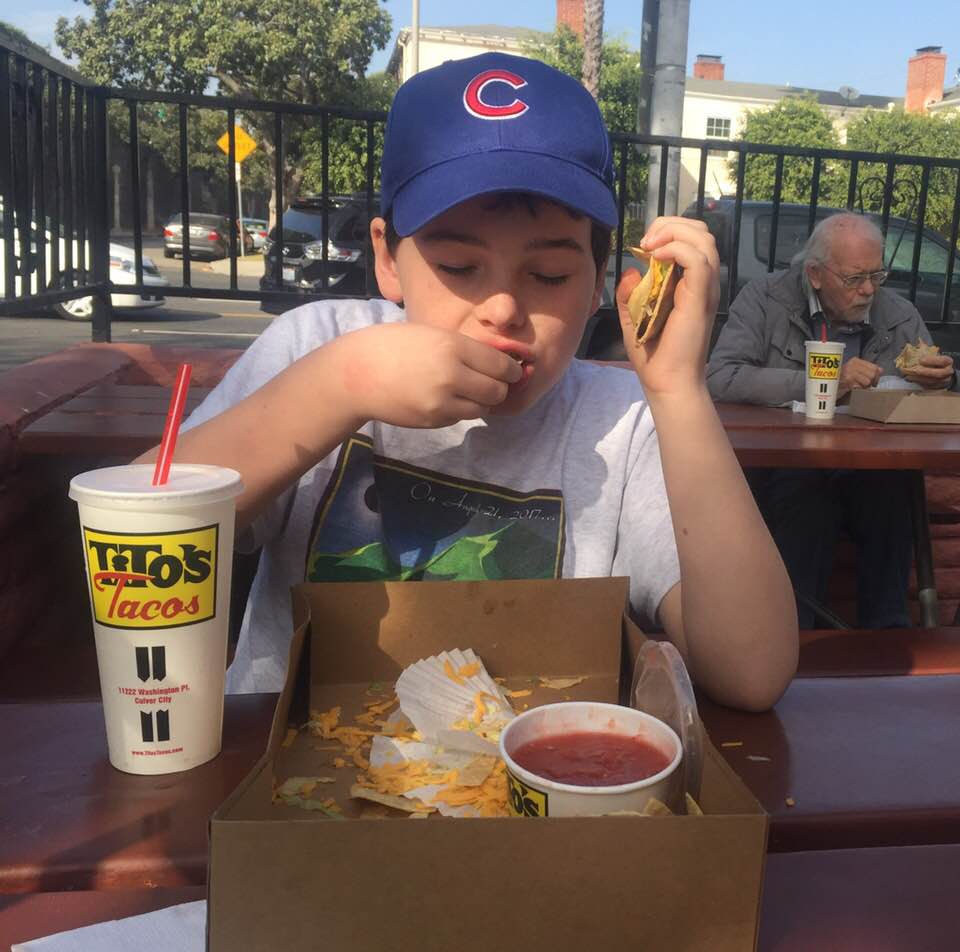
The red pin on the map was our house and center of my universe. That school in the upper left corner, Charnock Road Elementary, was where I walked for first and second grade. Tito’s Tacos, at the bottom of the map, was where we’d go out to eat. The Baskin-Robbins in the middle is where we’d go for ice cream when guests were in town. And most importantly, in the same strip mall as Baskin-Robbins was the liquor store where I traded what I could skim from my mom’s parking meter change for pack after pack of baseball cards.

Every now and then I make the trip back to Los Angeles to see old friends and take in a Dodger game. Forty years later, the old neighborhood is part familiar, part unrecognizable. Make the mandatory trip to Tito’s and place the same order I’ve always placed (tacos with cheese), head down Venice Boulevard to Baskin-Robbins, and this is home. Pass just about anything else, even the house I grew up in, and I’m the visitor, connected to nothing I see.

My son keeping tradition alive, 2017

Los Angeles will always be home to me, but my connections have dwindled to a just four: high school buds, tacos, the Dodgers, and nostalgia. Not a bad four to keep, I suppose, but sure a lot less than in the old days. That’s what the decades do to a place. Things happen. Things change. The blessing, of course, is that my remaining touchpoints, while few, have all gotten better with age.

* * *

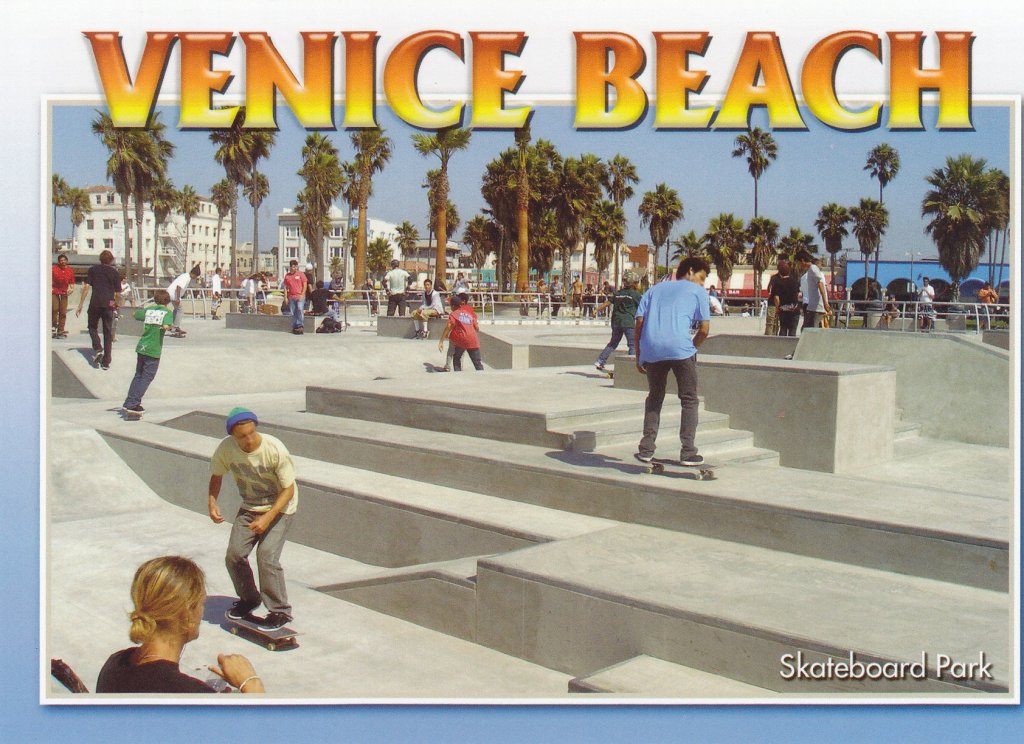
Only a few years ago there was a fifth connection to the city: family. My dad passed in October 2020, an indirect COVID casualty, but before that had spent a good 70 years of his life in L.A. That said, his true spiritual home was Venice, especially Venice Beach.

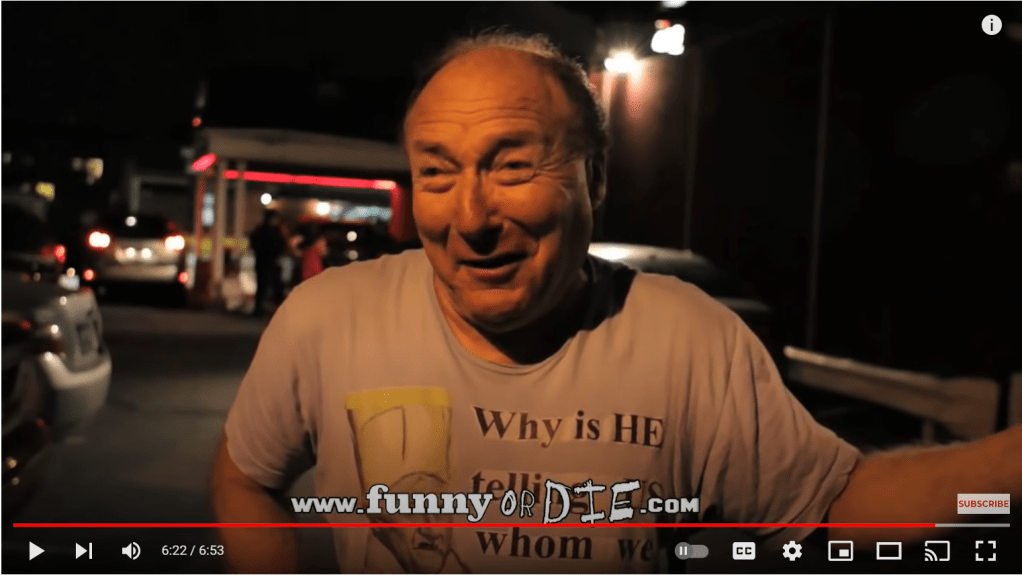
Locals, depending how far back they go, will remember him as the “cardboard sign man” of the 1980s and 90s, or–this century–as the “tee shirt guy.” In a town that prides itself on its freaks and crazies, my dad managed to lap the field, rendering the pretenders of this new urban Bohemia downright normal by comparison.

Accidental Jewel co-star Nelson Schwartz

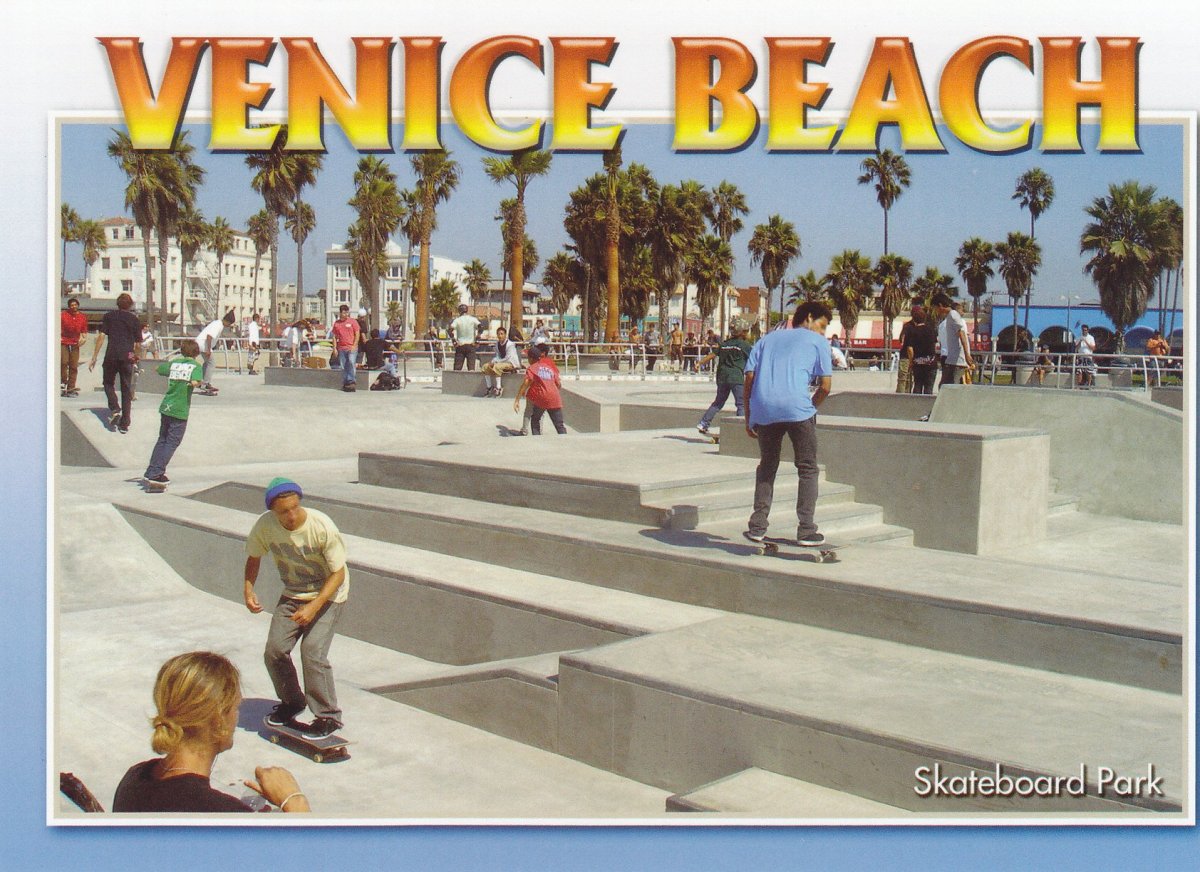
Still, despite my dad’s near celebrity status (if not because of it) I hated Venice as a kid. Too dirty. Too weird. And, when my dad was there (i.e., all the time!) too embarrassing! I was definitely the away team here, a reluctant (though frequent) visitor at best. I hadn’t yet learned to appreciate the ways Venice was my dad’s lifeblood, nor was I aware of its baseball history. And, for damn sure, I had no idea there were baseball cards!

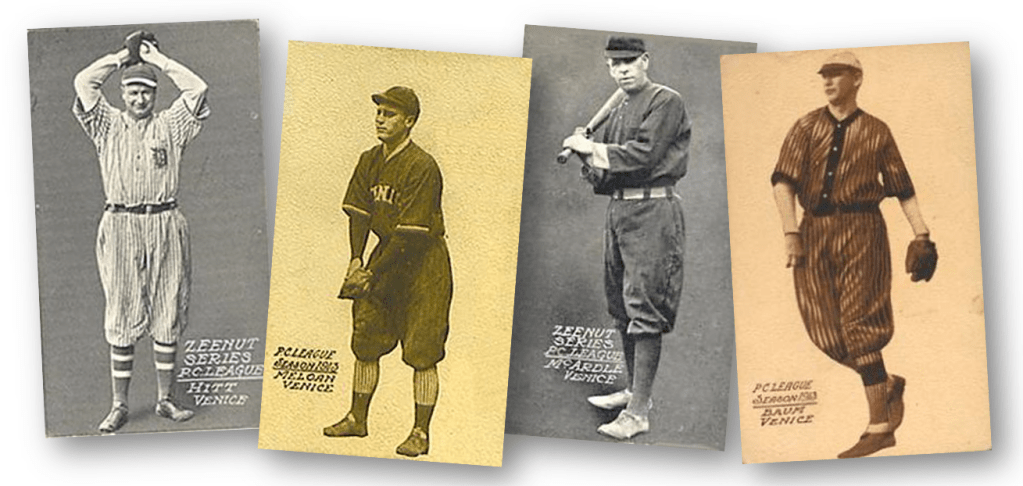
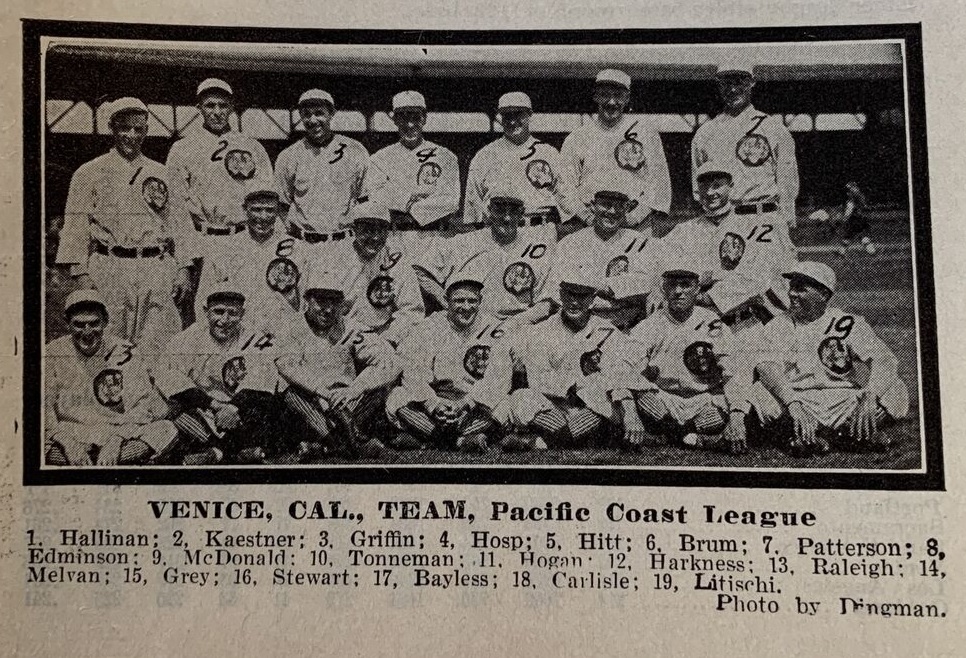
Venice Tigers baseball cards, 1913-14

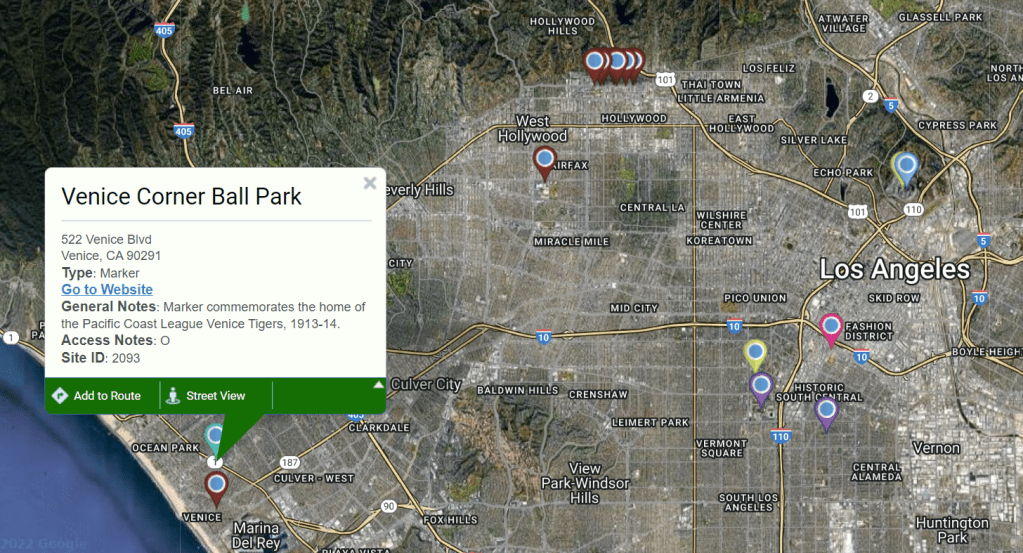
Yes, Venice was briefly home to the Venice Tigers of the Pacific Coast League. The team that had called Vernon home from 1909-1912 (and would return to the industrial enclave south of Los Angeles in 1915) spent the 1913 and 1914 seasons just a few blocks from the Pacific Ocean. (You can see the approximate location of the Venice ballpark on the SABR Baseball Map. You can also spot Vernon in the map’s lower right-hand corner.)

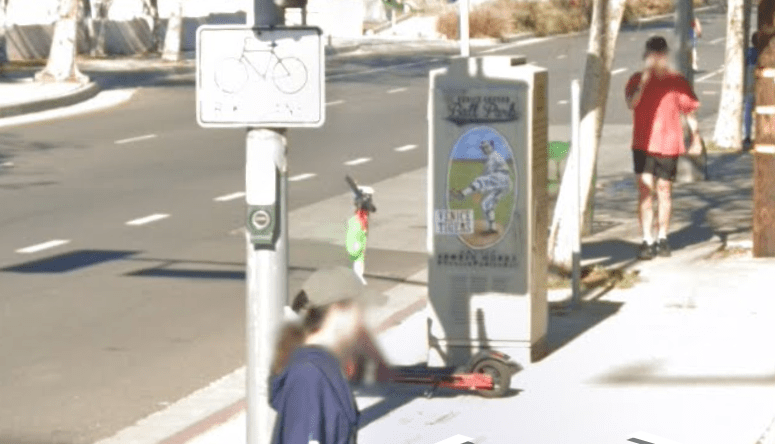
Moving from the map to real life, the marker is not so easy to locate. Having wandered the neighborhood a fair amount, nary noticing a thing baseball related is proof of this. However, some nice online photos are available though the Historical Marker Database. Google Street View also affords this image, though my understanding is that it’s frequently defaced by graffiti.

The presence of the Tigers in Venice (and even Vernon) pre-dates my dad by quite a bit, and it would be a stretch to even call my dad a baseball fan beyond his love of Fernando Valenzuela. Still, I feel drawn to this Pacific Coast League squad of no-names simply because these Tigers, like my dad, called Venice their home, even if both parties left too soon.

I have a Venice trip in my future, one that I’ve already put off too many times. A friend has been holding my dad’s ashes for me far longer then etiquette should allow, and the plan has always been to spread them at Venice Beach. There are a lot of reasons why I’ve waited this long, but I feel like the ghost of an old ballpark, whether as bonus or distraction, may be just what I need to get moving.

* * *

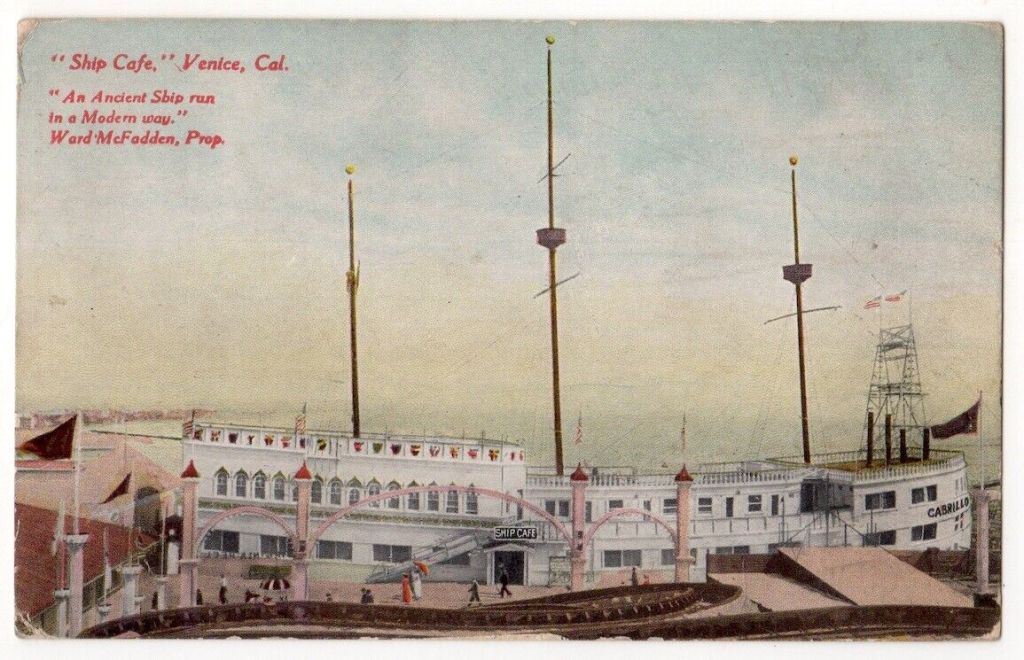
While I’m in the neighborhood I can also check out a couple other Venice Tigers-themed sites. About 0.4 miles from the Corner Ballpark marker, there is the precise location (southwest corner of South Venice and Abbott Kinney) where the ballpark (built in only five weeks!) stood . Though not an official SABR Landmark, why not take a look! And finally, if I’m dropping ashes off the Venice Pier, I may as well stroll past the old parking spot of Ward McFadden’s Ship Café.

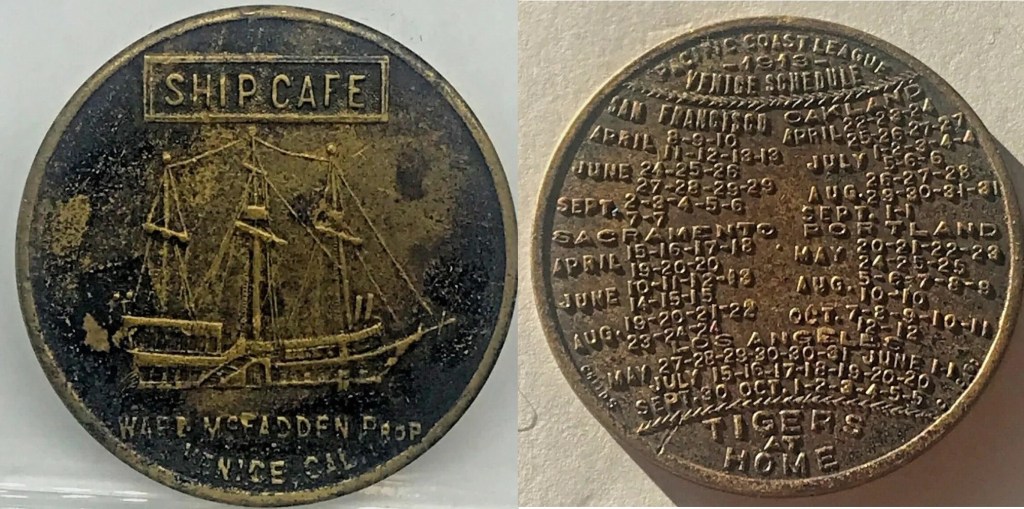
What does the Ship Café have to do with baseball?! How else did fans get ahold of their 1913 Venice Tigers schedule doubloons!

There will be a weirdness to the trip, as is tautologically true of all things Venice, but the weirdness will not emanate from the sights, the sounds, or even the smells. Now the weirdness will be my dad joining me, unmistakably, at every step. It will be his weirdness, once off-putting but now sufficiently missed as to turn the unwanted to welcome and the foreign to familiar. Steeped in his memory, this New Venice will offer me what it offered the Tigers, neither errand nor detour but—for however long it lasts—Home.

Author’s Note: This article is dedicated to my father, Nelson Schwartz (1947-2020) and his special love of all things Venice.