My first time in the Baltimore area will always be a once in a lifetime experience. David Stinson, Vice President of the Baltimore Chapter, invited me to the area to show me historical sites.
As the person who spearheaded the effort to get the first SABR historical marker in the state of South Dakota paying homage to the old Baltimore Orioles minor league team the Aberdeen Pheasants, there was a lot to see.
The first area that I had to see was the hometown in which the Ripkens lived – Aberdeen, Maryland. The first location we visited was the home of the Ripkens at 410 Clover Street in Aberdeen. The next area that we visited was the gravesite of Cal Ripken Sr., which was located at Baker Cemetery 3641 Churchville Road in Aberdeen.
Coincidentally, the same day that I was in Aberdeen (Friday, August 22) the Orioles minor league team the Aberdeen Ironbirds were in town, so we went to a game. Peter Coolbaugh, Balitmore’s Chapter President, joined David and me for the game. The day was full of fun and excitement, but there was even more to follow the next day.
The next day we went to the former site of Memorial Stadium. Some notable Aberdeen Pheasants who either managed or played at Memorial Stadium after being called to “The Show” include Cal Ripken Sr., Earl Weaver, and Jim Palmer.
It is truly remarkable what the Cal Ripken Sr. Foundation did to the area so future kids can still play on that field. After that we had to go to, “Just a long fly ball from Oriole Park at Camden Yards” aka the Babe Ruth Museum. It was truly an awe-inspiring experience to see all of the old items that the museum has.
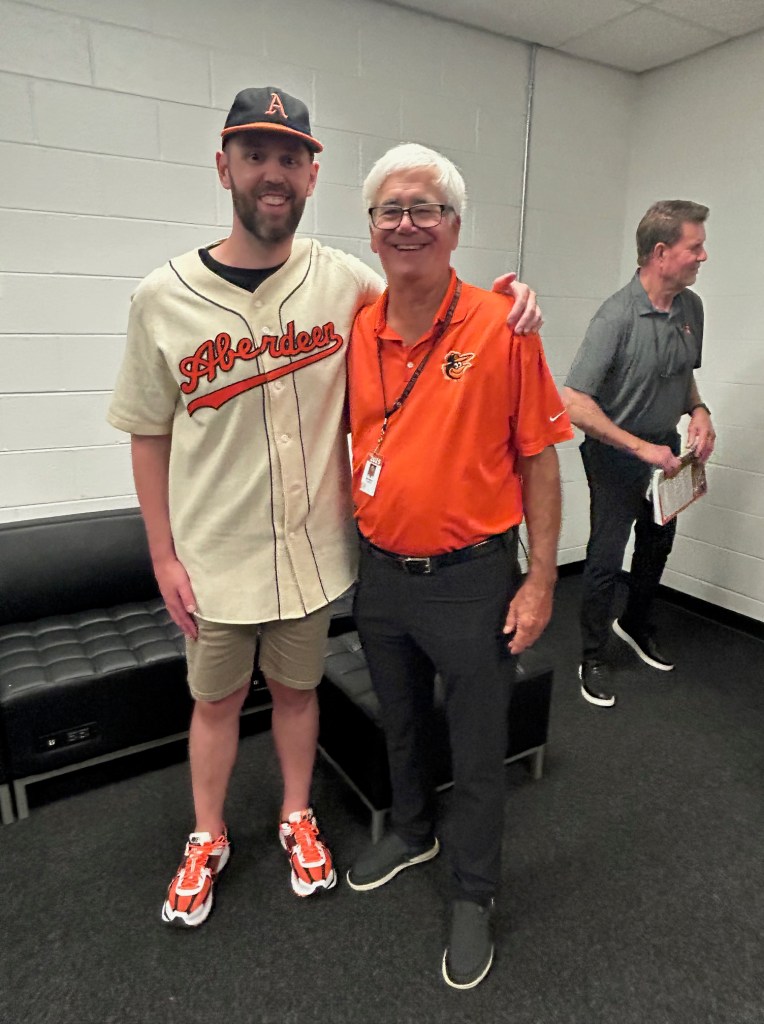
After that we went to the ballpark in which (on Saturday August 23) was Jim Palmer jersey giveaway day. David and Peter got in contact with fellow SABR member Bill Stetka. Bill Stetka is the Director of Orioles Alumni & Team Historian. Bill got in contact with Jim Palmer, and told him about the SABR historical marker. Jim gave us permission and we were able to meet with him before the game. It was truly a dream come true experience being able to meet the only Aberdeen Pheasant player ever in the Hall of Fame.
I am truly grateful to David, Peter, Bill, Jim, and the SABR organization. Dreams can come true, and this will always be a fond memory for me.
Looking for Baseball Graves and there was a surprise I wasn’t expecting…
It was a beautiful 75 degree day in Oregon and a perfect day to go grave hunting. I set out in the morning from Creswell, Oregon to hit four graves starting in Independence and then moving onto the final three that were all in Salem, Oregon.
It was a beautiful drive up to outside the little town of Independence, Oregon looking for the grave of Ed Mensor. The Buena Vista Cemetery was up on a hill overlooking the valley below. Driving up the one-lane gravel road, I knew there would be no map or for that matter a number to call. So it would be looking at every grave until I found Mr. Mensor.
The surprise I found was as I was looking. I completely forgot that my cousin was buried here as I ran across his stone. He was only 36 and died after a battle with cancer. He was a wonderful person and I still miss him.
So I walked from the top to the bottom of the cemetery. There were about 200 plots and of course I found him after walking almost all of the cemetery. Ed Mensor played for the Pittsburgh Pirates from 1912-1914 as an outfielder. He batted .221 with one home run and eight RBIs for his brief career. He would play until he was 35 years old mostly in the minor leagues with seven other teams. Read a bit more about him here https://www.baseball-reference.com/bullpen/Ed_Mensor.
It was onto Restlawn Memorial Gardens in Salem about 22 miles away. So when I arrived, what a stark difference – I just came from a little cemetery on top of a hill to a place that had thousands of graves over a huge 10-acre parcel of land.
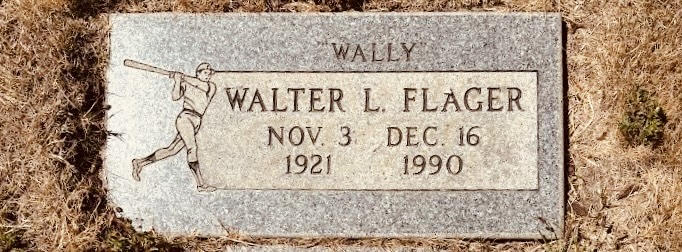
So I went in to the office and got a map and directions to the grave of Wally Flager. He played in the majors for one year but ended up playing for two different teams starting out with Cincinnati for 21 games and then onto the Pittsburgh Pirates for 49 games. He would hit a respectable .241 with two homers and 21 RBIs. He would play just two more seasons in the minors before leaving the game at 26 years old. He was buried on the front row of the section named Prayer. He served in World War II. You can read a bit more on him here https://www.baseball-reference.com/bullpen/Wally_Flager.
Onto my last stop which is where the final two players I set out to view would be. At Belcrest Memorial Park in Salem I found an even bigger place with thousands upon thousands of stones and burial sites. Thank God again for the office and the wonderful person who could show me on the map right where to go. I found Howard Maple, who played at Oregon State University before he would move onto the pros. He played only one year for the Washington Senators in 1932 getting into 44 games. He only had 41 at bats with 10 hits and seven RBIs. You can read about him at his BR-Bullpen site https://www.baseball-reference.com/bullpen/Howard_Maple.
After finding Howard Maple it was onto Max Marshall. He is interred in a space inside the funeral home with his wife. I found him after searching because the number and place they gave me was wrong – he was on the opposite side of where they told me. So even if they give you the coordinates, if you don’t find them search yourself as they are probably there. I imagine when you have thousands of people buried and entered it could be easy to write down the wrong number where someone is.
Max played for Wake Forest before moving onto the pros and playing for the Cincinnati Reds from 1942-44. He played mostly right field but ended up playing all three outfield positions. He started for the reds in both 1942 and 1943. He had 311 hits for his career with a .245 batting average. He hit 15 homers for his career. He played 12 years total and after playing his last game for Tulsa at the age 33 he would come back and play for Salem at 39 years old in the Western International League. Here’s a little bit of info on Max from the BR-Bullpen page https://www.baseball-reference.com/bullpen/Max_Marshall.
After nearly three hours listening to an old baseball game and driving over 100 miles I found all four, took the pictures, and marked the coordinates for all to find.
What a great fun day as I love to drive, and to help with the Landmarks Committee Project is icing on the cake.
My wife and I are cruising along the rolling hills of eastern Ohio, some 50 miles south of Canton and a hundred miles east of Columbus. This is Amish country, the farmhouses close to the winding roadway, laundry drying on clotheslines, yellow signs reminding drivers to share the road with horses and buggies.
Ohio Route 258 dips into a grove of trees, then rises again. As it bends to the right, the trees give way to a small brick church on a hilltop. “Peoli Cemetery / p.m.c. 1870-2018” is painted above the front door. A sign on the lawn next to the flagpole reads, “Peoli Church. Resting Place of Cy Young,” with a hand-painted baseball and glove.
They’re still quite proud of Denton True “Cy” Young out here, nearly 68 years after his death.
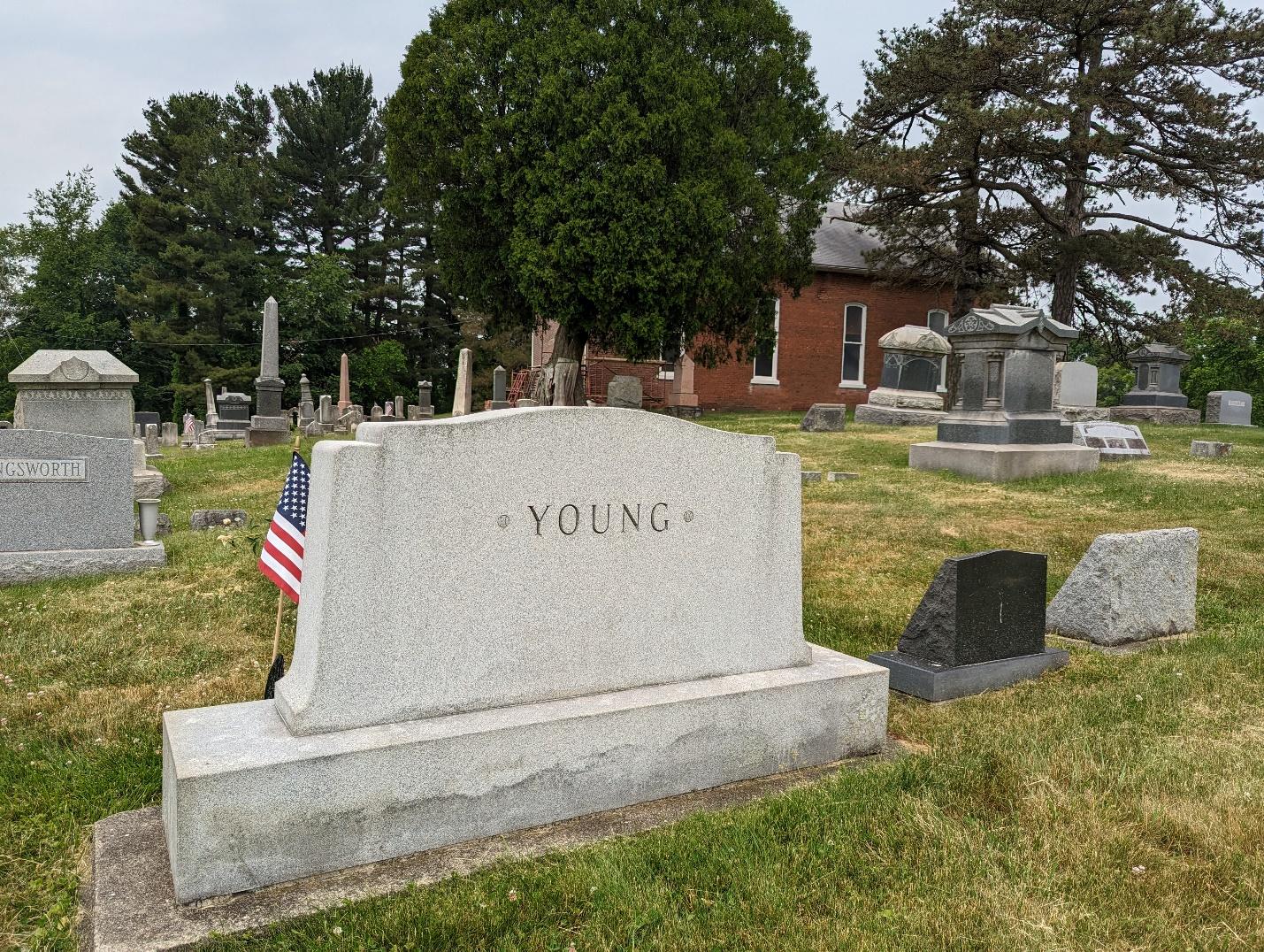
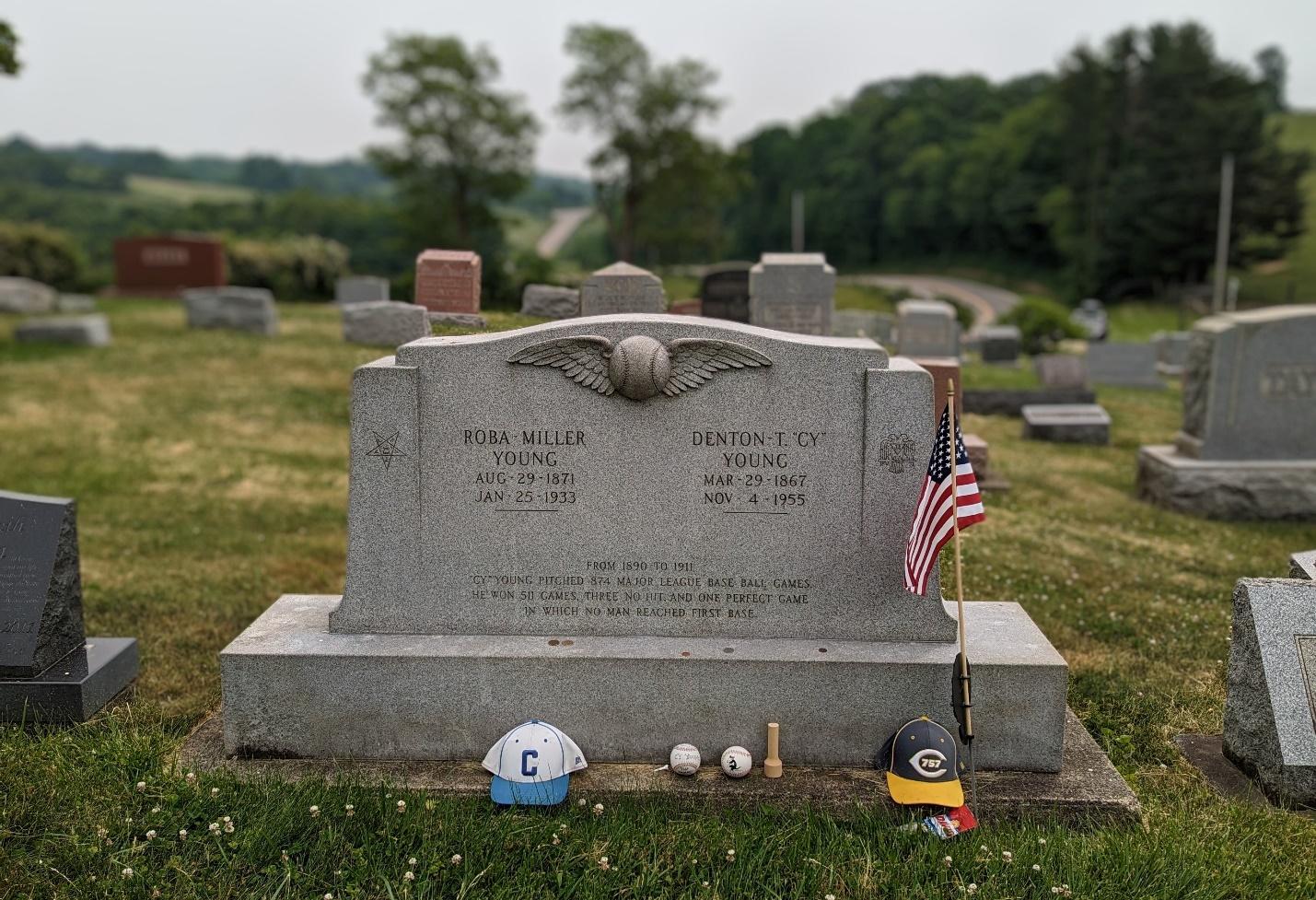
We slow down and park in a turnout at the bottom of the 1.8-acre cemetery next to a field of grazing cattle. It’s a warm, 70-degree day with a pleasant breeze as we walk beneath a wrought-iron archway reading “PEOLI CEMETERY” in white letters. Two gravel ruts bisect the church yard in a straight line and it’s not long before we spot the headstone on the right, up the hill:
⚾YOUNG⚾
Cy Young’s grave isn’t quite at the peak of the rise, but it’s not far off. The view to the south opens up to more rolling, green hills, the only other building in sight about half a mile away. It’s such a serene resting place.
The other side of the headstone features a winged baseball centered at the top – a fly ball? – the names of Cy and his wife, Roba, and their dates of birth and death below. The logo of the Order of the Eastern Star is etched next to Roba’s name, the Freemasons’ Scottish Rite emblem next to Cy’s; they were both members. An epitaph reads: “From 1890 to 1911, ‘Cy’ Young pitched 874 Major League base ball games. He won 511 games, three no-hit, and one perfect game in which no man reached first base.” Baseballs, caps and a bag of sunflower seeds have been left by other pilgrims who have ventured to this spot.
What brought baseball’s winningest pitcher to this tiny hamlet 10 miles east of his hometown, Newcomerstown? The answer is etched on the left side of the gravestone: Roba was born and raised in Peoli. Her family – parents Robert and Sue, brother Fred – are buried in the Miller family plot just a few steps away. All were members of this church, and their funerals were held here. About half a mile back up the road stands a battered red farmhouse, the last place Cy Young lived before his death on Nov. 4, 1955. He had moved there after Roba’s passing, staying with the Benedum family for the last 22 years of his life.
Casey and I made this trip the first week of June, just days before the Landmarks Committee added Hall of Famers’ gravesites to the map – not that this cemetery was hard to find; Cy Young’s grave is on Google. But before heading out to the country, we did use the map to find Cy Young Memorial Park in Newcomerstown.
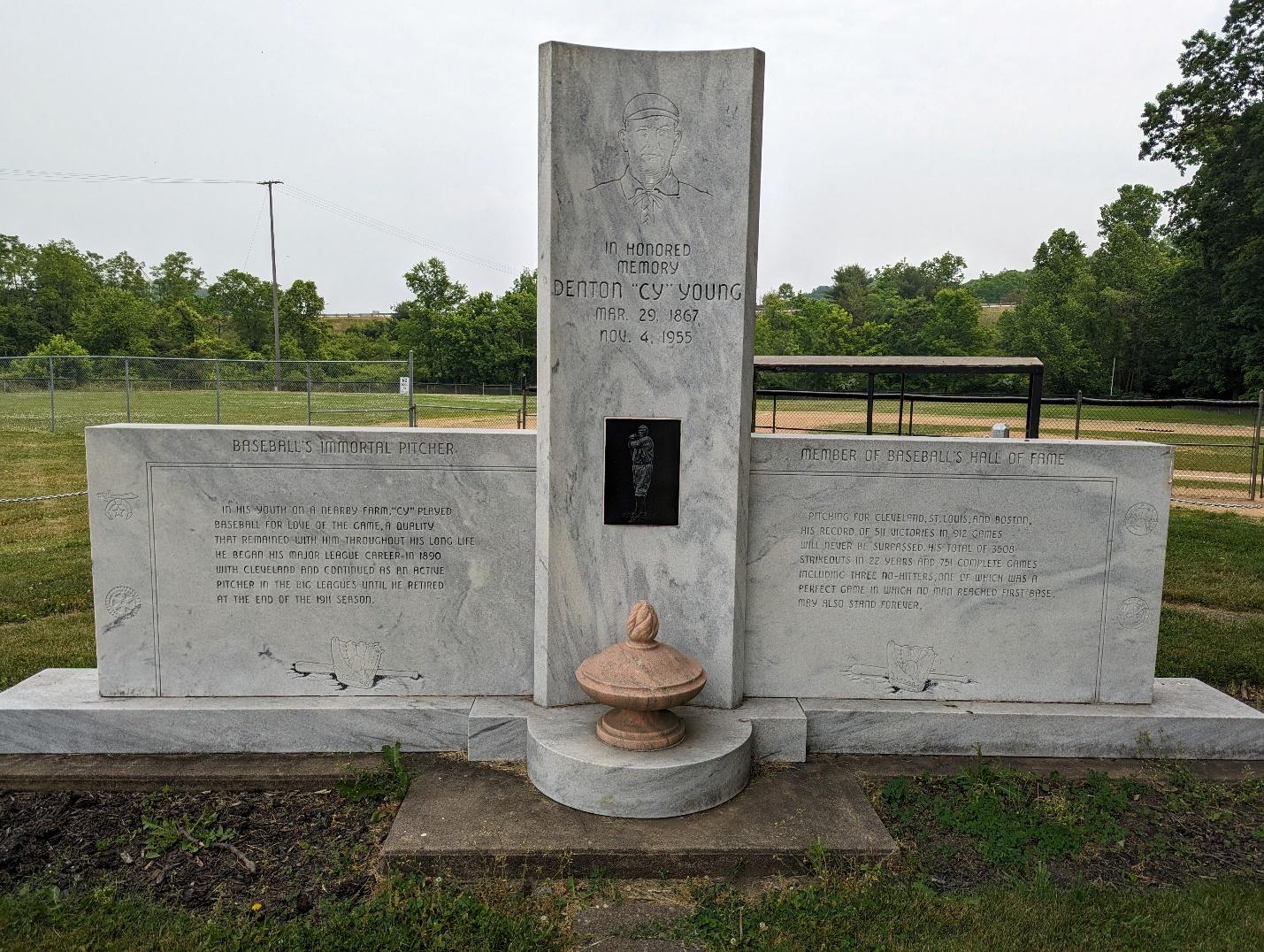
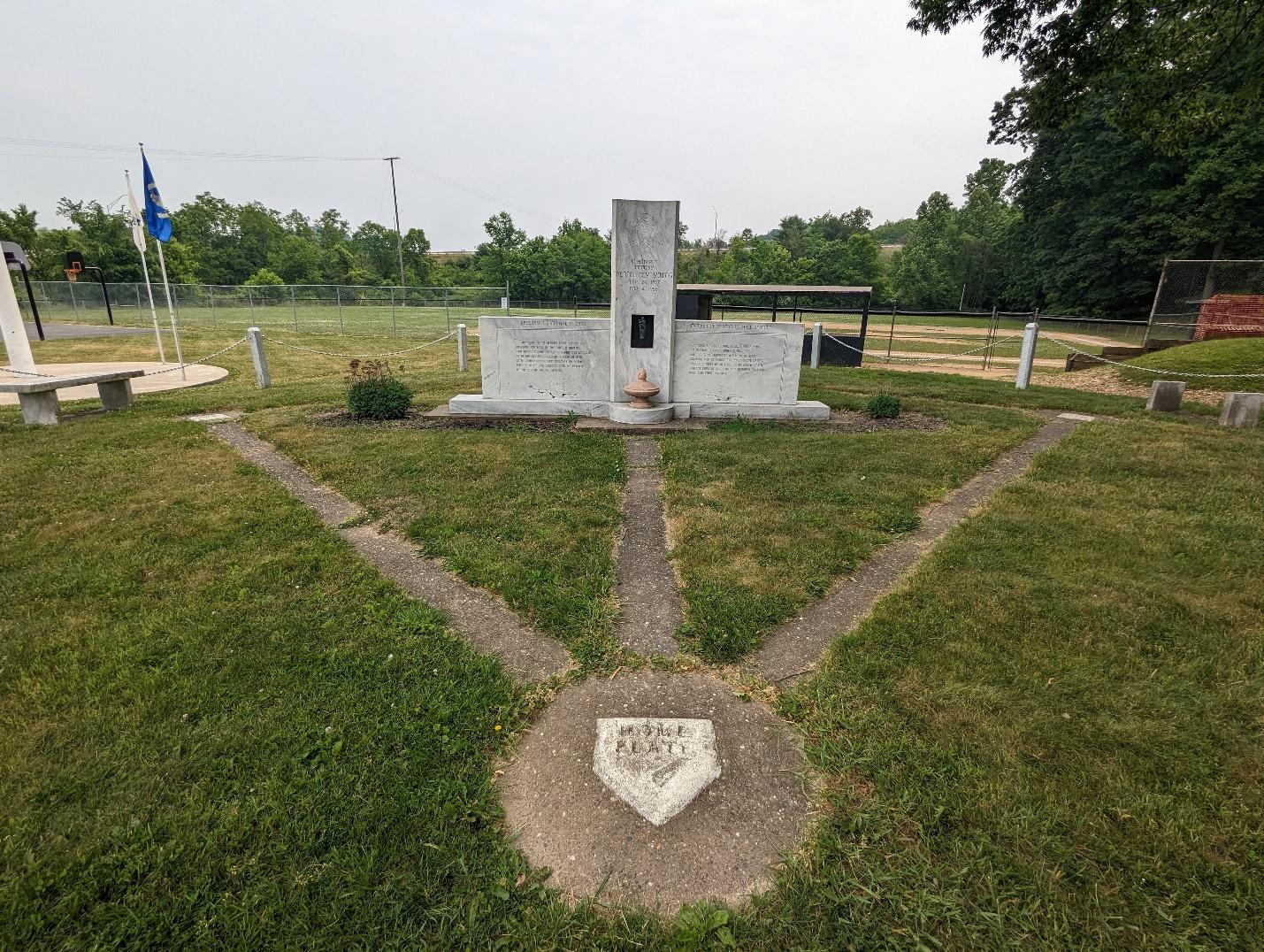
Nestled between a neighborhood and U.S. 36, the park contains a state historical marker as well as an elaborate Cy Young memorial next to a baseball field. There are also basketball courts, a beach volleyball pit, picnic tables and a community pool.
The elaborate memorial is centered on the pitcher’s mound of a small infield replica. Images of Young are engraved into the center pillar, with slabs on either side highlighting his career achievements. “BASEBALL’S IMMORTAL PITCHER” is chiseled on the left half. “In his youth on a nearby farm, ‘Cy’ played baseball for love of the game, a quality that remained with him throughout his long life. He began his Major League career in 1890 with Cleveland and continued as an active pitcher in the big leagues until he retired at the end of the 1911 season.”
The right-side header reads, “MEMBER OF BASEBALL’S HALL OF FAME,” and the text below echoes the wording on plaques in Cooperstown: “Pitching for Cleveland, St. Louis, and Boston, his record of 511 victories in 912 games will never be surpassed. His total of 3508 strikeouts in 22 years and 751 complete games including three no-hitters, one of which was a perfect game in which no man reached first base, may also stand forever.”
To be sure, his plaque is a bit simpler. And the gravestone and memorial have different career totals from what Young was known to have accomplished: 815 games (not 874 or 912), 2,803 strikeouts (not 3,508) and 749 complete games (not 751). The discrepancies and inaccuracies are understandable, though – the memorial was installed in 1964, five years before The Baseball Encyclopedia debuted and nine years before Nolan Ryan threw his first no-hitter. As we drive out of the parking lot, I notice a lawn sign promoting the 2023 Cy Young Days Festival, a three-day celebration of baseball and the hometown hero held the fourth weekend in June. We’re about two weeks too early, but it gives us a reason to come back.
The Landmarks Committee held its inaugural election in 2023 to select three new sites to be added to the SABR Baseball Map. SABR members nominated over 30 sites that were not otherwise eligible for the Map, such as:
Locations of former ballparks or other sites where there is no physical structure remaining or historical marker;
Graves of individuals who are not in the Baseball Hall of Fame;
A vote was conducted, and 70 ballots were counted. The top three vote-getters were:
West Field in Munhall, PA (now the site of Chatham University’s athletic fields, this was the location of the Homestead Grays home field in the 1930s and 1940s).
Shoeless Joe Jackson grave in Greenville, SC
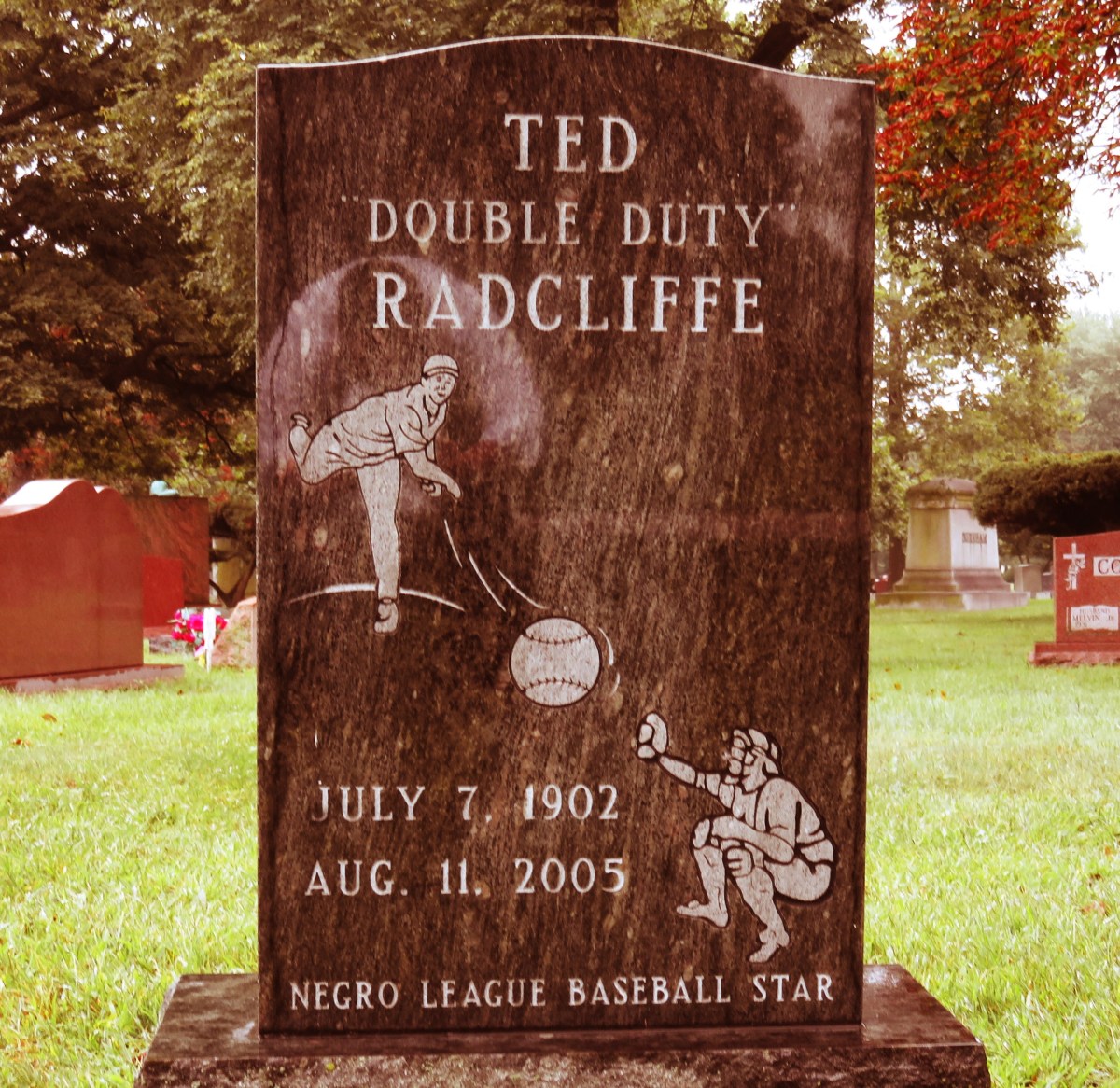
Ted “Double Duty” Radcliffe grave in Chicago, IL
The remainder of the top ten will be included on the 2024 ballot, which can be accessed here:
Harry Caray grave in Des Plaines, IL
Ray Chapman grave in Cleveland, OH
Former location of Giants Park in St. Louis, MO
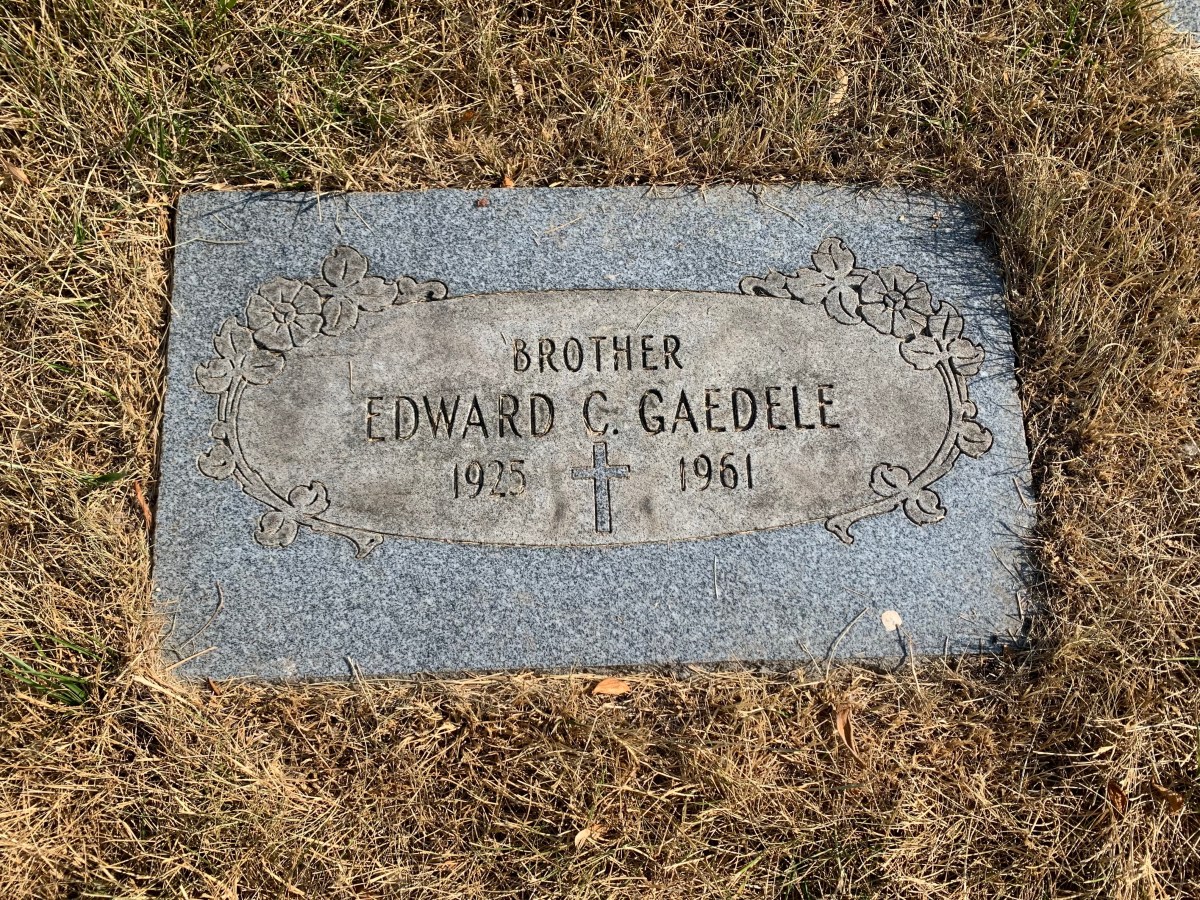
Eddie Gaedel grave in Evergreen Park, IL
Luke Easter grave in Cleveland, OH
Abner Doubleday grave in Arlington, VA
Former location of Fitton Field in Worcester, MA
Complete voting results are shown below:
Rank
Type
Site
Address
City
State
Points
1
Ballpark
West Field
1848 West St.
Munhall
PA
76
2
Grave
Shoeless Joe Jackson
1901 Wade Hampton Boulevard (Plot located in Section V)
Greenville
SC
70
3
Grave
Ted “Double Duty” Radcliffe
Oak Woods Cemetery
Chicago
IL
35
4
Grave
Harry Caray
All Saints Catholic Cemetery and Mausoleum
Des Plaines
IL
33
5
Grave
Ray Chapman
Lake View Cemetery 12316 Euclid Ave
Cleveland
OH
33
6
Ballpark
Giants Park
6000 N. Broadway, bounded by Broadway, Clarence, Ave, Carrie Ave, and Bulwer Ave
St. Louis
MO
32
7
Grave
Eddie Gaedel
Saint Mary Catholic Cemetery
Evergreen Park
IL
26
8
Grave
Luke Easter
Highland Park Cemetery 21400 Chagrin Blvd
Cleveland
OH
20
9
Grave
Abner Doubleday
321 Sherman Dr.
Arlington
VA
20
10
Ballpark
Fitton Field
1 College St.
Worcester
MA
16
Grave
Louis Sockalexis
Old Town Cemetery 59 Down St.
Old Town
ME
10
Grave
Chick Stahl
Lindenwood Cemetery 2324 Main Street
Fort Wayne
IN
7
Grave
Louis Heilbroner
Lindenwood Cemetery 2324 Main Street
Fort Wayne
IN
6
Marker
Pittsburg Public Library
308 N Walnut
Pittsburg
KS
5
Grave
A. Bartlett Giamatti
Grove Street Cemetery
New Haven
CT
4
Grave
Andy Leonard
New Calvary Cemetery 800 Harvard St.
Mattapan
MA
3
Grave
George Gore
Masonic Care Community Cemetery
Utica
NY
3
House
Smoky Joe Wood
90 Marvel Rd
Westville (New Haven)
CT
3
Grave
Duffy Lewis
Holy Cross Cemetery Gilchreast Rd
Londonderry
NH
2
Grave
Jim Delahanty
Calvary Cemetery 10000 Miles Ave
Cleveland
OH
2
Grave
Everett Scott
Elm Grove Cemetery 3500 IN -124
Bluffton
IN
1
Grave
Jim Konstanty
Maple Grove Cemetery
Worcester
NY
1
Grave
Americus McKim
Elmwood Cemetery, 4900 East Truman Road
Kansas City
MO
0
Grave
Frank Delahanty
Calvary Cemetery 10000 Miles Ave
Cleveland
OH
0
Grave
Joe Delahanty
Calvary Cemetery 10000 Miles Ave
Cleveland
OH
0
Grave
Jimmy McAleer
344 Oak Hill Ave.
Youngstown
OH
0
Grave
Ed McKean
Calvary Cemetery 10000 Miles Ave
Cleveland
OH
0
Grave
Bonesetter Reese
344 Oak Hill Ave.
Youngstown
OH
0
Grave
Patsy Tebeau
Calvary Cemetery 10000 Miles Ave
Cleveland
OH
0
Grave
Bill Wambsganss
Calvary Cemetery 10000 Miles Ave
Cleveland
OH
0
Grave
Jack Barry
Sacred Heart Cemetery 250 Gypsy Ln
Meriden
CT
0
Grave
Jumping Jack Jones
East Lawn Cemetery
East Haven
CT
0
Grocery Store
Jim Lemon
3811 Hamilton St
Hyattsville
MD
0
Ballpark
Don Gutteridge Sports Complex
702 Memorial Dr
Pittsburg
KS
0
*Ned Hanlon’s gravesite was inadvertently listed on the initial ballot despite it having already been included on the SABR Baseball Map due to his Hall of Fame status. Any votes for this site were not counted.
When it comes to baseball history, most fans will recognize the name “Eddie Gaedel.” He was the little person that Bill Veeck sent to the plate on August 19, 1952 for the St. Louis Browns. Paid $100 to entertain the crowd that day, Gaedel performed wonderfully- jumping out of a birthday cake, drawing a walk in his only career plate appearance, and tipping his cap to the crowd as he was replaced at first base with a pinch runner. On the surface, many may think this is a fun baseball story.
While Gaedel seemed in good spirits during the game, his life was a hard one. Teased and bullied his whole life, he turned to alcohol as a coping mechanism. Insecure about his height, he was quick to anger and was known to get into fights. On June 18, 1961, Gaedel went to a bowling alley near his home and got into a drunken altercation with an unknown person. Between leaving the bowling alley and arriving home, he suffered a severe beating. His mother found him lying dead in bed the next day. An autopsy showed that he had suffered a heart attack, likely a direct result of the beating. Gaedel was only 36 years old.
It is believed that Gaedel may have been robbed and beaten before arriving home, and then suffered a heart attack that ultimately killed him. Unfortunately, because of a lack of evidence, the case remains unsolved to this day.
Bob Cain, the pitcher who walked Gaedel on four straight balls, was the only person linked to Major League Baseball that attended his funeral.
Most people who have even a brief stint playing Major League Baseball find some acclaim and admiration from fans during their lifetime. Eddie Gaedel did not. Adding his gravesite (“Edward C. Gaedele” on the marker) to the SABR Baseball Map would give a chance for baseball fans to pay their respects to a person who did not receive much respect during his lifetime.
Picture it: It’s the fall of 2020 and the COVID-19 pandemic has affected nearly all aspects of day-to-day life. Groceries are delivered weekly and from 8:00 to 5:00 every day, my dining room table is converted into my office. I actually enjoy working from home and I am thrilled with the number of virtual conferences, presentations, and book clubs I’m able to attend. In short, lockdown wasn’t terrible for some of us with more introverted personalities. Nevertheless, some measure of boredom set in and the need to get out of the house and do something fun safely, while keeping a proper distance from others, began to grow. Exploring Pittsburgh’s cemeteries was, obviously to me, the answer.
Pittsburgh offers no shortage of spaces in which to indulge my interests, be they historical, sports-related, or connected to my love of all things pop culture. Within the following two years, I would find Honus Wagner’s grave at Jefferson Memorial Cemetery in Pleasant Hills, where, by the way, there is an abundance of mosquitoes in the summer. You’ve been warned. Frank Gorshin, who played the Riddler in the 1960s Batman television series (I am a huge fan) is buried in Calvary Catholic Cemetery, as it turns out, right next to my pre-work-from-home office. I was thrilled when Amazon Prime filmed a bulk of the new A League of Their Own series around Pittsburgh and tracking down those locations kept me busy several weeks in a row. Before all of that, however, I knew my maiden pandemic field trip would be in search of the final resting place of Cum Posey.
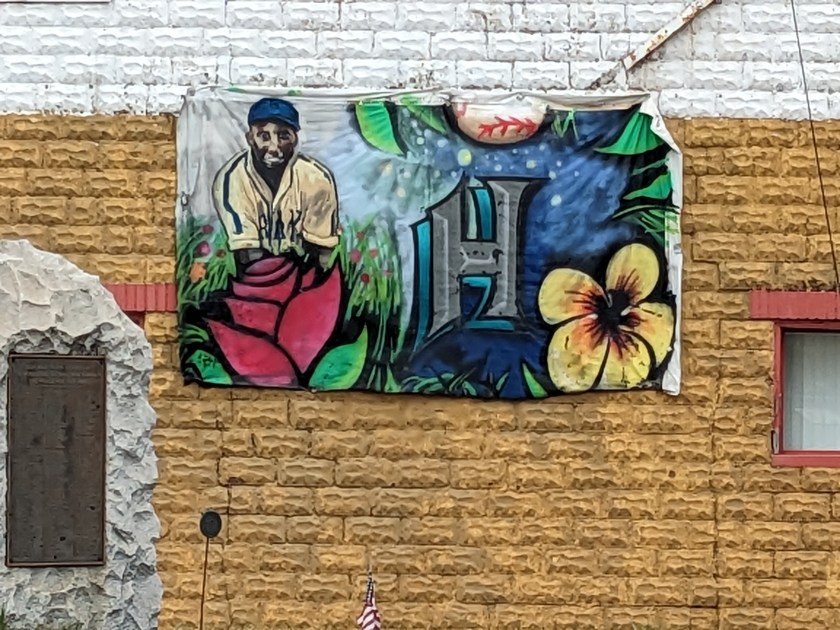
Homestead Cemetery in Munhall is a 10-minute drive from my house. Traveling south from the Squirrel Hill and Greenfield neighborhoods provides the baseball tourist plenty to see in terms of Negro Leagues history in a very short area along the way. First, I crossed the Monongahela River via the formerly named High Level Bridge, built in 1936. The structure was renamed the Homestead Grays Bridge in 2002 and in warmer months, features banners of former Grays and Crawfords players on light fixtures along both sides. At the end of the bridge, there are a few markers to see and it’s worth parking nearby and walking up to them. First, there is the bridge marker itself, complete with the Homestead Grays logo. Within a few feet is a Pennsylvania state historical marker providing a brief history of the team. Across the street, a painted banner hangs from the side of the building depicting Josh Gibson’s likeness and again, the Homestead Grays’ logo.
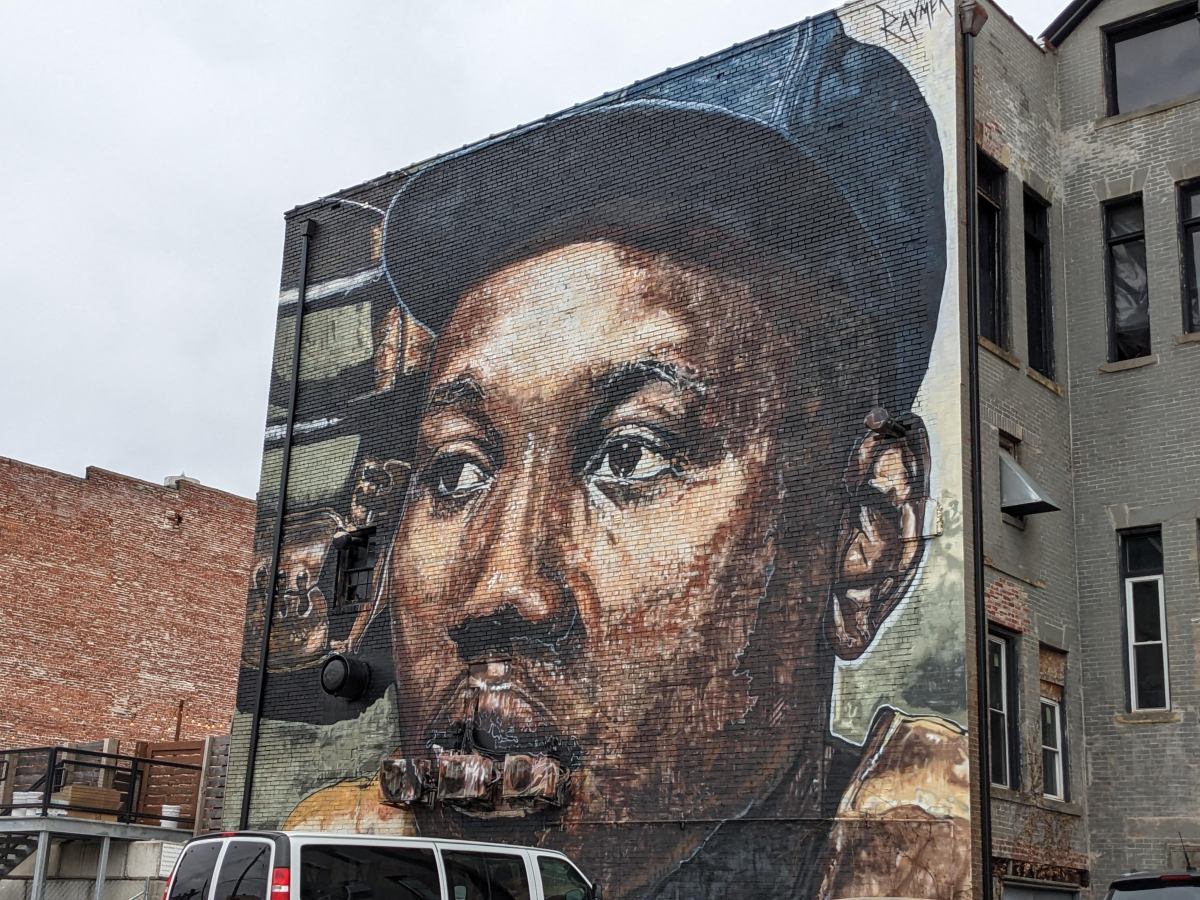
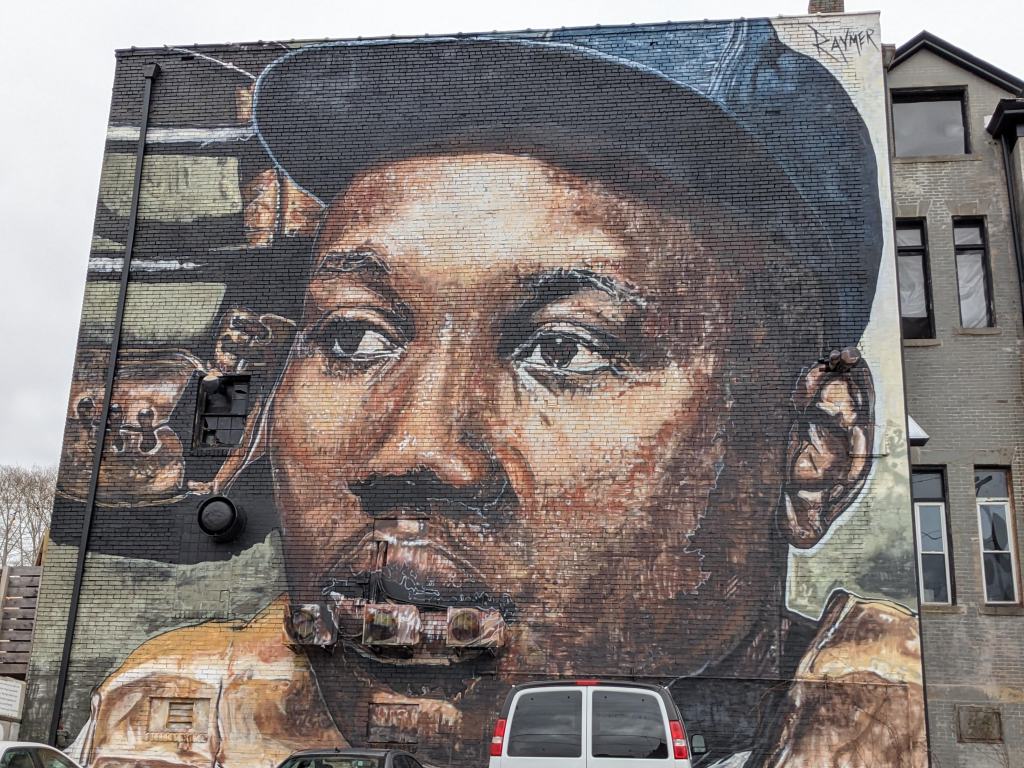
A block to the east, located in Hazel Way (an alley between 8th and 9th Avenues), lies the new Josh Gibson mural created by artist Jeremy Raymer and unveiled in 2021. The 2,000 square foot painting covers the entire back of a building, currently occupied by the Voodoo Brewing Company. The project was approved by Pittsburgh’s Josh Gibson Foundation, an organization that provides academic and athletic opportunities for young people. The art is outstanding and just one of many of Raymer’s murals found throughout Pittsburgh, which include personal favorites of horror icon Tom Savini in Lawrenceville and Roberto Clemente on the city’s north side. As a bonus, it’s now possible to catch a glimpse of the mural while traveling south on the Homestead Grays bridge. All of these Homestead and Munhall locations are technically within walking distance of one another, but keep in mind Pittsburgh’s extremely hilly landscape.
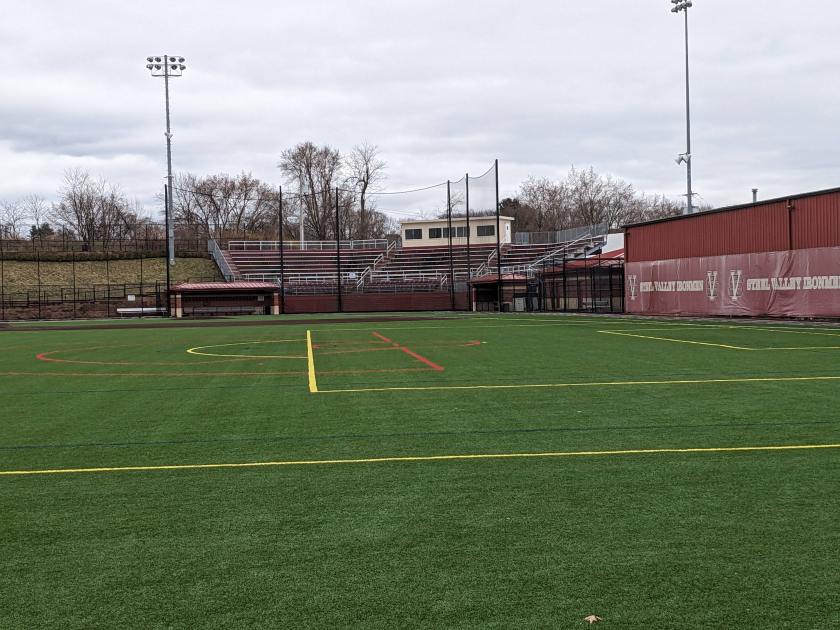
Further up the hill toward the cemetery lies another piece of Homestead Grays history. Just behind the Munhall municipal buildings and police station sits West Field, long ago a playing field and practice area for the Homestead Grays. Built in the late 1930s, the Grays used this facility, among others, for exhibition games, spring training, and official games when Forbes Field was otherwise unavailable.
Though completely renovated several years ago, the field is still worth stopping for on the way through Munhall. The playing field is completely turf now with the capability of hosting baseball, softball, football, and soccer games. Currently home to the Chatham University baseball and softball programs as well as the Steel Valley High School baseball team, the baseball field’s grandstand occupies the same space as the original West Field stadium. While the field offers little for the baseball history fan, it remains an interesting location to take in, knowing who played here decades ago.
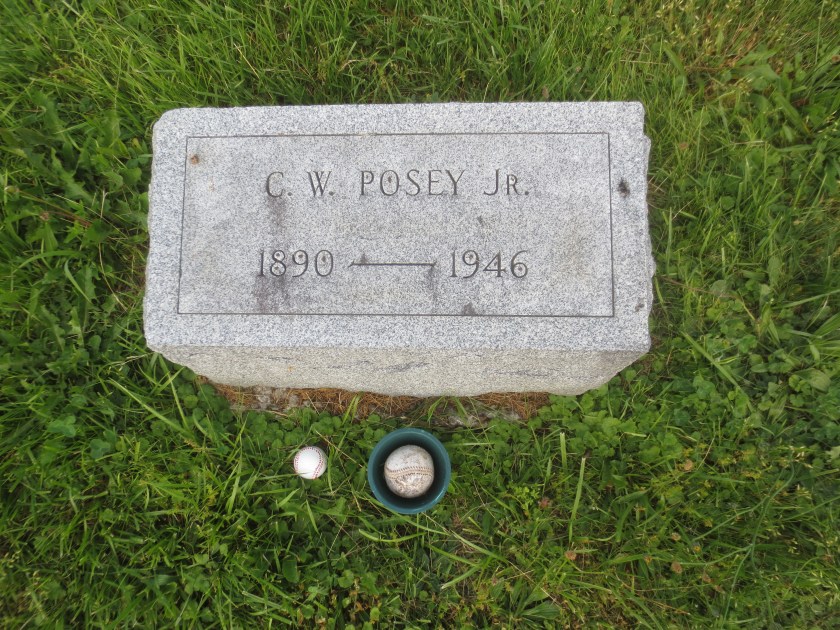
Another three blocks up the hill, and finally, Homestead Cemetery sits opposite St. John Cemetery across Munhall’s Main Street. Weather permitting, the cemetery is open daily from sunrise to sunset. Upon entering the cemetery, the Posey family plot is located in Section D, which is situated between the two driveways on the left-hand side. Cumberland (“Cum”) Willis Posey Jr. was born in 1890 and is regarded as one of the finest all-around athletes of his time, certainly in western Pennsylvania.
A standout in baseball and basketball, Posey began playing with the Homestead Grays in 1911, was managing the team five years later, and by the 1920s became an owner for the next 25 seasons. Buried next to him is Ethel T. Posey, his wife of over 30 years. Thanks to the SABR Women in Baseball Committee, I knew that Ethel inherited ownership of the team after his death in 1946, making her a significant figure in Homestead Grays and baseball history. As with Josh Gibson’s grave across town in Allegheny Cemetery, there are sure to be items left in tribute by visitors—usually baseballs, trading cards, or photos. Cum Posey was elected to the National Baseball Hall of Fame in 2006 and the Naismith Memorial Basketball Hall of Fame a decade later.
Pittsburgh is a fun city that is full of monuments, exhibits, and memorials to its rich sports history and traditions. The SABR Landmarks Map is an excellent resource for finding these locations and more Negro League memorials across the country. For a huge dose of history packed into a small geographic location, look no further than Homestead and Munhall, Pennsylvania.
The Greater Cincinnati region has been home to many outstanding baseball players – men and women – for decades. Any baseball fan’s visit to the area is likely to include stops at the Crosley Field marker, Great American Ball Park, and the Cincinnati Reds Hall of Fame and Museum. Across the Ohio River, however, fans will find sites related to an all-star athlete whose story may not be as familiar. Patricia Ann “Pat” Scott was a pitcher in the All-American Girls Professional Baseball League (AAGPBL) and called parts of Kenton and Boone Counties home for most of her life. Scott’s long and varied career resulted in many unique and noteworthy experiences and yet, her short time as a baseball player is commemorated at two locations, a field named in her honor and her final resting place, detailing the history of Northern Kentucky’s “Mound Ace” of girls’ baseball.
For those unfamiliar with Pat Scott’s participation and contributions to baseball, she was born in 1929 and grew up near Burlington, KY on her family’s farm that featured a baseball diamond. Barnstorming and semi-pro teams would often use the field and young Pat took advantage, working out with the teams and developing into a fine athlete. Becoming a standout softball player in her teenage years first got her noticed by AAGPBL scouts and she was recruited to play for the Springfield (Illinois) Sallies in 1948. Just weeks into her first season, Scott left the league to care for her ill mother and would eventually decide to put any baseball career on hold in favor of attending college, traveling, and working.
Three years later, when the league was in short supply of solid overhand pitchers, Scott was again contacted by the league and offered a roster spot with the Fort Wayne (Indiana) Daisies. For the next three seasons, she would shine with the Daisies, winning an average of 16 games and leading Fort Wayne to the league playoffs each year. Scott’s life after baseball was just as remarkable, earning a degree in zoology, working as a medical technologist for years, training horses, becoming an accomplished artist in painting and wood carving, and competing in the Senior Games.
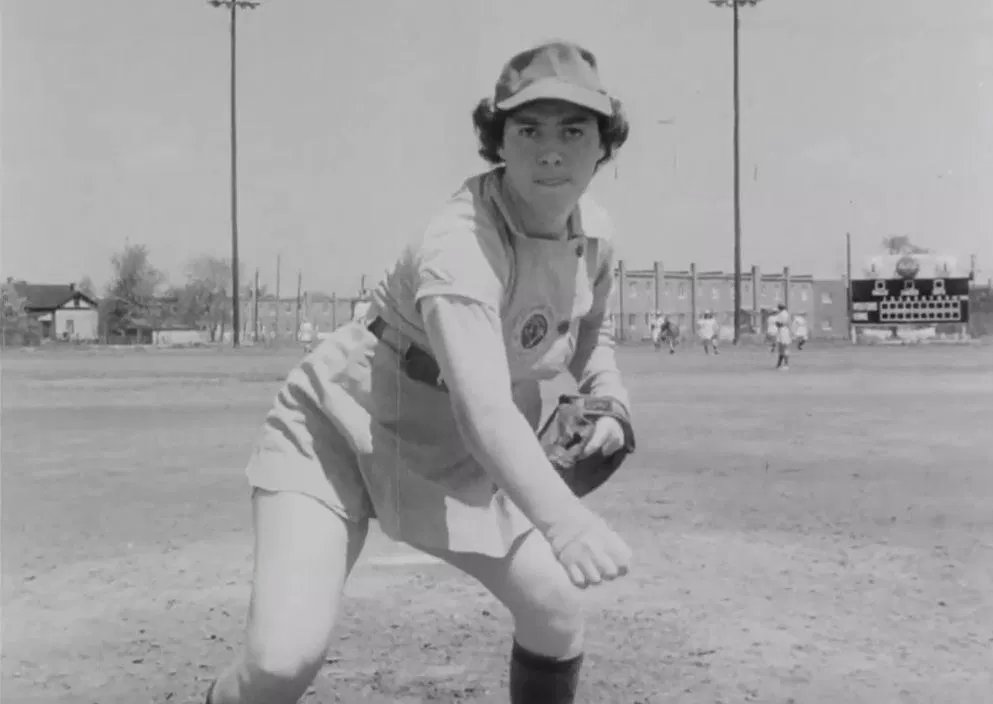
Located 25-30 minutes south of Cincinnati proper, Walton Community Park is easily found just off of I-75. The park features ample green space, a playground, basketball and tennis courts, a soccer field, and next to the parking lot, the ball field. Approaching the parking lot from the center drive, visitors are met with a large sign that reads “Pat Scott Field” – letting them know they’re in the right place. The sign has changed over the years with the current version including a photo of Scott, taken from newsreel footage from the early 1950s when the Daisies spent spring training in Alexandria, Virginia. This particular newsreel is now in the public domain and can be viewed on the National Archives and Records Administration (NARA) website or by searching any number of video hosting sites such as YouTube.
The opposite side of the sign is an enlarged replica of Scott’s 1995 Larry Fritsch Cards baseball card and provides an educational bonus for visitors. Listed are both pitching and batting statistics for Scott’s three complete seasons in the league as well as a brief biographical text that includes her pitching the winning game against Rockford that gave Fort Wayne its first pennant in 1952. The field, named for Scott in 2002, is a small, standard field, but well maintained. Fencing surrounds an irregularly configured outfield and a dirt infield. The field is visible in a 2008 episode of Kentucky Life, a series produced by Kentucky Educational Television exploring culture and community throughout the Bluegrass State. During her segment, Scott spends the afternoon with host Dave Shuffett playing catch on the field that bears her name.
Approximately seven miles southeast of Walton lies Saint Patrick’s Cemetery, the final resting place of Pat Scott. The small cemetery is accessible from Verona-Mudlick Road, halfway between the small community of Verona and I-71. The rural location lends itself to a quiet and peaceful atmosphere – surrounded by green fields in warmer months. The small cemetery is bisected by a driveway and Pat Scott’s marker can be found near the rear right (west) corner. Scott’s headstone is quickly recognizable. A black marble stone bearing her name at the top and “Beloved Sister and Aunt” at the bottom. The center focus of the marker consists of an elaborate and thoughtful engraving, highlighting Scott’s career as a professional baseball player. The view is that of sitting behind home plate, a baseball speeding toward you, and Scott further back in a pitcher’s follow through stance. The image is based on a photo of Scott in her Fort Wayne Daisies uniform. The AAGPBL logo is featured to the right of
Pat Scott’s grave site marker is a fitting memorial, but also offers visitors more about the significance of her baseball career. First, there is the educational aspect of the imagery featured on the marker. Imagine a person seeing the marker who may have no knowledge of women’s professional baseball in the 1950s. The potential for educational exploration exists when presented with the image of a skirted ballplayer pitching overhand as well as the unique AAGPBL logo. Second, after such an accomplished life full of athletic, scientific, and artistic achievements, it is her time as a professional baseball player that is forever featured on Scott’s marker.
Memorial efforts and recognition for Pat Scott’s athletic career continue and her name can be found in the St. Henry District High School Hall of Fame, the Northern Kentucky Sports Hall of Fame, and listed with other All-Americans in the National Baseball Hall of Fame and Museum. Pat Scott Field at Walton Community Park and Saint Patrick’s Cemetery both truly honor her individual athletic accomplishments and provide visitors with an opportunity to celebrate and learn more about her unique baseball career.
There is a famous quote attributed to Rogers Hornsby, “People ask me what I do in winter when there’s no baseball. I’ll tell you what I do. I stare out the window and wait for spring.” As a Chicagoan, this sentiment seems a bit disingenuous considering Hornsby lived in Texas. Nonetheless, I really hate winter, too. Snow is a hassle and messy and annoying.
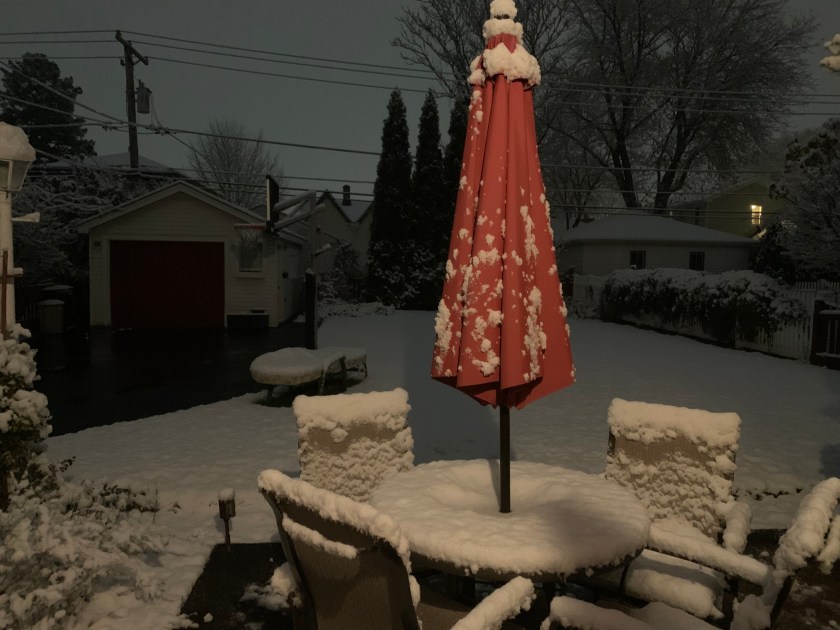
Looks like someone waited too long to stow the patio furniture
It was somewhat quaint this morning to wake up to a surprise snowstorm in the smartphone age, (especially in mid-November before someone had put the patio furniture away for the winter). Regardless, snow has at least one redeeming quality—it often creates magical, though fleeting, moments of serenity.
Billy Sunday – Forest Home Cemetery, Forest Park, IL
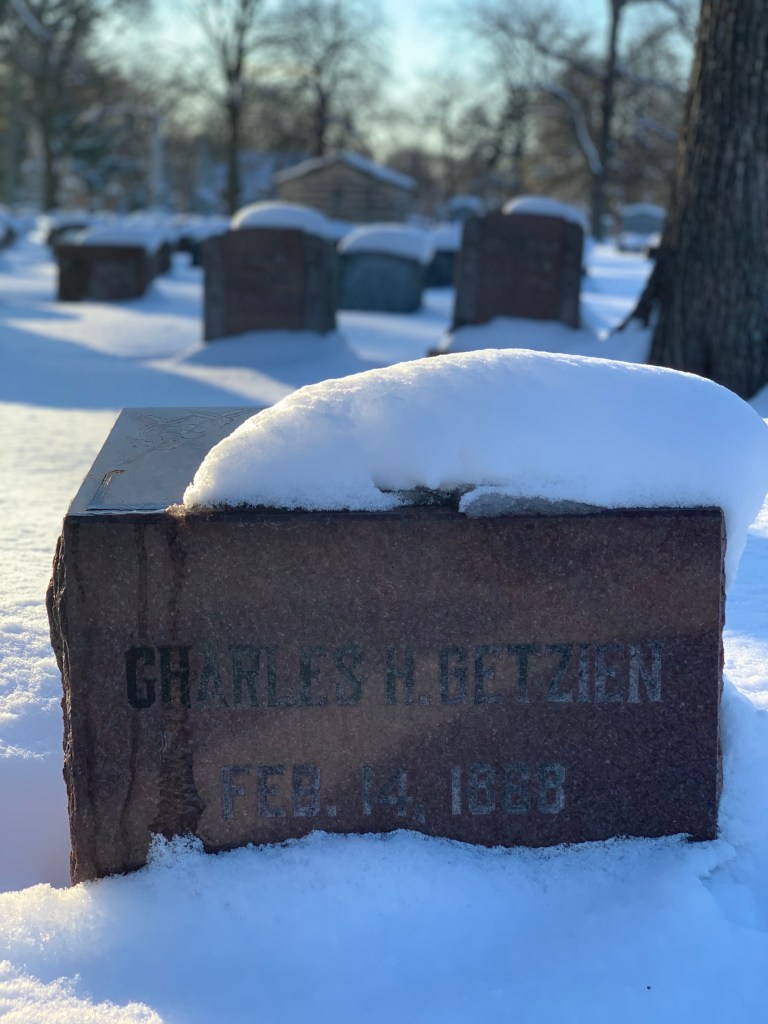
Cemeteries are typically tranquil places, but they take on a whole new level of quiet peacefulness under a fresh blanket of snow.
Pretzels Getzien – Concordia Cemetery, Forest Park, IL
This winter, don’t let a little snow prevent you from paying your respects at the graves of departed ball players.
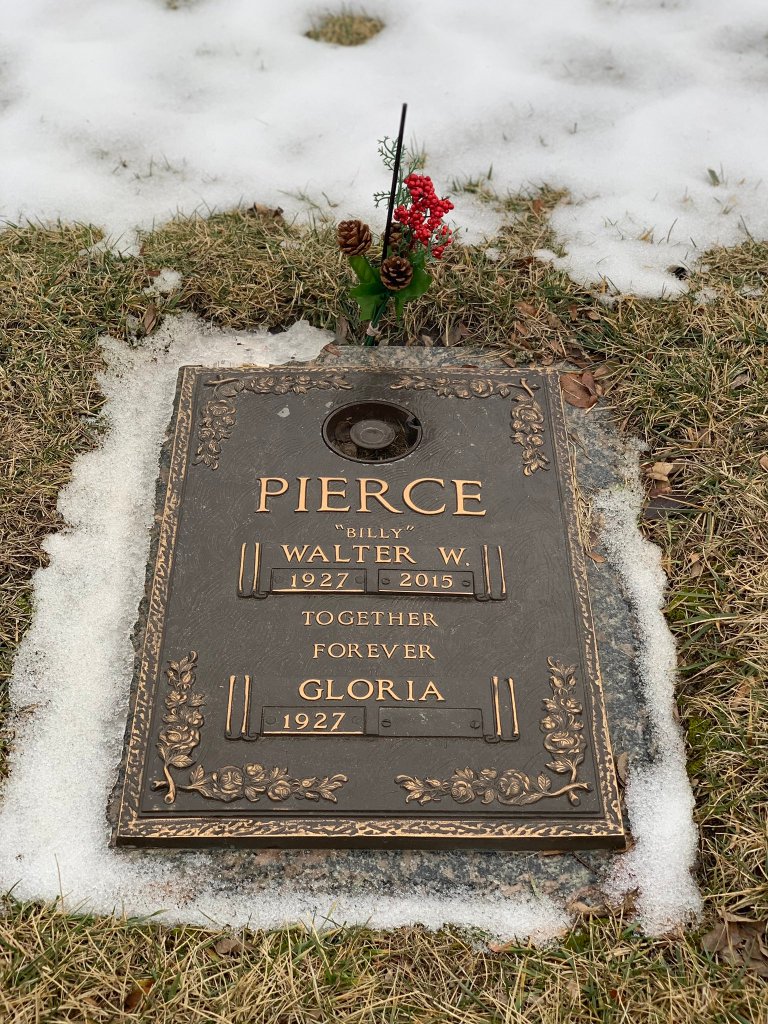
Billy Pierce – Chapel Hill Gardens South Cemetery, Oak Lawn, IL
We would love to see hear your stories.
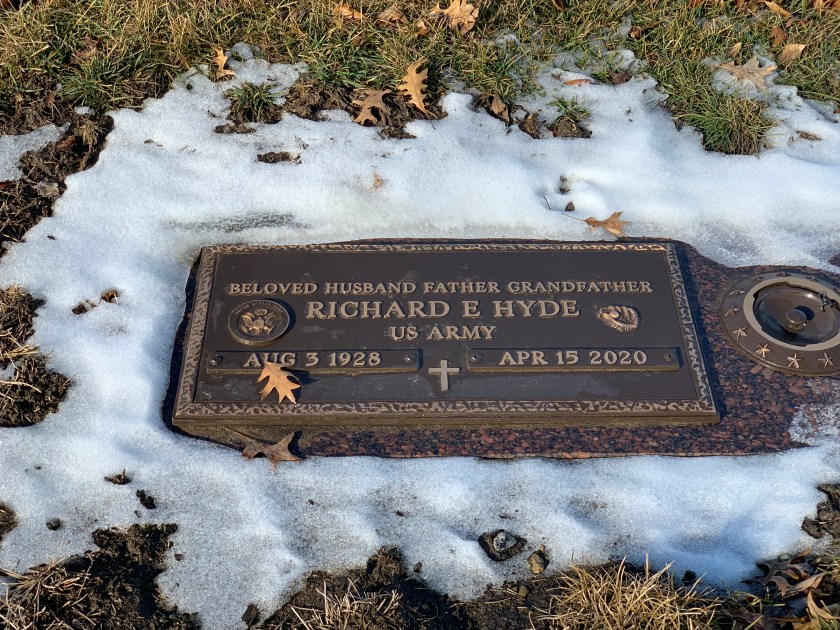
Dick Hyde – Grandview Memorial Gardens, Champaign, IL
Ichiro Suzuki famously slandered Cleveland when having to return there to make up a snowed-out game, “To tell the truth, I’m not excited to go to Cleveland, but we have to. If I ever saw myself saying I’m excited going to Cleveland, I’d punch myself in the face, because I’m lying.”
Frankly, I was ambivalent about the city having visited twice before my youngest put a school there at the top of his college list. In the intervening trips for campus tours and moving him in and out of dorms, there has been some opportunity to explore the city, dine at some amazing restaurants, and better formulate my thoughts on what Cleveland has to offer.
“To tell the truth, I’m not excited to go to Cleveland, but we have to. If I ever saw myself saying I’m excited going to Cleveland, I’d punch myself in the face, because I’m lying.”
Ichiro Suzuki
Moreover, there is an awful lot of baseball history in the Cleveland area to experience. Most of my landmark hunting to date has been in the early morning hours while everyone else sleeps in, often by way of a roundabout bagel run. Spanning several trips I have lingered at League Park, admired the statues of Elmer Flick and Rocky Colavito erected in town parks, paid my respects at the (purported) grave of Ed Delahanty, and attended games played by the Guardians and Lake Erie Crushers of the Frontier League.
Our most recent visit was for parent’s weekend, a delightful departure from past visits free of the “is this the right place for him?” quandary or the stress of packing and moving and making sure we brought enough ramen. We enjoyed an afternoon of hiking at Cuyahoga Valley National Park, had an amazing dinner downtown, and toured the Cleveland Museum of Art (CMA) after a late breakfast the following morning.
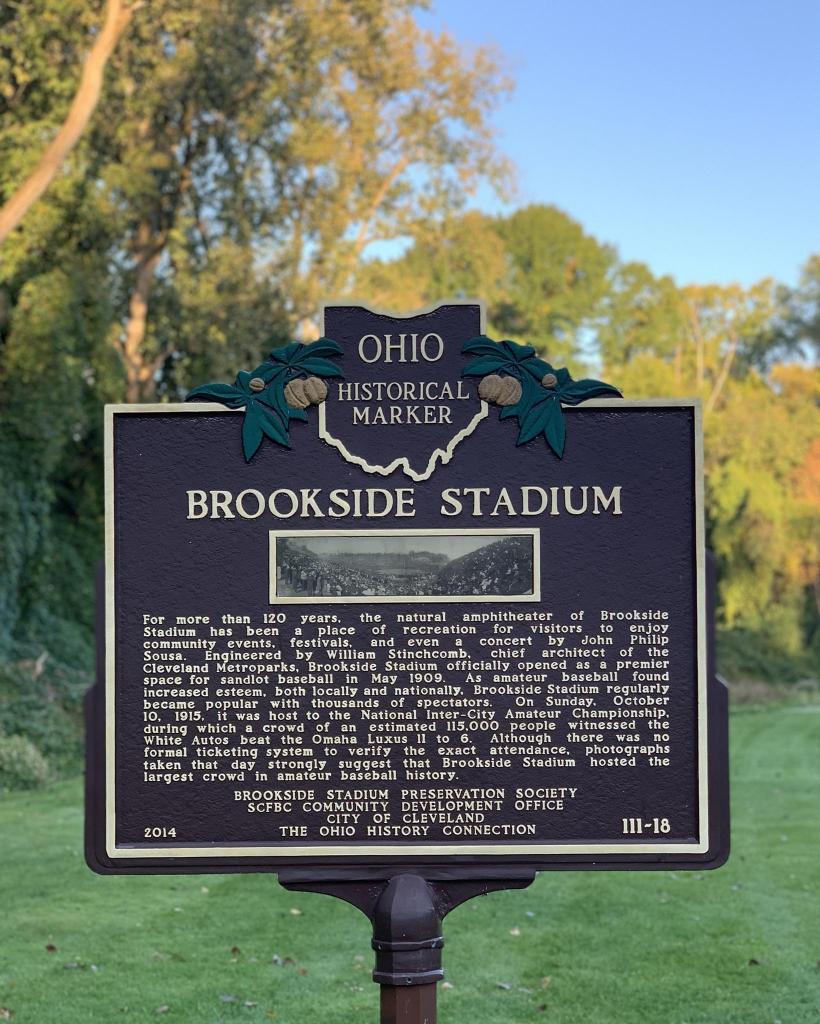
But of course I had some time to see a few baseball things. I headed first to the marker at Brookside Stadium and found the park quite easily with turn-by-turn directions from the SABR Baseball Map on my phone. It was a bit of a walk down a paved path the marker, but it was worth it.
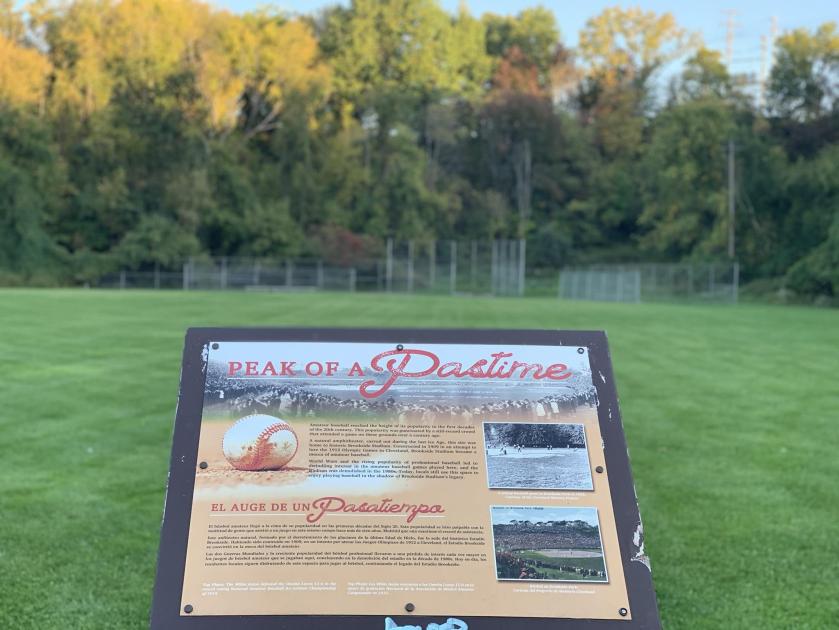
Built in a natural amphitheater, a baseball diamond still occupies the former site of Brookside Stadium, which was razed in the 1980s. According to the marker, Brookside hosted the largest crowd ever recorded for an amateur baseball game, some 115,000 people in 1915. What a contrast to the park I found, serene and lovely on a crisp fall morning.
Part of exploring baseball history is finding new landmarks, so I was thrilled to look over and see another marker detailing the history of Brookside Stadium that we did not yet have on our list. I learned that the ballpark was built in 1909 in an effort to have the 1912 Olympics awarded to Cleveland.
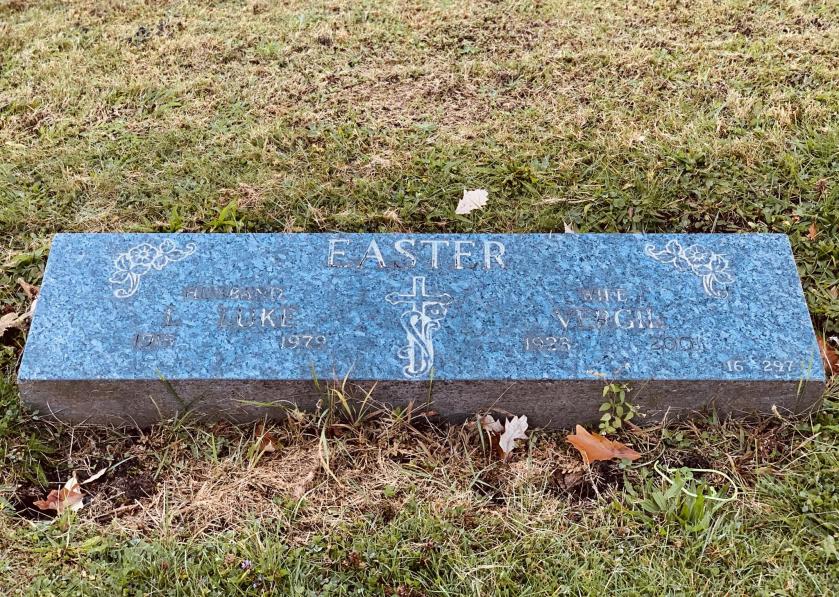
I then headed over to Highland Park Cemetery to pay my respects at the grave of Luke Easter, a fascinating player who seemingly came out of nowhere and met a tragic end. [Do not miss the chapter on Easter in Outsider Baseball by Scott Simkus.]
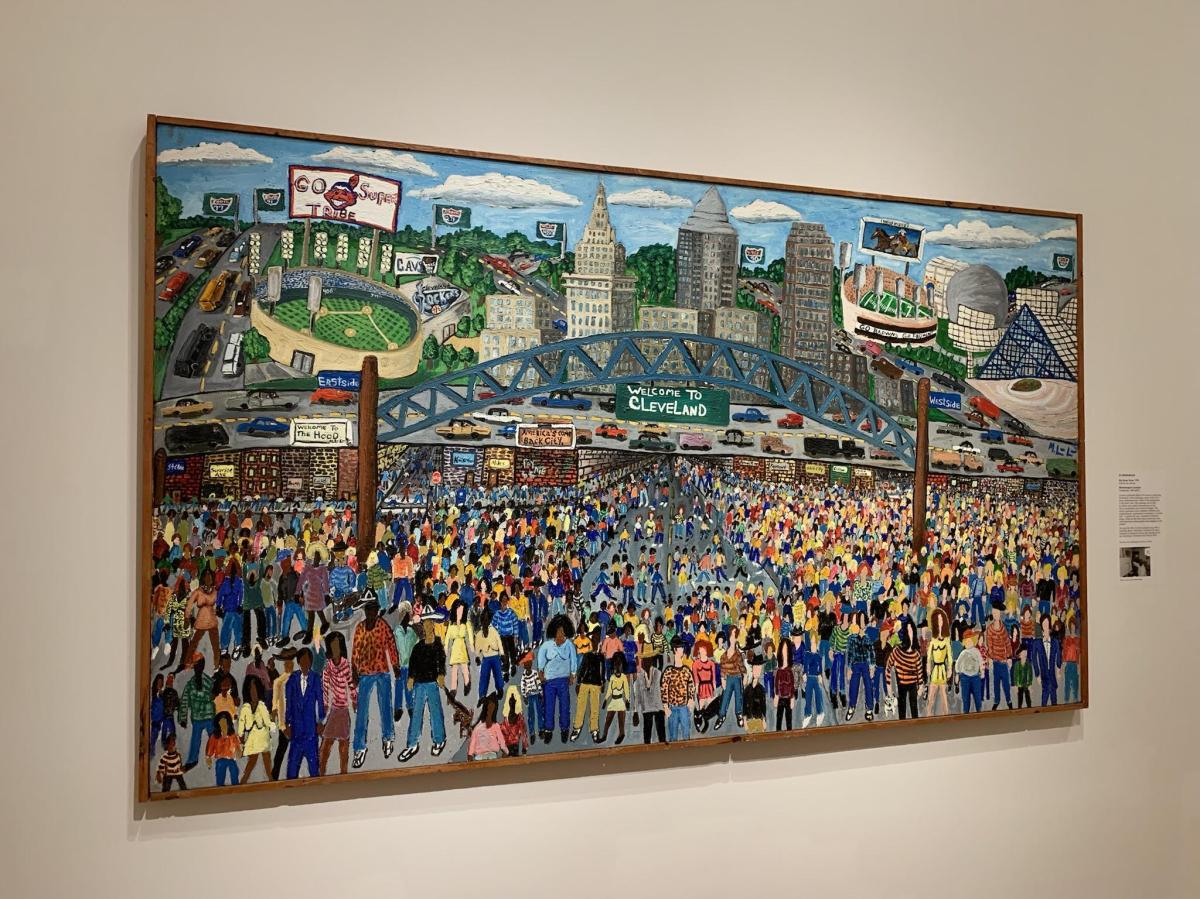
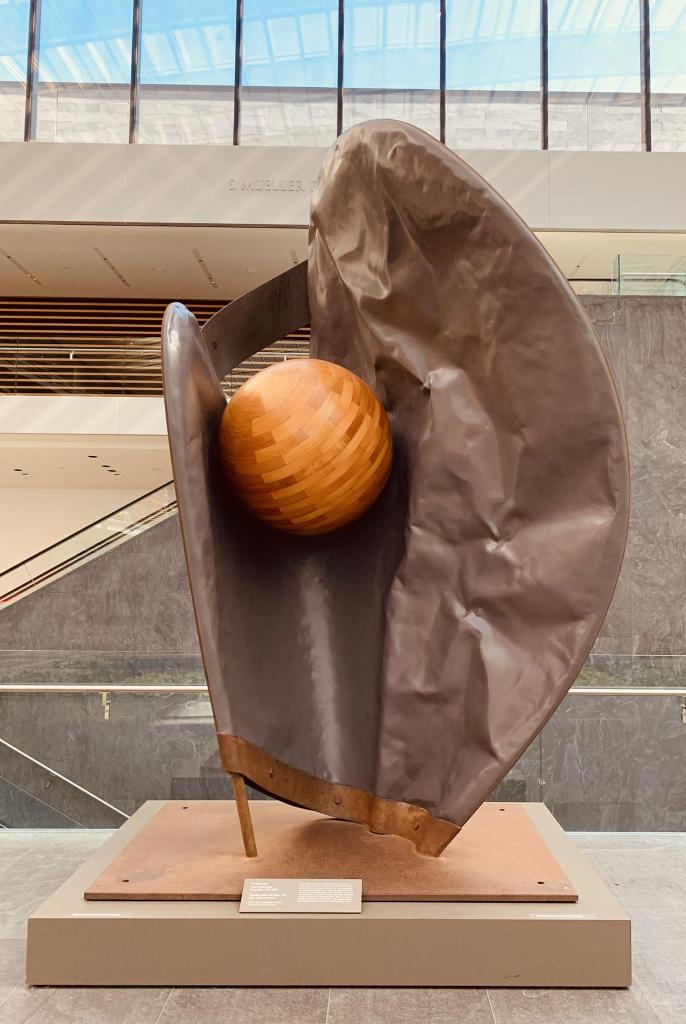
And perhaps most surprisingly, I happened upon some baseball-related art at the CMA. The oversized Standing Mitt and Ball by Claes Oldenburg was a fitting companion piece to his Batcolumn erected in Chicago, just blocks from my office.
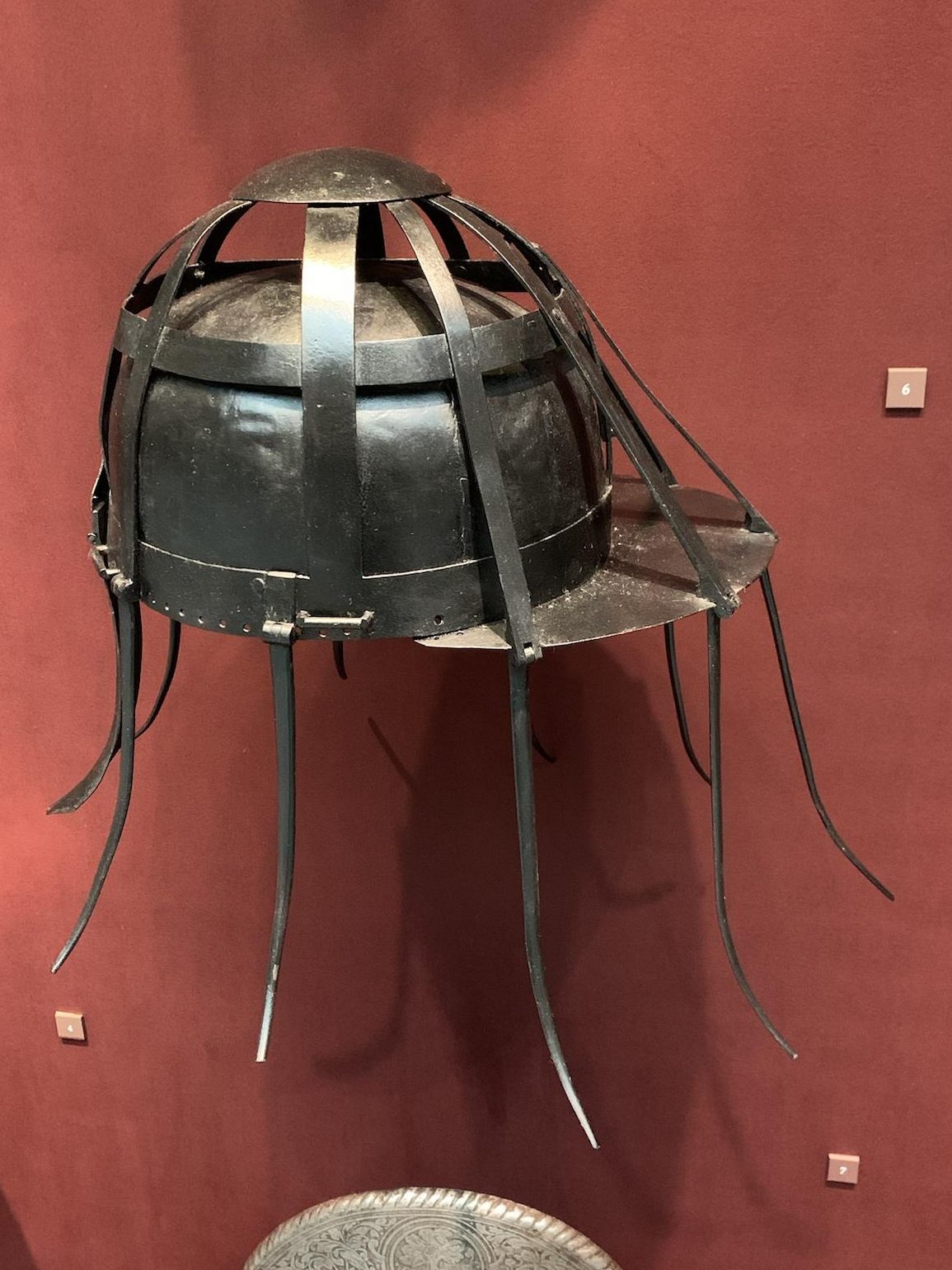
I also happened upon this centuries-old headgear displayed in the armor gallery, which most certainly qualifies as the earliest known baseball helmet, right?
There are several more trips to Cleveland in my future and I cannot wait to continue exploring the area. That I might get to see some baseball-related sites along the way is just a bonus.
Ichiro was wrong.
Sources:
Larry Stone, “Ichiro unlike any player we’ve seen or will see again,” Longview (Washington) Daily News, March 23, 2019: B7.
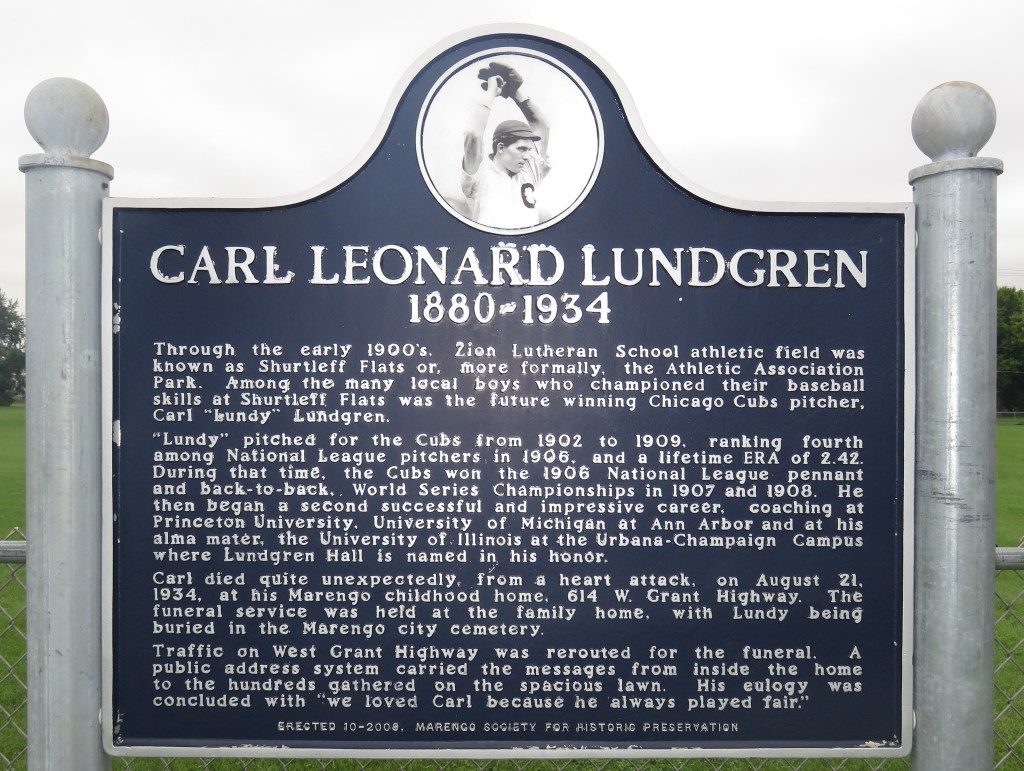
Several years ago I was in Rockford, Illinois for work so (of course) I planned a slight detour on the way home to check out the Carl Lundgren historical marker in Marengo. After a bit of detective work (the SABR Baseball Map did not exist yet!) I was able to locate the marker, placed on the west side of North East Street.
Carl Lundgren was a terrific twirler for the Chicago Cubs from 1902-09. During the three consecutive seasons in which the Cubs appeared in the World Series (1906-08), Lundgren posted a regular season record of 41-22, with an ERA of 2.33 and 13 shutouts. Yet he was the odd man out and tossed not a single World Series pitch in any of those three years.
After a pair of ineffective outings for Chicago in 1909, Lundgren bounced around the minors for a few seasons before retiring from the game as a player. He went on to an amazing career as manager for Princeton, the University of Michigan and (alma mater) University of Illinois baseball teams, piloting his Wolverine and Illini squads to eight total Big Ten championships.
As I took a moment to read the inscription and snap a couple of photographs on an overcast morning, a man approached on a bicycle and let me know the sign had been purposely placed near the field where Lundgren played ball as a child. Wonderfully, a youth-sized diamond still existed at the site.
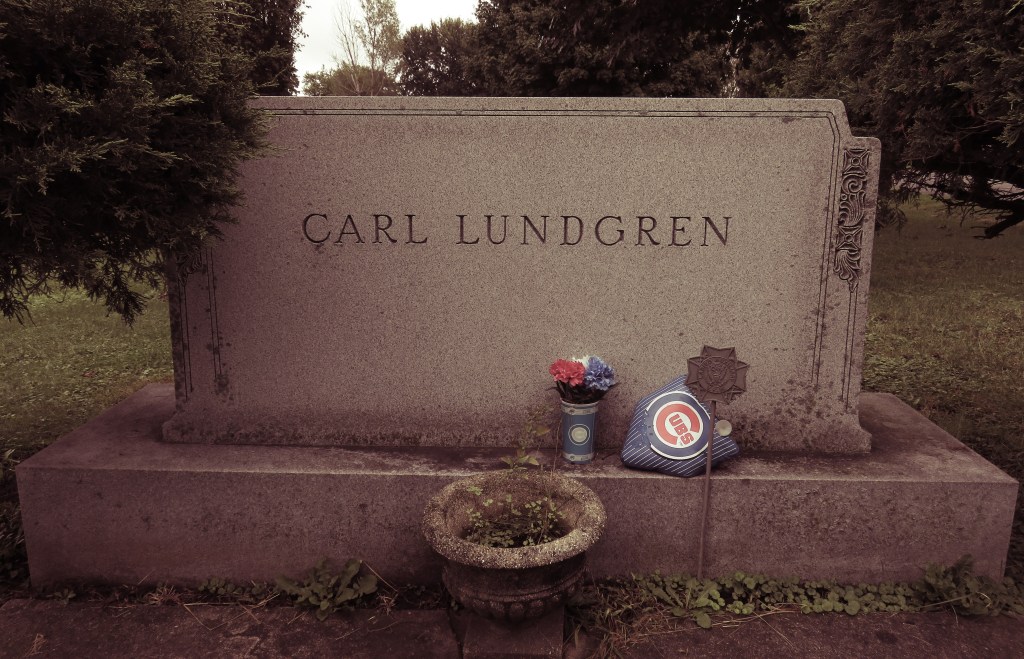
Lundgren died suddenly of a heart attack at his childhood home in 1934 and, as the gentleman on the bike advised, was buried right across the street from where his baseball career began. The man rode off after directing me to Lundgren’s grave, certainly unaware he had just sent me down a path that would lead to innumerable future ballplayer gravesite visits. Somewhat reluctantly at the time, however, I drove slowly through the cemetery and found Lundgren’s marker, lovingly adorned with Cubs mementos.
Unsure what to do, I silently paid my respects and snapped a quick photo. As I drove away, I was struck by the weighty realization that although Lundgren threw his final pitch for the Cubs in 1909, he was not forgotten. Although baseball is not the most important thing in the world, these individuals were the most important people in the world to the people who loved them.












 The Hardball Voyager