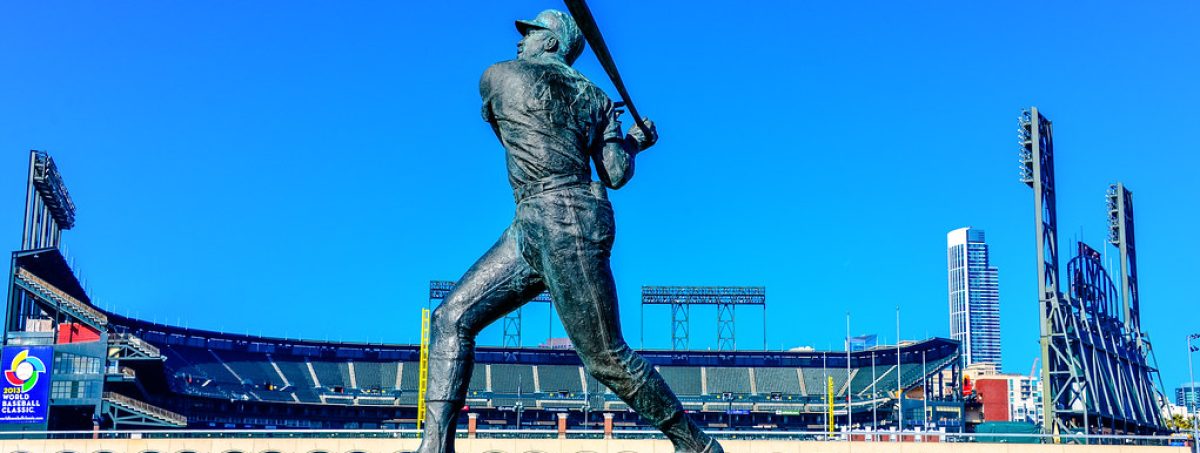
My first time in the Baltimore area will always be a once in a lifetime experience. David Stinson, Vice President of the Baltimore Chapter, invited me to the area to show me historical sites.
As the person who spearheaded the effort to get the first SABR historical marker in the state of South Dakota paying homage to the old Baltimore Orioles minor league team the Aberdeen Pheasants, there was a lot to see.
The first area that I had to see was the hometown in which the Ripkens lived – Aberdeen, Maryland. The first location we visited was the home of the Ripkens at 410 Clover Street in Aberdeen. The next area that we visited was the gravesite of Cal Ripken Sr., which was located at Baker Cemetery 3641 Churchville Road in Aberdeen.
Coincidentally, the same day that I was in Aberdeen (Friday, August 22) the Orioles minor league team the Aberdeen Ironbirds were in town, so we went to a game. Peter Coolbaugh, Balitmore’s Chapter President, joined David and me for the game. The day was full of fun and excitement, but there was even more to follow the next day.
The next day we went to the former site of Memorial Stadium. Some notable Aberdeen Pheasants who either managed or played at Memorial Stadium after being called to “The Show” include Cal Ripken Sr., Earl Weaver, and Jim Palmer.
It is truly remarkable what the Cal Ripken Sr. Foundation did to the area so future kids can still play on that field. After that we had to go to, “Just a long fly ball from Oriole Park at Camden Yards” aka the Babe Ruth Museum. It was truly an awe-inspiring experience to see all of the old items that the museum has.
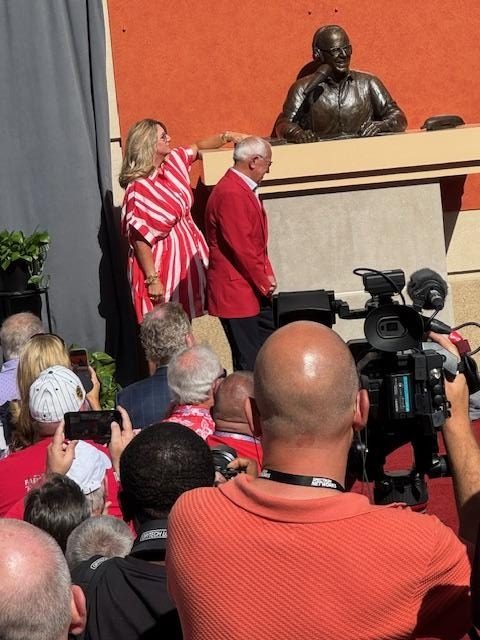
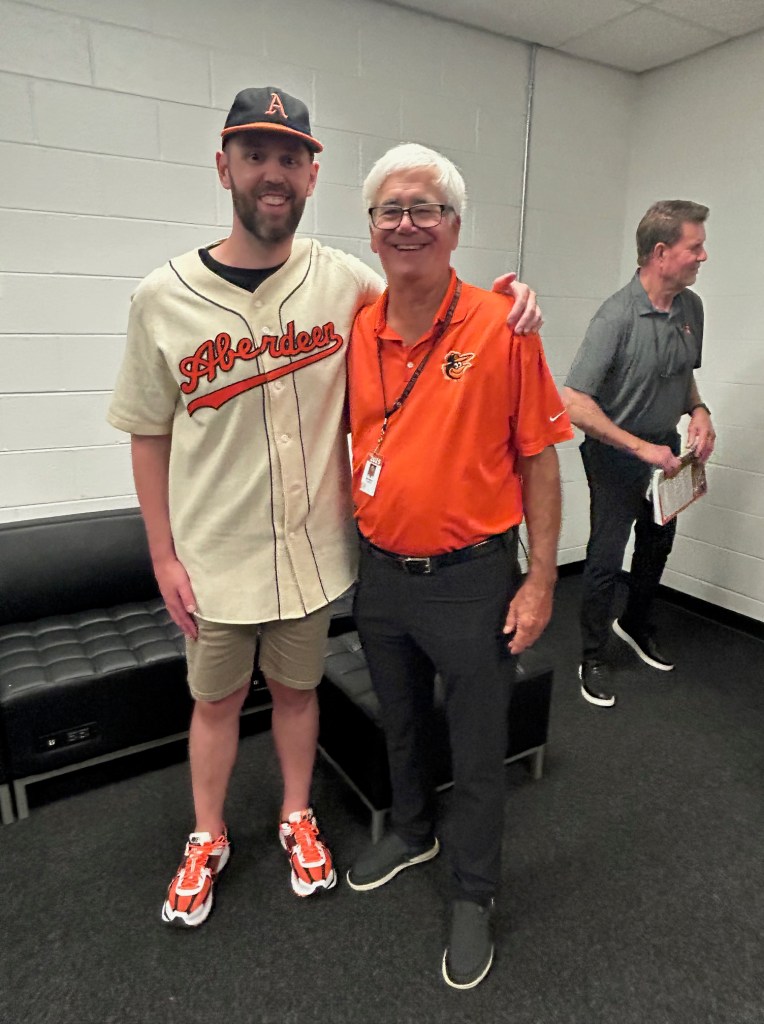
After that we went to the ballpark in which (on Saturday August 23) was Jim Palmer jersey giveaway day. David and Peter got in contact with fellow SABR member Bill Stetka. Bill Stetka is the Director of Orioles Alumni & Team Historian. Bill got in contact with Jim Palmer, and told him about the SABR historical marker. Jim gave us permission and we were able to meet with him before the game. It was truly a dream come true experience being able to meet the only Aberdeen Pheasant player ever in the Hall of Fame.
I am truly grateful to David, Peter, Bill, Jim, and the SABR organization. Dreams can come true, and this will always be a fond memory for me.
I am really excited to share the story of my day trip on January 3, 2025 to visit Gil Hodges’ hometown of Petersburg, Indiana.
Let me first explain for those that might not know. Gil Hodges was born in Princeton, Indiana but Petersburg was his hometown.
Petersburg is in southwest Indiana, about a 30-minute drive east of U.S. 41, in Pike County. I live in Terre Haute. Terre Haute is north of Petersburg on the central west edge of Indiana (at the intersection of U.S. 41 and Interstate 70). Princeton is about thirty minutes southwest of Peterson (at the intersection of U.S. 41 and S.R. 64).
I visited Petersburg and Princeton on this trip. It took me only about an hour and thirty minutes to drive from Terre Haute to Petersburg; a very easy drive, mostly on good state roads and national highways.
I visited sites in Petersburg and was fortunate to spend a little time with a man who knew Gil and the Hodges family. I’ll tell you more about that man later. While in Petersburg, I visited:
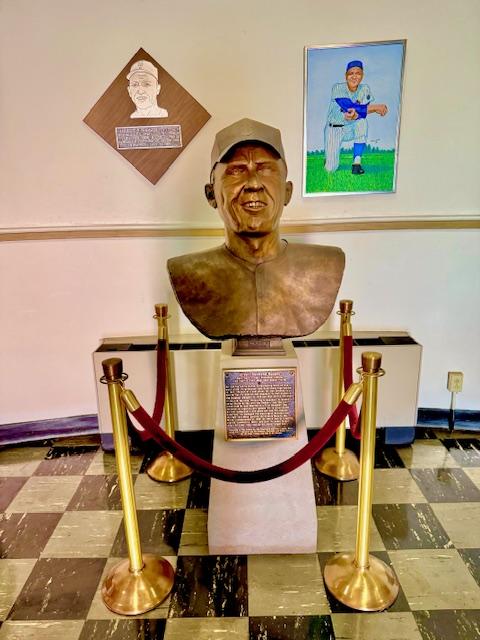
Pike County Courthouse to see the bronze bust of Gil Hodges in the rotunda,
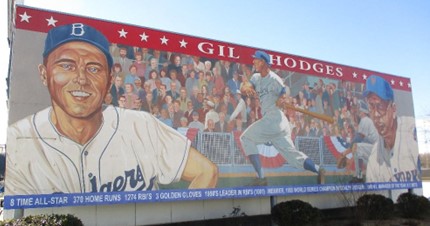
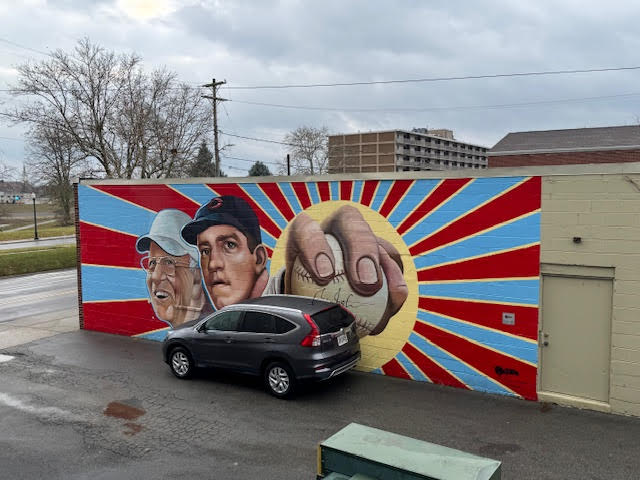
Mural of Gil Hodges that is across the street from the Courthouse,
Bridge that is named for Gil Hodges, and
Boyhood home of Gil Hodges.
I’ll tell you a little bit about each and share pictures and videos that I took that day.
In Princeton, I visited the ballpark that is named for Gil Hodges. I’ll show you pictures and a video that I took there, too.
Gil Hodges Bronze Bust in the Pike County Courthouse
The bust is on the main level of the courthouse. It was created by sculptor Don Ingle and dedicated on June 14, 1997. Randy Harris, Mayor of Petersburg at the time, led a two-year fundraising project and was instrumental in getting the bust made and placed at the courthouse.
One thing to remember if you visit, be sure to go when the courthouse is open (weekdays) if you want to be able to get inside to see the bust!
Gil Hodges Mural
The Gil Hodges mural is across the street from the courthouse. You can’t miss it! It’s fantastic to see and very well done. The 52’ X 16’ mural was first completed and dedicated in 2009. Again, then-Mayor Randy Harris had a hand in this project. In 2022, following Gil’s induction into the National Baseball Hall of Fame, the mural was updated to include the HOF logo and a plaque commemorating Gil’s enshrinement. For some reason, these features were missing on the day that I visited. The mural was created by artist and Petersburg High School graduate Randall Heddon. Heddon also created the picture of Gil in his Mets uniform that hangs on the wall next to the bronze bust in the courthouse.
Gil Hodges Bridge
The Gil Hodges Bridge is on State Road 57 as it crosses the East Fork of the White River, on the north edge of Pike County. The bridge is only about a 10-minute drive from downtown Petersburg. This picture below provides a view of the sign on the south side of the bridge (looking in a northerly direction).
Gil Hodges Boyhood Home
I learned from visiting with people in Petersburg that the boyhood home of Gil Hodges is located at 1401 E. Main Street. The home is only a few blocks east of the courthouse (at the SE corner of Main and 14th Streets). I learned that when Gil’s mother passed away, the house was sold. The same family that purchased the house from the Hodges family seemingly still owns the property.
Gil Hodges Ball Park (Princeton, Indiana)
Gil Hodges Ball Park is centrally located in Princeton adjacent to Lafayette Park. The street address is 700 N. Lafayette Park Drive. The ball park looks to be in awesome condition.
If you’re looking for a place to eat or get a milkshake, I highly recommend Dick Clark’s Family Restaurant at 702 N. Prince Street in Princeton.
Wrap Up
Gil Hodges was born on April 4, 1924. As of the day of my trip, he would have been 100 years old. I am a really big fan of the New York baseball teams and players from the era in which Gil Hodges played. I love reading and learning about the Boys of Summer, Willie Mays and the New York Giants, and of course Mickey Mantle, Whitey Ford and some of those Yankees teams. What a great era for baseball. While I didn’t get to see these players and teams in person, I have been fortunate to make friends with people who did.
I’ve learned so much from being part of the New York Giants Preservation Society. I encourage you to check them out if you don’t already follow them. One more thing about the Brooklyn Dodgers…..I was lucky to shake Carl Erskine’s hand on an airplane once. He boarded a flight in Denver (to Indianapolis) after I had already taken my seat. As he passed by my seat, He could tell by the expression on my face that I recognized him. He reached out, smiled, and shook my hand. Neither of us said anything, but we both knew. What a thrill for me. Erskine…. another baseball hero of mine from Indiana. Anderson, Indiana (hometown of Carl Erskine) is likely the next place I’m heading for a day trip!
I almost forgot to tell you about the man I met from Petersburg. His name is Randy Harris. Randy is a former Mayor of Petersburg. He currently sells real estate and has an office on Main Street (just a couple blocks west of the courthouse). For a time, Randy owned and operated a restaurant called Randy’s Americana Café. I called and introduced myself to Randy. Not knowing about his personal connections to Gil and the Hodges family, I called and told him I was coming to town to visit sites and wanted to make sure this café was going to be open. Mr. Haris explained that he had sold the restaurant but told me I was welcome to stop by his real estate office when I was in town. I could not have imagined getting so lucky. Randy told me stories about growing up in Evansville and Petersburg, and about Gil and his family. Randy knows all about the bust and mural. I encourage any of you that visit Petersburg to see Gil Hodges sites to call Randy Harris. He’s a great guy with great stories.
It is very nice to see that Gil’s legacy is celebrated in Petersburg and Princeton. Gil passed away at 47 years-old from a heart attack. During his very short life, he seemingly had a significant impact on the people he knew.
Clem Labine is quoted as saying “Not getting booed at Ebbets Field was an amazing thing. Those fans knew their baseball, and Gil was the only player I can remember whom the fans never, I mean never, booed.”
Pee Wee Reese is quoted as saying “If you had a son, it would be a great thing to have him grow up to be like Gil Hodges.”
Arthur Dailey of the New York Times is quoted as saying “He (Hodges) was such a noble character in so many respects that I believe Gil to have been one of the finest men I met in sports or out of it.”
Gil’s plaque at the courthouse concludes “Gil was a man of integrity, dignity, community, family and God. He never forgot where he came from, and we will never forget him.”
Thanks Gil for being a great ballplayer. Thanks for giving us great baseball memories and for being such a good teammate and person.
This is my first blog. Thanks for reading.
So happy I made this trip!
Greg Phegley
Links to the videos I made during my trip are below.
If you’re reading about SABR Landmarks research projects, you undoubtedly love seeing historical roadside markers. The more specific and local, the better. George Washington slept here. Teddy Roosevelt lived there. First Roman Catholic Church in the area. You get it. We see them when we’re least expecting and are probably driving too fast half the time to read every word, but we immediately appreciate that someone took the time to research and get that marker placed so that patrons of future generations know why that exact spot is special.
Before we get to baseball history on Long Island, it’s worth mentioning my origin story with historical markers. Without the work we did through the Press Club of Long Island (PCLI), no sports history markers would exist. PCLI is the local pro chapter of the Society of Professional Journalists (SPJ), the oldest organization representing journalists in the United States. As the longest-serving president of PCLI from 2014-2018, I constantly sought interesting ways to put the organization on the map and have it stand out from hundreds of other chapters nationwide. Our projects had to relate to our core values of education, advocacy, and ethics.
I noticed that SPJ had an application to apply for a chance to get a historical marker related to local journalism history for your region. I applied, and we didn’t get selected. In speaking with a longtime board member, local historian, and journalist, Bill Bleyer, I suggested we put up our own historical marker. He had experience doing it, the board agreed, and we sought our first location, which happened to be in Hempstead, NY, where Newsday was first printed in 1940. What better way to start than the spot where the island’s most recognizable news source came to life? We erected four markers during my tenure as PCLI president.
The journalism marker project began in 2015. I became President of the Suffolk County Sports Hall of Fame in 2017. The Hall originated in 1990 and has honored people of significance related to sports, from coaches and pro players to journalists and athletic administrators. From Craig Biggio, Carl Yastrzemski, and Henry Chadwick to Frank Catalanotto and Sal Agostinelli, there is no shortage of baseball people from Suffolk County who have reached the pinnacle of the sport.
After rebranding the Hall, creating a digital archive of all Hall artifacts and documents, reimagining the induction ceremony and process, and evolving several satellite exhibits in the county, I wanted to make a splash with another purpose by enhancing our mission. Since then, the Suffolk Sports Hall of Fame has developed a marker project honoring places of historical significance.
So much history has happened on our 118-mile-long stretch of land. If it were a state, Long Island would be the 13th most populated in the country. It’s common to see markers designating where George Washington visited during the Revolutionary War, especially since he ran a spy ring in the area, and the Battle of Long Island was the first conflict following the signing of the Declaration of Independence on July 4, 1776. But did you know Satchel Paige pitched here in 1950? Imagine seeing Babe Ruth and Lou Gehrig in a barnstorming game on the south shore in 1930, just three years after the 1927 New York Yankees built a reputation as one of the greatest teams in history. Ever think about where Yasztremski played his high school ball?
There is no shortage of sports history, so I set out to spread the love and educate with one marker at a time.
Independent Baseball on Long Island
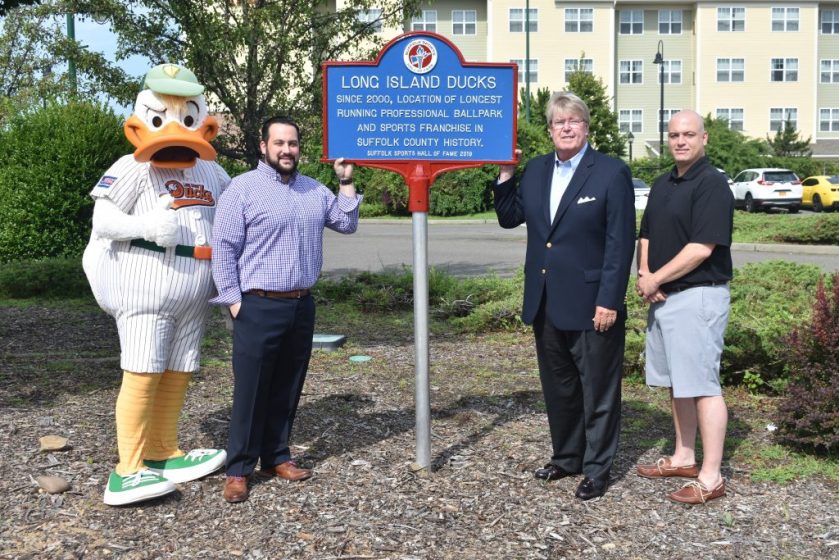
The Long Island Ducks, who play in the Atlantic League, have been synonymous with the area for over 20 years. Families and kids have made it a right of passage to attend Ducks games in Central Islip, NY, since 2000. In 2019, during the 20th season of Ducks baseball, we put up our first marker to commemorate the longest-running pro sports organization in the county. It felt right as the Ducks were celebrating their anniversary to mark it with this placard next to Fairfield Properties Ballpark.
“When Frank Boulton began this journey, many did not think a minor league ballpark in Suffolk County would work,” said Ducks President/GM Michael Pfaff. “Then, with the initial great success of the Ducks, others predicted it would not last. This marker celebrates the success and longevity of Long Island’s hometown team, a tradition we look forward to continuing.”
The Ducks baseball team got its name from the Long Island Ducks hockey club that played at Long Island Arena from 1959 through 1973. The Ducks have had some good talent, including big leaguers Rich Hill, Carl Everett, Edgardo Alfonzo, Danny Graves, Lew Ford, and Daniel Murphy.
Celebrating Yaz’s High School Stomping Grounds
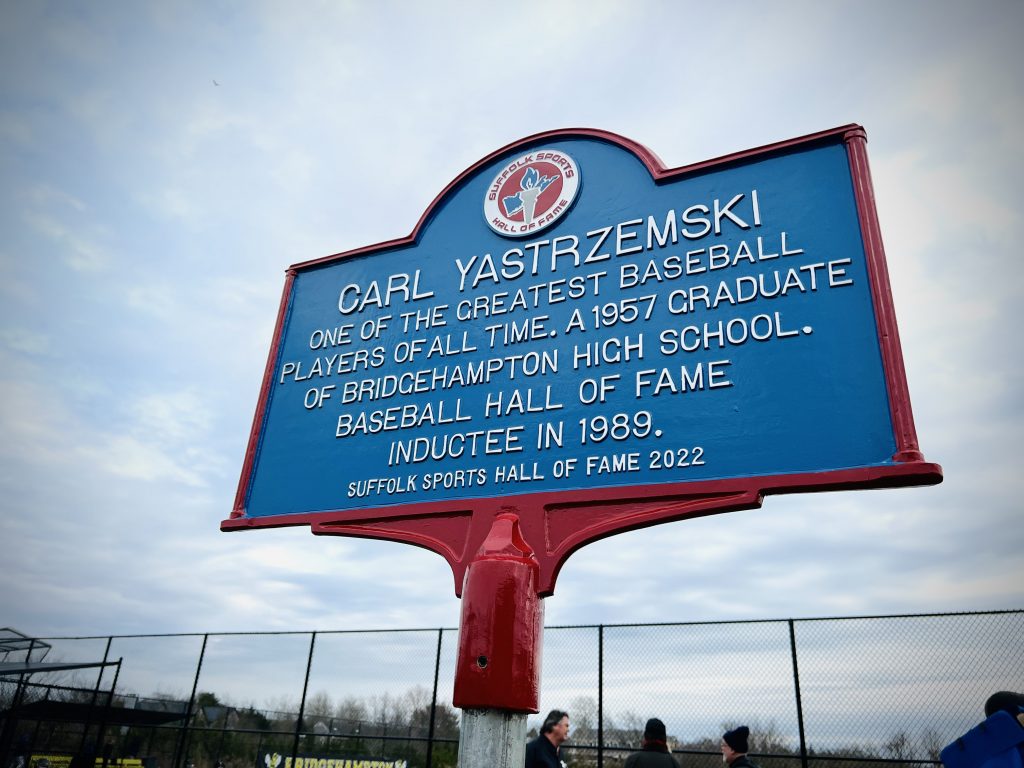
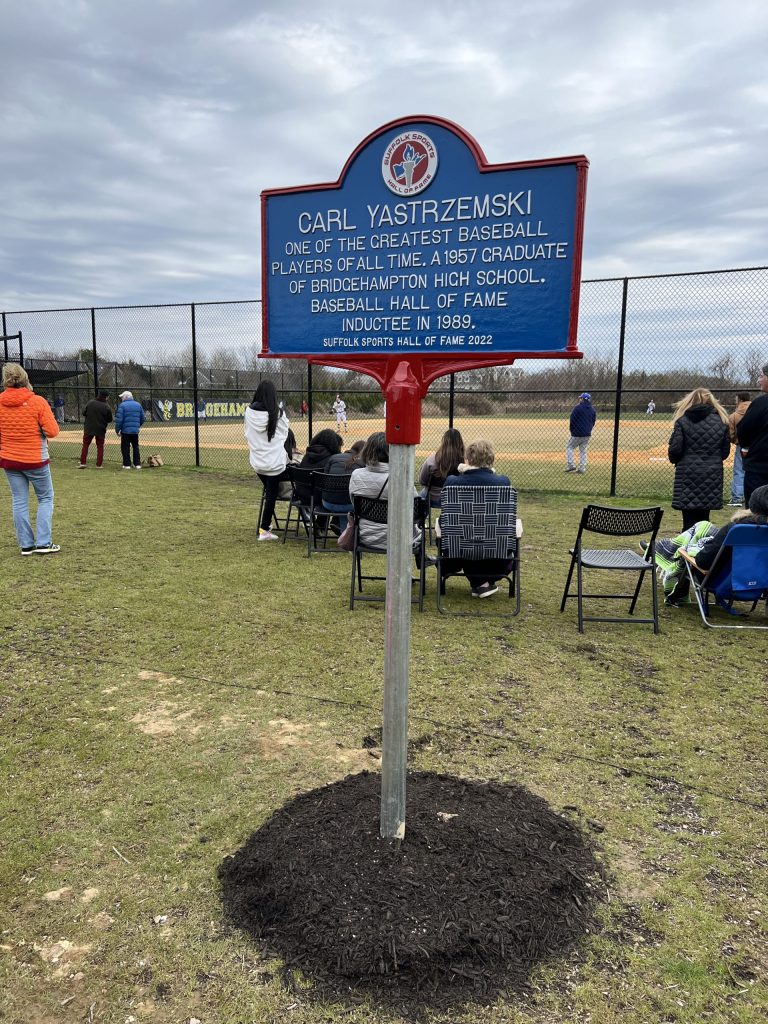
We were delayed in 2020 and 2021 due to the pandemic but picked up with our second marker at Bridgehampton High School on Tuesday, April 5, 2022. The historical marker to honor where Baseball Hall of Famer Carl Yastrzemski played prep ball was timed with the resurrection of the baseball program in Bridgehampton, which returned after a 43-year hiatus.
Yastrzemski was inducted into the Suffolk Sports Hall of Fame in 1990, grew up in Bridgehampton, graduated in 1957, and hit .512 during high school. Yaz, unfortunately, did not come down from Massachusetts for the event.
Yaz’s longtime friend Dan Shedrick of Sag Harbor read a statement during the ceremony written by the local icon: “I truly regret that I am unable to join you today for this special honor. My thanks to my coaches and teammates, and members of the Bridgehampton community for their support. Most importantly, my congrats to the ‘Bridges’ new varsity team — learn from your coaches, play hard and have fun.”
Satchel Paige Barnstorming Moment Immortalized
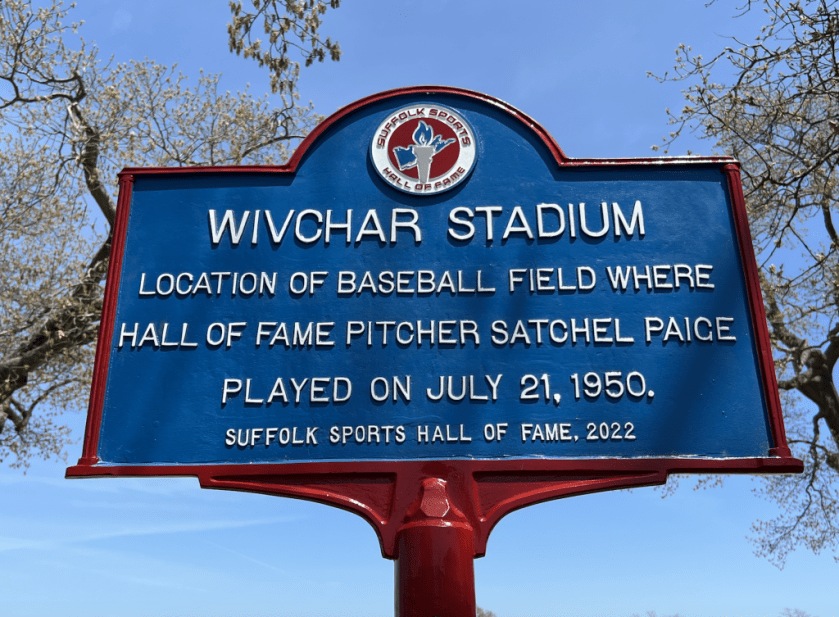
Baseball Hall of Famer Satchel Paige pitched in Riverhead, NY, during a barnstorming game on July 21, 1950. Thanks to Fabio Montella, an assistant professor of library services and history for Suffolk County Community College’s Eastern Campus in Riverhead, this research was brought to my attention, and we circled this spot as the third location deserving a marker, which was erected on May 5, 2022.
The marker was placed on Riverhead Schools’ property on Osborn Avenue, where Wivchar Stadium once stood. Paige pitched for the Philadelphia Stars, a semipro barnstorming team. Also at the game that day was Carl Yastrzemski Jr., a 10-year-old bat boy for the Riverhead Falcons, a team his dad, Carl Sr., played on.
Ruth and Gehrig Come to Lindenhurst
I placed the Hall of Fame’s fourth historical marker at the location where Babe Ruth and Lou Gehrig played a barnstorming game in Lindenhurst, NY, in 1930. We dedicated the marker on October 18, 2023.
Ninety-three years to the day, the marker was placed to designate the location on South Second Street, where the Baseball Hall of Famers played against Addie Klein’s Lindenhurst Nine.
There were more than 4,000 fans in attendance at the game. Ruth hit a monster home run that is believed to have gone at least 500 feet. Gehrig had three hits. After the game, they had a drink at the Plaza, a hotel, restaurant, and bar on Montauk Highway.
What’s next?
The process is different for each location. It depends on who owns the property and who can grant permission to put the marker in the ground. It might be a private owner, a school district, or a village government. I also rely on a maintenance, facilities, or public works team to help do the installation. Finally, none of this is possible without the beautiful craftsmanship from Catskill Castkings, who makes the markers and ships the heavy piece to me directly on Long Island.
You might be asking why we’ve only had baseball markers to date. It’s purely a coincidence, but I’m happy with the theme it presents to support our national pastime. We have a working list of markers for various sports worth considering in the future. Shinnecock Hills (Golf), Bridgehampton Raceway (Racing), Long Island Arena (Hockey), and the Canoe Place Inn (Boxing), where John Sullivan trained before his heavyweight title fight in 1892, to name a few. On the baseball front, we’ve explored the location where an all-woman baseball team, similar to the ones in “A League of Their Own” played, two more spots where Babe Ruth played in Riverhead and Kings Park, the field in Sag Harbor where Henry Chadwick watched games, and, my favorite, the location where the first all-Black baseball team played in 1885. The New York Cuban Giants were inducted into the Suffolk Sports Hall of Fame in 2019, and there is a large rock at the location of the old Argyle Hotel in Babylon, NY, to commemorate the location. The year 2025 marks the 140th anniversary of the team’s formation, a nice round number to honor with a historical marker.
Here’s to preserving history, honoring the past, and inspiring the future …
The Landmarks Committee held its inaugural election in 2023 to select three new sites to be added to the SABR Baseball Map. SABR members nominated over 30 sites that were not otherwise eligible for the Map, such as:
Locations of former ballparks or other sites where there is no physical structure remaining or historical marker;
Graves of individuals who are not in the Baseball Hall of Fame;
A vote was conducted, and 70 ballots were counted. The top three vote-getters were:
West Field in Munhall, PA (now the site of Chatham University’s athletic fields, this was the location of the Homestead Grays home field in the 1930s and 1940s).
Shoeless Joe Jackson grave in Greenville, SC
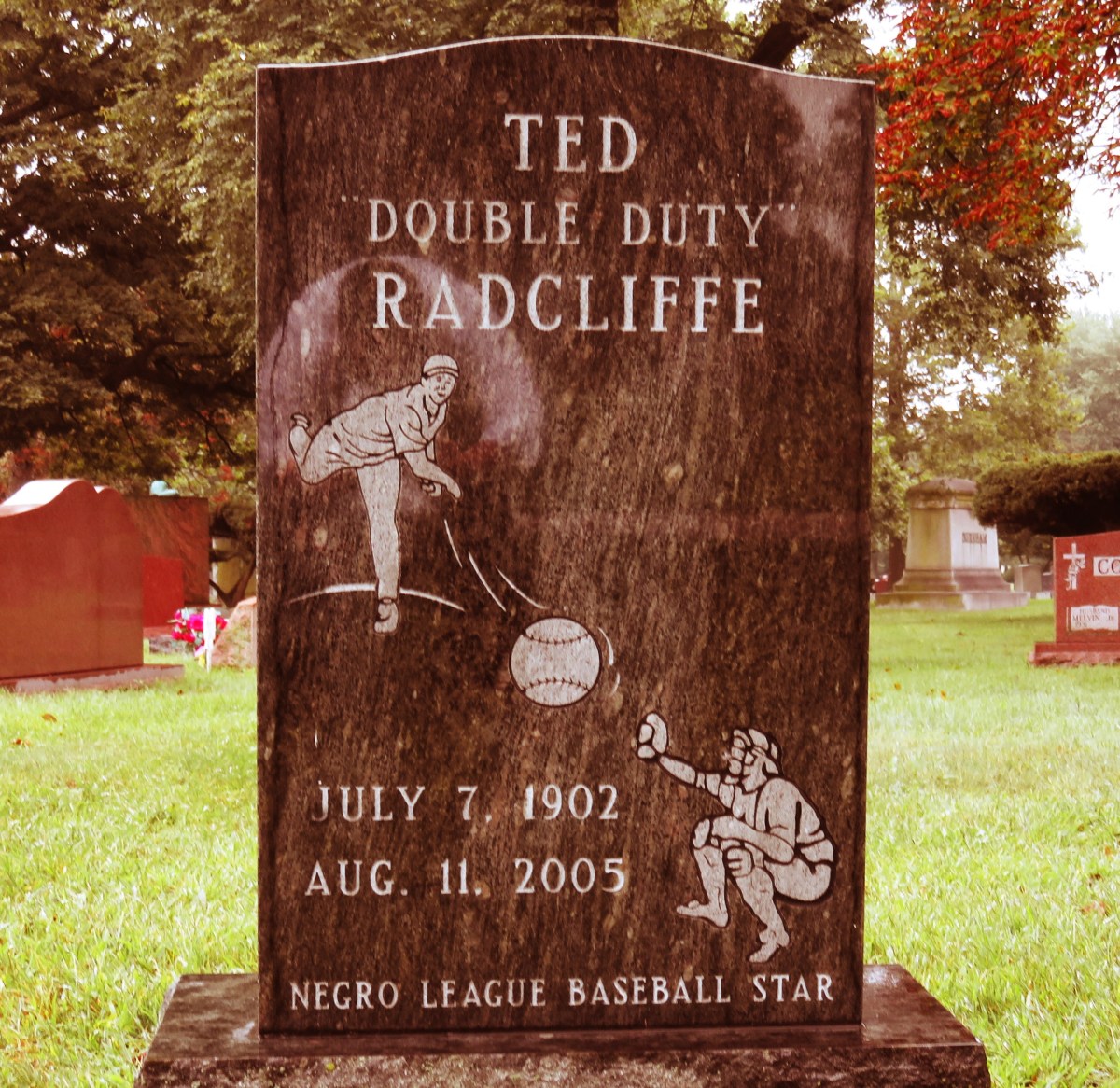
Ted “Double Duty” Radcliffe grave in Chicago, IL
The remainder of the top ten will be included on the 2024 ballot, which can be accessed here:
Harry Caray grave in Des Plaines, IL
Ray Chapman grave in Cleveland, OH
Former location of Giants Park in St. Louis, MO
Eddie Gaedel grave in Evergreen Park, IL
Luke Easter grave in Cleveland, OH
Abner Doubleday grave in Arlington, VA
Former location of Fitton Field in Worcester, MA
Complete voting results are shown below:
Rank
Type
Site
Address
City
State
Points
1
Ballpark
West Field
1848 West St.
Munhall
PA
76
2
Grave
Shoeless Joe Jackson
1901 Wade Hampton Boulevard (Plot located in Section V)
Greenville
SC
70
3
Grave
Ted “Double Duty” Radcliffe
Oak Woods Cemetery
Chicago
IL
35
4
Grave
Harry Caray
All Saints Catholic Cemetery and Mausoleum
Des Plaines
IL
33
5
Grave
Ray Chapman
Lake View Cemetery 12316 Euclid Ave
Cleveland
OH
33
6
Ballpark
Giants Park
6000 N. Broadway, bounded by Broadway, Clarence, Ave, Carrie Ave, and Bulwer Ave
St. Louis
MO
32
7
Grave
Eddie Gaedel
Saint Mary Catholic Cemetery
Evergreen Park
IL
26
8
Grave
Luke Easter
Highland Park Cemetery 21400 Chagrin Blvd
Cleveland
OH
20
9
Grave
Abner Doubleday
321 Sherman Dr.
Arlington
VA
20
10
Ballpark
Fitton Field
1 College St.
Worcester
MA
16
Grave
Louis Sockalexis
Old Town Cemetery 59 Down St.
Old Town
ME
10
Grave
Chick Stahl
Lindenwood Cemetery 2324 Main Street
Fort Wayne
IN
7
Grave
Louis Heilbroner
Lindenwood Cemetery 2324 Main Street
Fort Wayne
IN
6
Marker
Pittsburg Public Library
308 N Walnut
Pittsburg
KS
5
Grave
A. Bartlett Giamatti
Grove Street Cemetery
New Haven
CT
4
Grave
Andy Leonard
New Calvary Cemetery 800 Harvard St.
Mattapan
MA
3
Grave
George Gore
Masonic Care Community Cemetery
Utica
NY
3
House
Smoky Joe Wood
90 Marvel Rd
Westville (New Haven)
CT
3
Grave
Duffy Lewis
Holy Cross Cemetery Gilchreast Rd
Londonderry
NH
2
Grave
Jim Delahanty
Calvary Cemetery 10000 Miles Ave
Cleveland
OH
2
Grave
Everett Scott
Elm Grove Cemetery 3500 IN -124
Bluffton
IN
1
Grave
Jim Konstanty
Maple Grove Cemetery
Worcester
NY
1
Grave
Americus McKim
Elmwood Cemetery, 4900 East Truman Road
Kansas City
MO
0
Grave
Frank Delahanty
Calvary Cemetery 10000 Miles Ave
Cleveland
OH
0
Grave
Joe Delahanty
Calvary Cemetery 10000 Miles Ave
Cleveland
OH
0
Grave
Jimmy McAleer
344 Oak Hill Ave.
Youngstown
OH
0
Grave
Ed McKean
Calvary Cemetery 10000 Miles Ave
Cleveland
OH
0
Grave
Bonesetter Reese
344 Oak Hill Ave.
Youngstown
OH
0
Grave
Patsy Tebeau
Calvary Cemetery 10000 Miles Ave
Cleveland
OH
0
Grave
Bill Wambsganss
Calvary Cemetery 10000 Miles Ave
Cleveland
OH
0
Grave
Jack Barry
Sacred Heart Cemetery 250 Gypsy Ln
Meriden
CT
0
Grave
Jumping Jack Jones
East Lawn Cemetery
East Haven
CT
0
Grocery Store
Jim Lemon
3811 Hamilton St
Hyattsville
MD
0
Ballpark
Don Gutteridge Sports Complex
702 Memorial Dr
Pittsburg
KS
0
*Ned Hanlon’s gravesite was inadvertently listed on the initial ballot despite it having already been included on the SABR Baseball Map due to his Hall of Fame status. Any votes for this site were not counted.
I was fortunate enough to spend the start of July in one of the world’s great cities, Montreal, home to the Expos from 1969 to 2004. Of course the baseball history (and baseball card history!) of Montreal stretches back much further than that.
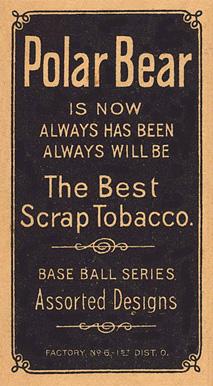
The Montreal Royals joined the International League in 1897 and went on to win seven league titles, all between 1941 and 1958. A Montreal Royal, James “Doc” Casey, is even represented in the 1909-11 American Tobacco Company “White Borders” (T206) set affectionately dubbed “The Monster.”
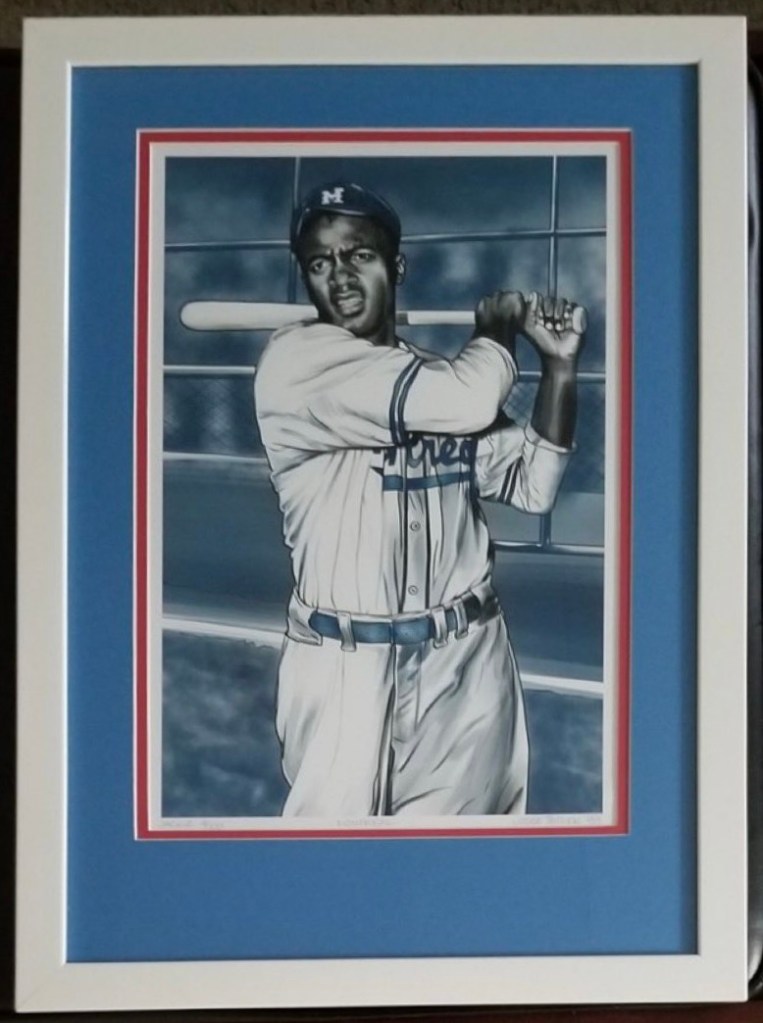
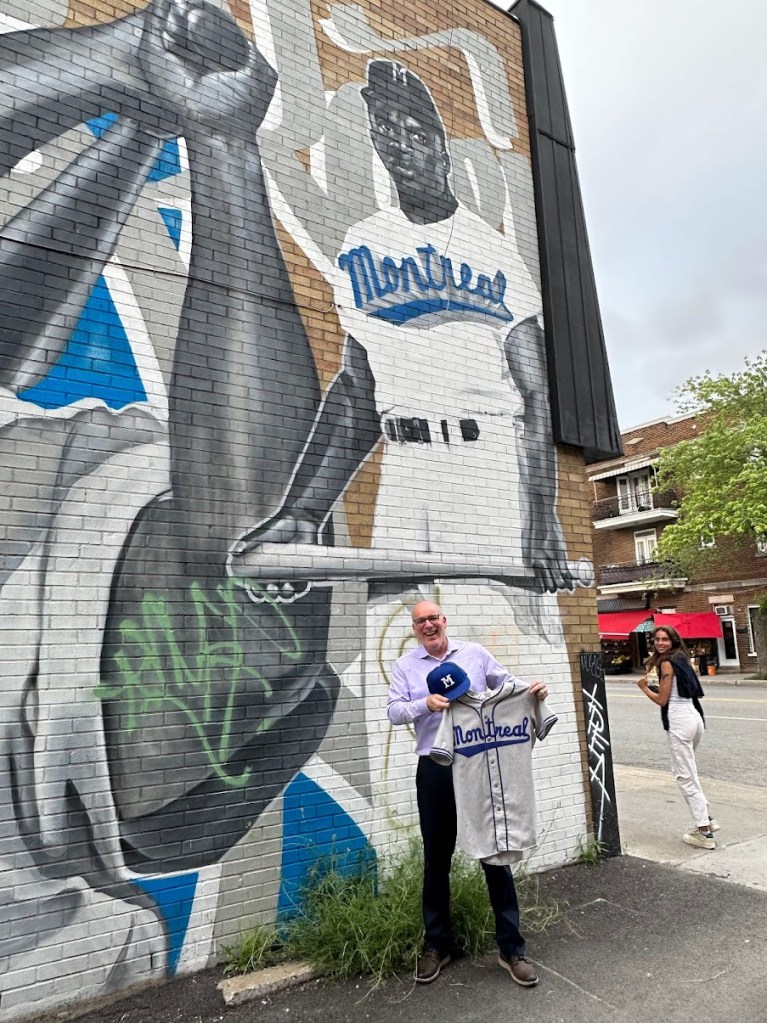
Of course, the most famous Royal of them all played for the 1946 Montreal squad, recognized as one of the top 100 minor league teams of all-time. A pleasant half hour walk through some fun and artsy neighborhoods brought me to his colorful mural at 3907 St. Laurent Blvd.
From there, I had two choices. Walk back to my hotel or walk another 30-40 minutes to hit another Jackie Robinson landmark. I chose the latter.
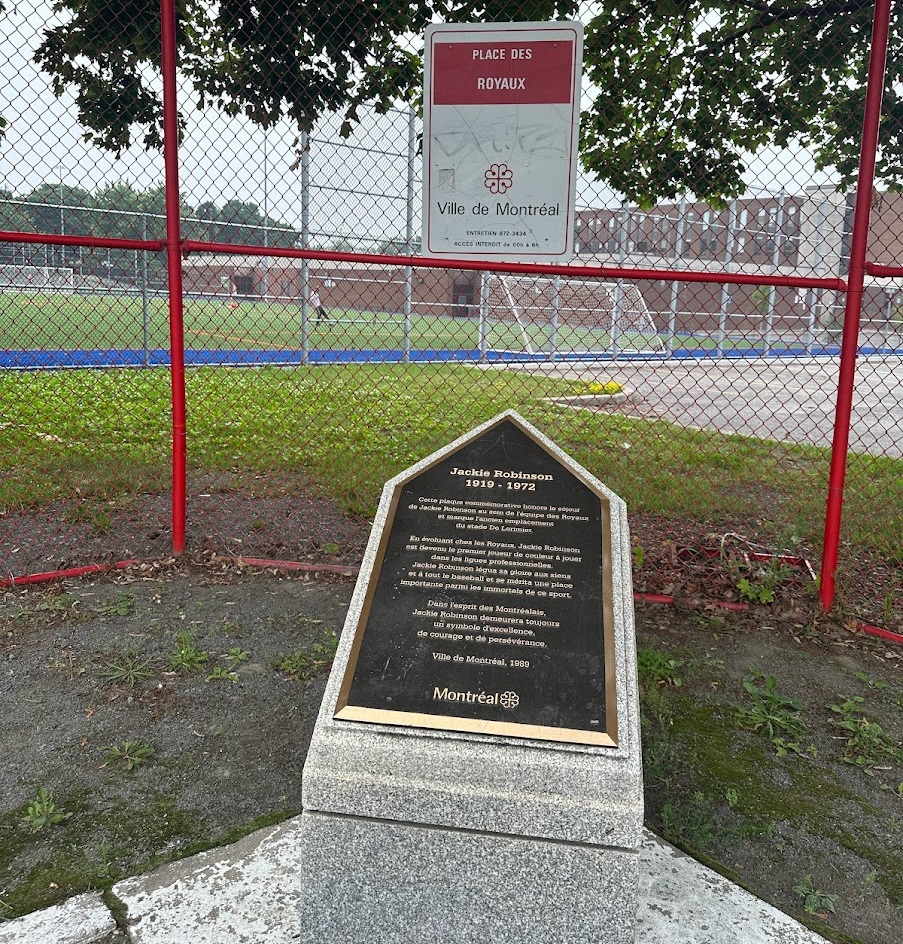
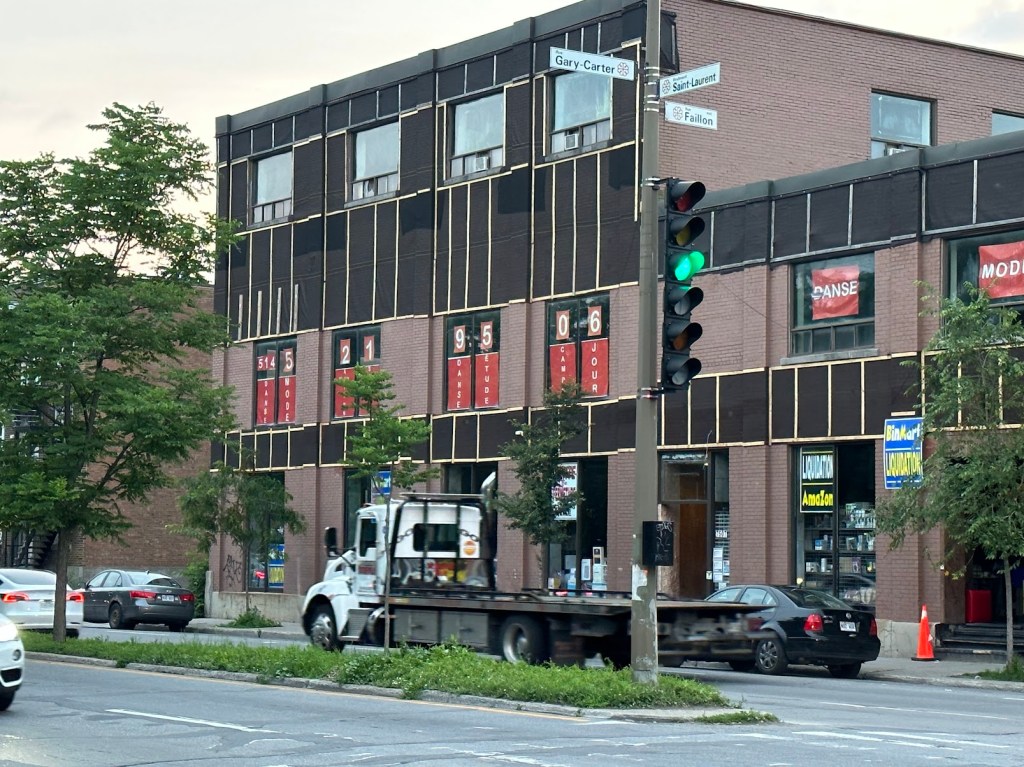
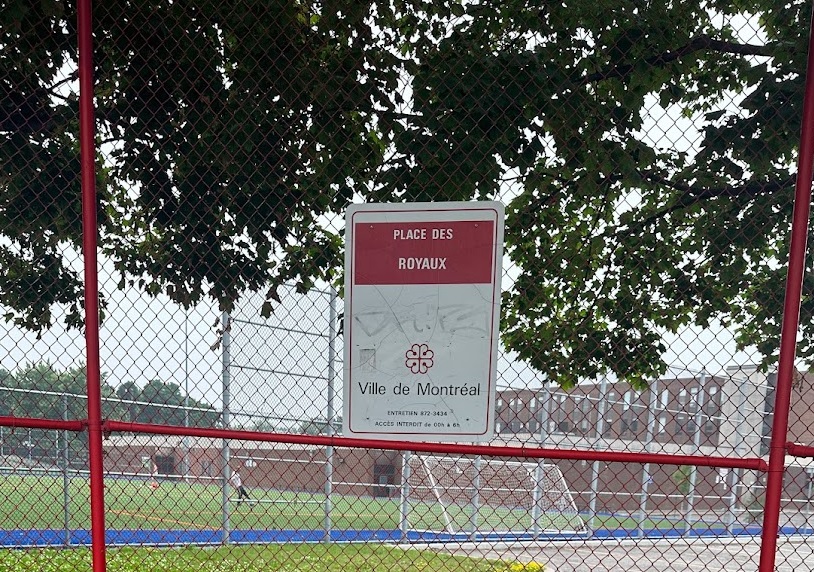
The Montreal Royals of Jackie’s time played their games at Stade De Lorimier (pronounced duh-lor-eem-yay). The ballpark is long gone, but the city has commemorated the “place of the Royals” with a…dingy metal sign?!
Okay, so that’s only half true. Yes, the marker could use an upgrade, but there is also an excellent tribute to Jackie Robinson just below it.
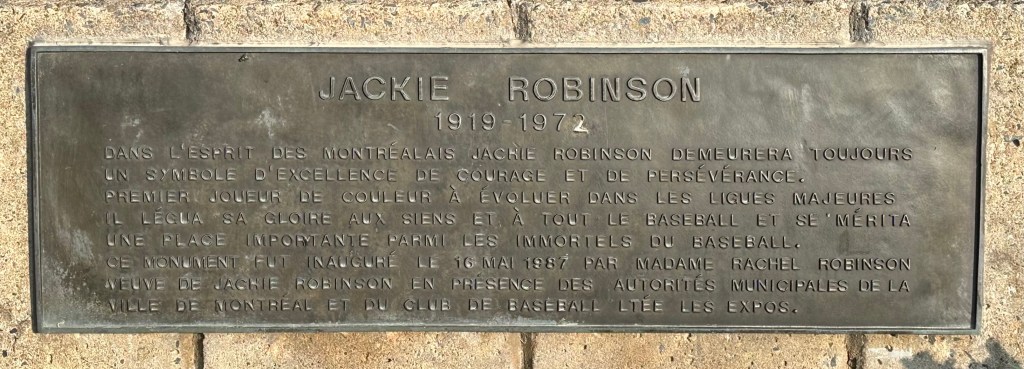
Loosely translated to English, the words on the sign read—
This commemorative plaque honors Jackie Robinson’s stay with the Royal team and marks the former location of De Lorimier Stadium.
By playing with the Royals, Jackie Robinson became the first player of color to play in professional leagues.
Jackie Robinson bequeathed his glory to his family and all baseball and earned an important place among the immortals of this sport.
In the minds of Montrealers, Jackie Robinson will always remain a symbol of excellence, courage and perseverance
City of Montreal, 1989
You may have noticed the plaque takes the form of home plate, and this is no coincidence. In fact, it is part of a larger mini-ballpark, complete with outfield grass and bleachers.
Though there were other landmarks I might have made by foot, I already had plans to tour them the next day with Montreal baseball artist Josée Tellier, whose wonderful Jackie Robinson artwork adorns the entrance to our guest room.
As this second day of landmarks was more distant from my hotel, we caught a cab to their general vicinity before setting out on foot. Our first stop was Jackie’s second mural in Montreal. If you look closely you’ll notice one of the locals totally not thinking what I’m doing is super dorky.
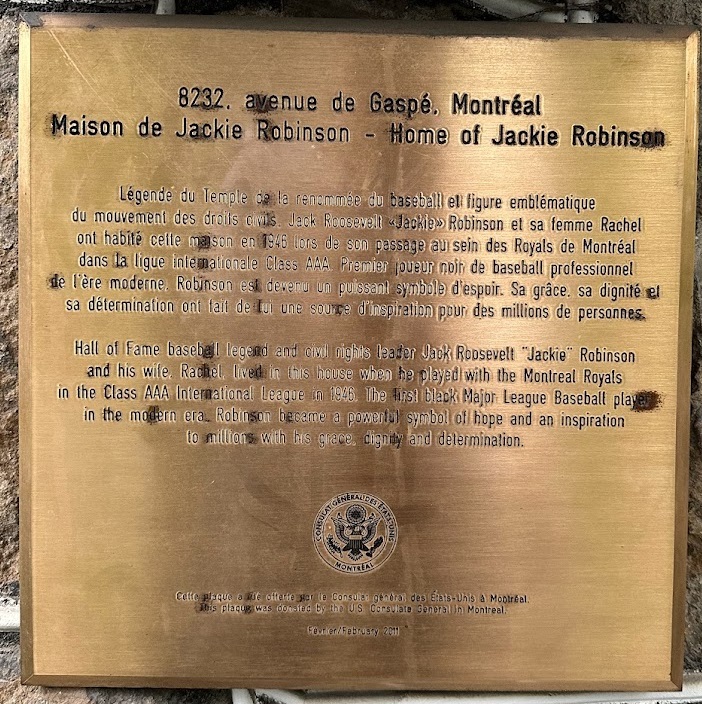
We were definitely in Mr. Robinson’s neighborhood now, or more correctly Mr. and Mrs. Robinson’s neighborhood. As proof, here is the house just a few blocks away that Jackie and Rachel called home in 1946.
Here is a closer look at the plaque by the door. (Note the bottom half presents the English translation.)
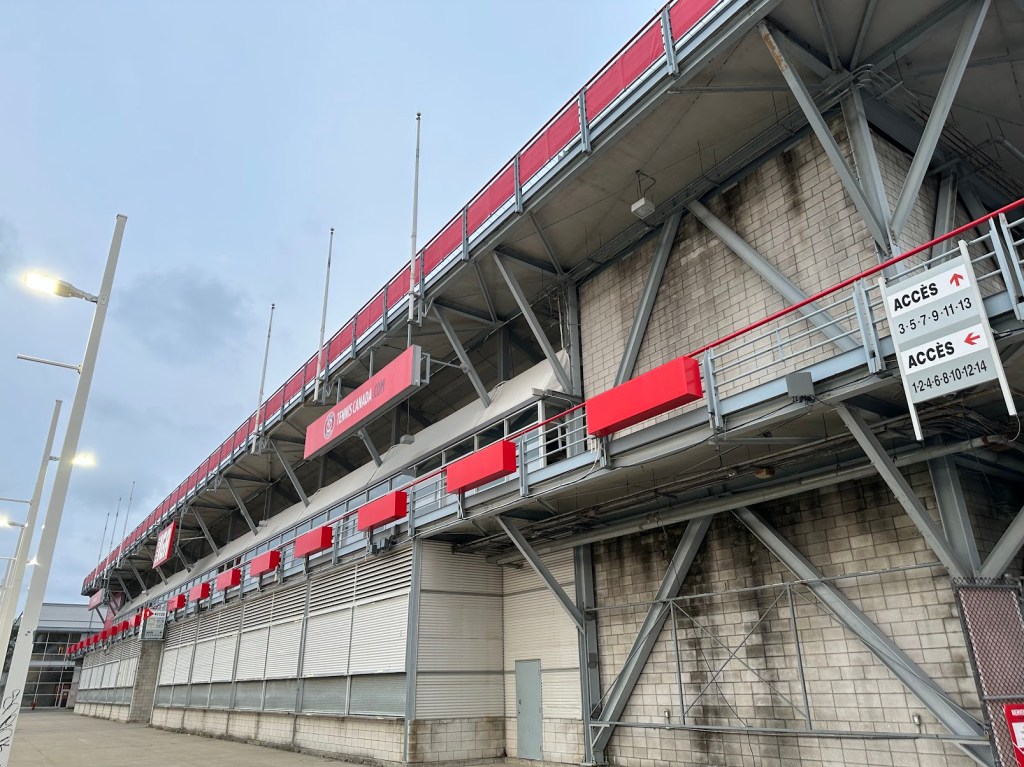
Our final landmark for the evening was nearby Jarry Park, home of the Montreal Expos from 1969-76. A small portion of the original stadium structure still remains as part of a newer tennis facility.
The street name equally serves to remind visitors that a beloved major league team once played here.
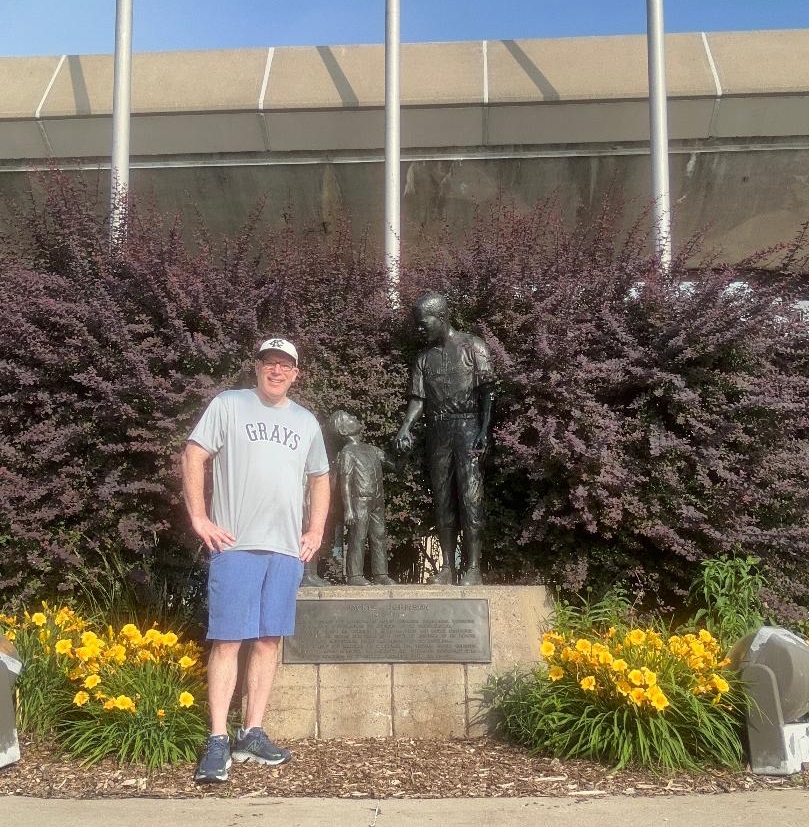
As we wrapped up this round of landmarks, Josée made sure I knew there was one more Jackie Robinson landmark we didn’t cover because it was too far away: the Jackie statue at Olympic Stadium. Lucky for readers of the Hardball Voyager, I got up the next day at 5 AM and decided a 7-mile walk wouldn’t be completely insane.
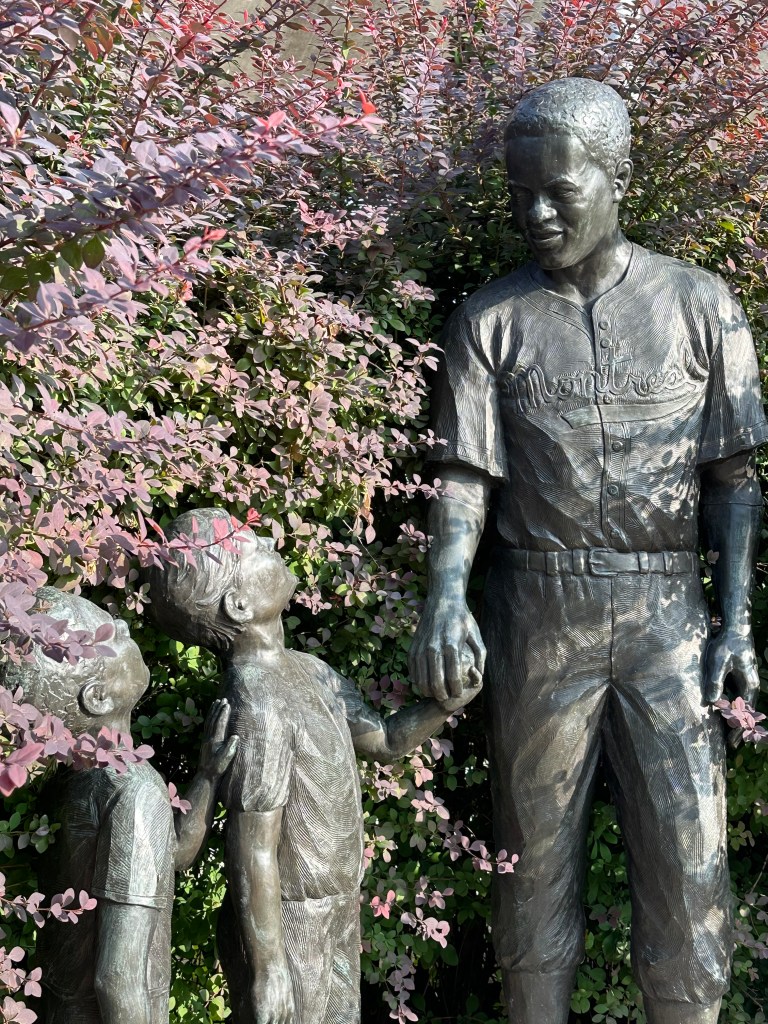
Here is a view of the statue without some guy blocking it.
And here is a close-up of the plaque.
Finally, here is the statue from further away. Olympic Stadium is the giant flying saucer-looking thing behind it.
Olympic Stadium was of course home to the Expos from 1977 until 2004, after which MLB relocated the team to Washington, DC. (Boo! Bud stole the Expos!) Amid all today’s talk of expansion and relocation, there are high hopes in Las Vegas, Nashville, Salt Lake City, and Portland but only the dimmest of forecasts for a return to Montreal.
Still, right in front of this stadium without a team stands Jackie—in what now may be recast as an act of defiance—handing the ball to the next generation, refusing to let the game die. I guess time will tell, at least here in Montreal.
Picture it: It’s the fall of 2020 and the COVID-19 pandemic has affected nearly all aspects of day-to-day life. Groceries are delivered weekly and from 8:00 to 5:00 every day, my dining room table is converted into my office. I actually enjoy working from home and I am thrilled with the number of virtual conferences, presentations, and book clubs I’m able to attend. In short, lockdown wasn’t terrible for some of us with more introverted personalities. Nevertheless, some measure of boredom set in and the need to get out of the house and do something fun safely, while keeping a proper distance from others, began to grow. Exploring Pittsburgh’s cemeteries was, obviously to me, the answer.
Pittsburgh offers no shortage of spaces in which to indulge my interests, be they historical, sports-related, or connected to my love of all things pop culture. Within the following two years, I would find Honus Wagner’s grave at Jefferson Memorial Cemetery in Pleasant Hills, where, by the way, there is an abundance of mosquitoes in the summer. You’ve been warned. Frank Gorshin, who played the Riddler in the 1960s Batman television series (I am a huge fan) is buried in Calvary Catholic Cemetery, as it turns out, right next to my pre-work-from-home office. I was thrilled when Amazon Prime filmed a bulk of the new A League of Their Own series around Pittsburgh and tracking down those locations kept me busy several weeks in a row. Before all of that, however, I knew my maiden pandemic field trip would be in search of the final resting place of Cum Posey.
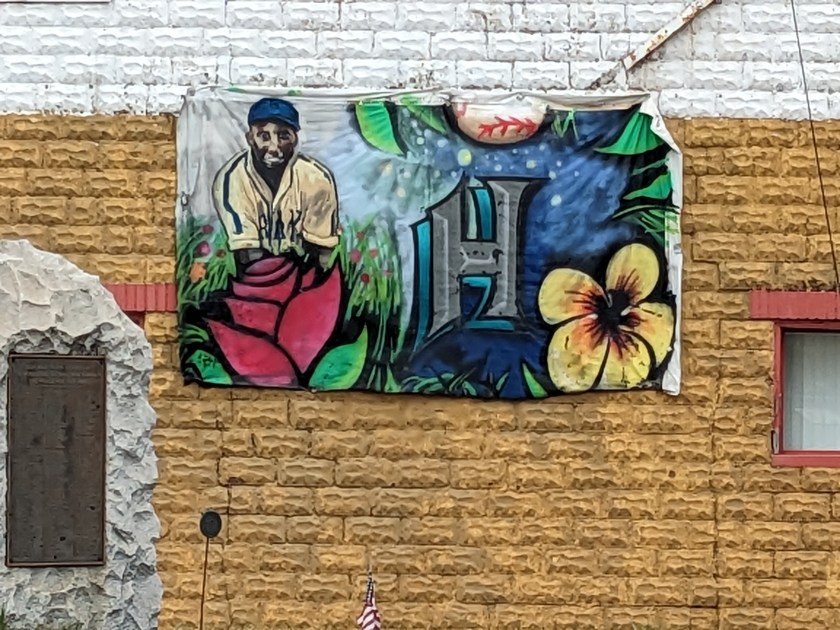
Homestead Cemetery in Munhall is a 10-minute drive from my house. Traveling south from the Squirrel Hill and Greenfield neighborhoods provides the baseball tourist plenty to see in terms of Negro Leagues history in a very short area along the way. First, I crossed the Monongahela River via the formerly named High Level Bridge, built in 1936. The structure was renamed the Homestead Grays Bridge in 2002 and in warmer months, features banners of former Grays and Crawfords players on light fixtures along both sides. At the end of the bridge, there are a few markers to see and it’s worth parking nearby and walking up to them. First, there is the bridge marker itself, complete with the Homestead Grays logo. Within a few feet is a Pennsylvania state historical marker providing a brief history of the team. Across the street, a painted banner hangs from the side of the building depicting Josh Gibson’s likeness and again, the Homestead Grays’ logo.
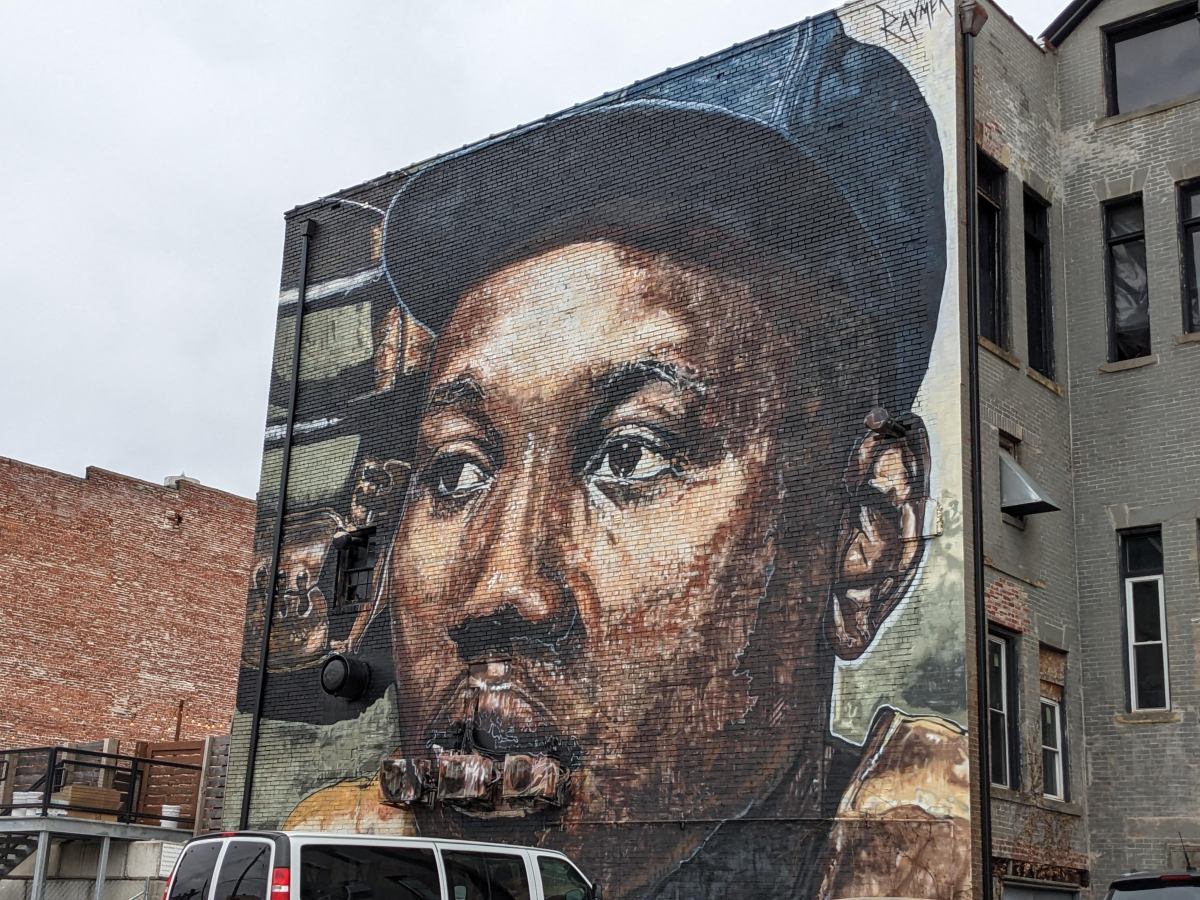
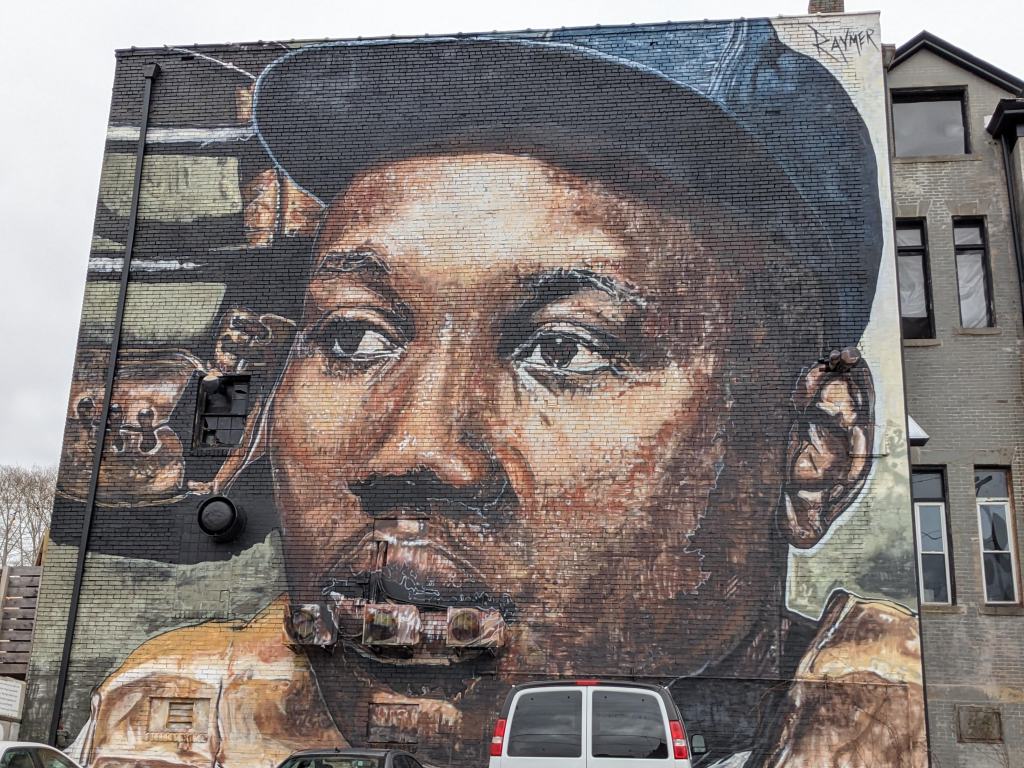
A block to the east, located in Hazel Way (an alley between 8th and 9th Avenues), lies the new Josh Gibson mural created by artist Jeremy Raymer and unveiled in 2021. The 2,000 square foot painting covers the entire back of a building, currently occupied by the Voodoo Brewing Company. The project was approved by Pittsburgh’s Josh Gibson Foundation, an organization that provides academic and athletic opportunities for young people. The art is outstanding and just one of many of Raymer’s murals found throughout Pittsburgh, which include personal favorites of horror icon Tom Savini in Lawrenceville and Roberto Clemente on the city’s north side. As a bonus, it’s now possible to catch a glimpse of the mural while traveling south on the Homestead Grays bridge. All of these Homestead and Munhall locations are technically within walking distance of one another, but keep in mind Pittsburgh’s extremely hilly landscape.
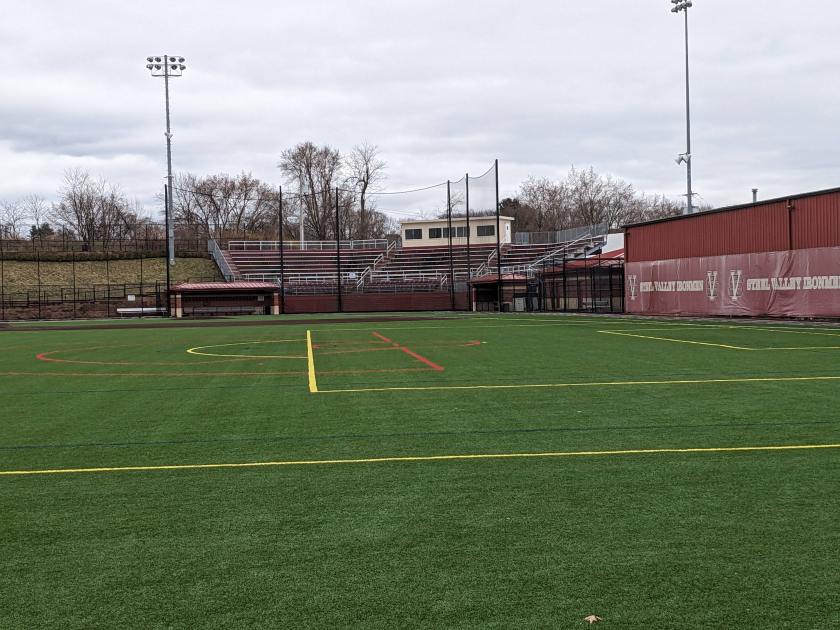
Further up the hill toward the cemetery lies another piece of Homestead Grays history. Just behind the Munhall municipal buildings and police station sits West Field, long ago a playing field and practice area for the Homestead Grays. Built in the late 1930s, the Grays used this facility, among others, for exhibition games, spring training, and official games when Forbes Field was otherwise unavailable.
Though completely renovated several years ago, the field is still worth stopping for on the way through Munhall. The playing field is completely turf now with the capability of hosting baseball, softball, football, and soccer games. Currently home to the Chatham University baseball and softball programs as well as the Steel Valley High School baseball team, the baseball field’s grandstand occupies the same space as the original West Field stadium. While the field offers little for the baseball history fan, it remains an interesting location to take in, knowing who played here decades ago.
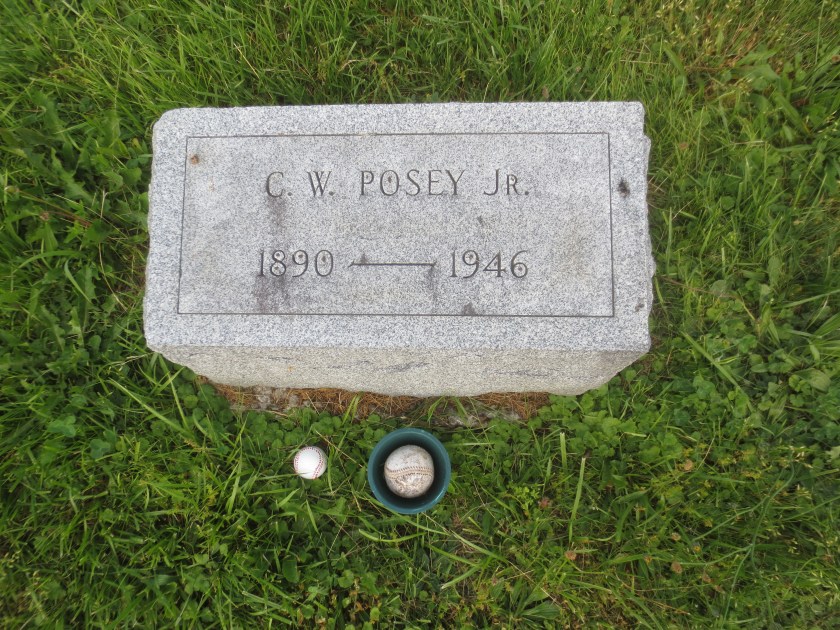
Another three blocks up the hill, and finally, Homestead Cemetery sits opposite St. John Cemetery across Munhall’s Main Street. Weather permitting, the cemetery is open daily from sunrise to sunset. Upon entering the cemetery, the Posey family plot is located in Section D, which is situated between the two driveways on the left-hand side. Cumberland (“Cum”) Willis Posey Jr. was born in 1890 and is regarded as one of the finest all-around athletes of his time, certainly in western Pennsylvania.
A standout in baseball and basketball, Posey began playing with the Homestead Grays in 1911, was managing the team five years later, and by the 1920s became an owner for the next 25 seasons. Buried next to him is Ethel T. Posey, his wife of over 30 years. Thanks to the SABR Women in Baseball Committee, I knew that Ethel inherited ownership of the team after his death in 1946, making her a significant figure in Homestead Grays and baseball history. As with Josh Gibson’s grave across town in Allegheny Cemetery, there are sure to be items left in tribute by visitors—usually baseballs, trading cards, or photos. Cum Posey was elected to the National Baseball Hall of Fame in 2006 and the Naismith Memorial Basketball Hall of Fame a decade later.
Pittsburgh is a fun city that is full of monuments, exhibits, and memorials to its rich sports history and traditions. The SABR Landmarks Map is an excellent resource for finding these locations and more Negro League memorials across the country. For a huge dose of history packed into a small geographic location, look no further than Homestead and Munhall, Pennsylvania.
The Greater Cincinnati region has been home to many outstanding baseball players – men and women – for decades. Any baseball fan’s visit to the area is likely to include stops at the Crosley Field marker, Great American Ball Park, and the Cincinnati Reds Hall of Fame and Museum. Across the Ohio River, however, fans will find sites related to an all-star athlete whose story may not be as familiar. Patricia Ann “Pat” Scott was a pitcher in the All-American Girls Professional Baseball League (AAGPBL) and called parts of Kenton and Boone Counties home for most of her life. Scott’s long and varied career resulted in many unique and noteworthy experiences and yet, her short time as a baseball player is commemorated at two locations, a field named in her honor and her final resting place, detailing the history of Northern Kentucky’s “Mound Ace” of girls’ baseball.
For those unfamiliar with Pat Scott’s participation and contributions to baseball, she was born in 1929 and grew up near Burlington, KY on her family’s farm that featured a baseball diamond. Barnstorming and semi-pro teams would often use the field and young Pat took advantage, working out with the teams and developing into a fine athlete. Becoming a standout softball player in her teenage years first got her noticed by AAGPBL scouts and she was recruited to play for the Springfield (Illinois) Sallies in 1948. Just weeks into her first season, Scott left the league to care for her ill mother and would eventually decide to put any baseball career on hold in favor of attending college, traveling, and working.
Three years later, when the league was in short supply of solid overhand pitchers, Scott was again contacted by the league and offered a roster spot with the Fort Wayne (Indiana) Daisies. For the next three seasons, she would shine with the Daisies, winning an average of 16 games and leading Fort Wayne to the league playoffs each year. Scott’s life after baseball was just as remarkable, earning a degree in zoology, working as a medical technologist for years, training horses, becoming an accomplished artist in painting and wood carving, and competing in the Senior Games.
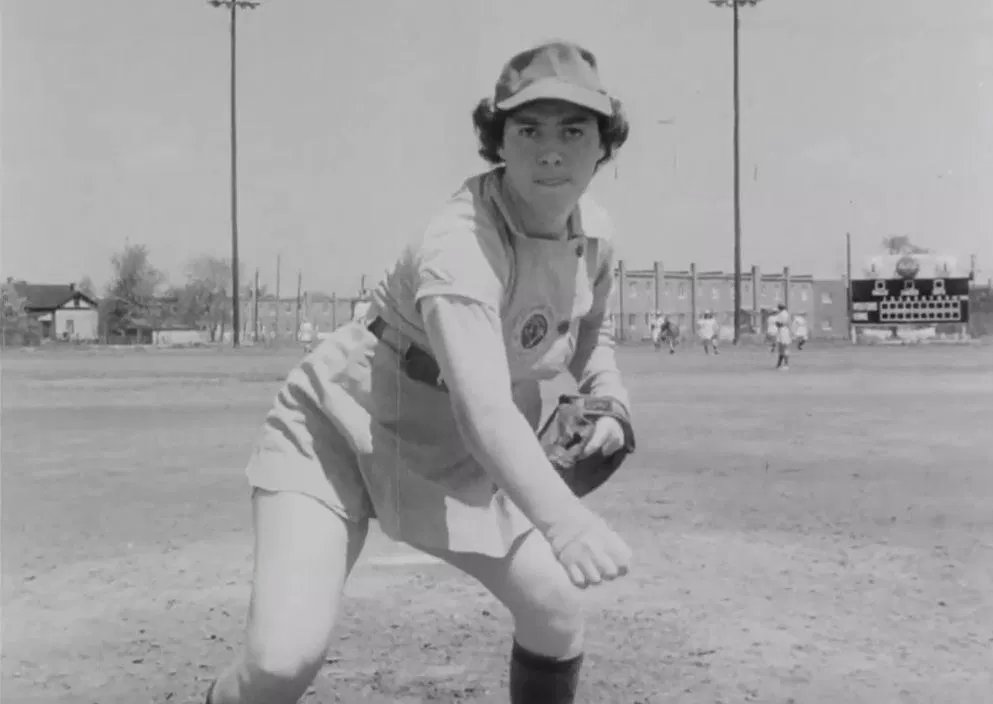
Located 25-30 minutes south of Cincinnati proper, Walton Community Park is easily found just off of I-75. The park features ample green space, a playground, basketball and tennis courts, a soccer field, and next to the parking lot, the ball field. Approaching the parking lot from the center drive, visitors are met with a large sign that reads “Pat Scott Field” – letting them know they’re in the right place. The sign has changed over the years with the current version including a photo of Scott, taken from newsreel footage from the early 1950s when the Daisies spent spring training in Alexandria, Virginia. This particular newsreel is now in the public domain and can be viewed on the National Archives and Records Administration (NARA) website or by searching any number of video hosting sites such as YouTube.
The opposite side of the sign is an enlarged replica of Scott’s 1995 Larry Fritsch Cards baseball card and provides an educational bonus for visitors. Listed are both pitching and batting statistics for Scott’s three complete seasons in the league as well as a brief biographical text that includes her pitching the winning game against Rockford that gave Fort Wayne its first pennant in 1952. The field, named for Scott in 2002, is a small, standard field, but well maintained. Fencing surrounds an irregularly configured outfield and a dirt infield. The field is visible in a 2008 episode of Kentucky Life, a series produced by Kentucky Educational Television exploring culture and community throughout the Bluegrass State. During her segment, Scott spends the afternoon with host Dave Shuffett playing catch on the field that bears her name.
Approximately seven miles southeast of Walton lies Saint Patrick’s Cemetery, the final resting place of Pat Scott. The small cemetery is accessible from Verona-Mudlick Road, halfway between the small community of Verona and I-71. The rural location lends itself to a quiet and peaceful atmosphere – surrounded by green fields in warmer months. The small cemetery is bisected by a driveway and Pat Scott’s marker can be found near the rear right (west) corner. Scott’s headstone is quickly recognizable. A black marble stone bearing her name at the top and “Beloved Sister and Aunt” at the bottom. The center focus of the marker consists of an elaborate and thoughtful engraving, highlighting Scott’s career as a professional baseball player. The view is that of sitting behind home plate, a baseball speeding toward you, and Scott further back in a pitcher’s follow through stance. The image is based on a photo of Scott in her Fort Wayne Daisies uniform. The AAGPBL logo is featured to the right of
Pat Scott’s grave site marker is a fitting memorial, but also offers visitors more about the significance of her baseball career. First, there is the educational aspect of the imagery featured on the marker. Imagine a person seeing the marker who may have no knowledge of women’s professional baseball in the 1950s. The potential for educational exploration exists when presented with the image of a skirted ballplayer pitching overhand as well as the unique AAGPBL logo. Second, after such an accomplished life full of athletic, scientific, and artistic achievements, it is her time as a professional baseball player that is forever featured on Scott’s marker.
Memorial efforts and recognition for Pat Scott’s athletic career continue and her name can be found in the St. Henry District High School Hall of Fame, the Northern Kentucky Sports Hall of Fame, and listed with other All-Americans in the National Baseball Hall of Fame and Museum. Pat Scott Field at Walton Community Park and Saint Patrick’s Cemetery both truly honor her individual athletic accomplishments and provide visitors with an opportunity to celebrate and learn more about her unique baseball career.
However much baseball has changed in my lifetime one aspect that has always stayed the same is the notion of a home team and an away team. This is true even when the two squads share the same ballpark (e.g., Dodgers/White Sox Spring Training) or play at a neutral site such as Mexico City or the Field of Dreams. After all, someone has to bat first.
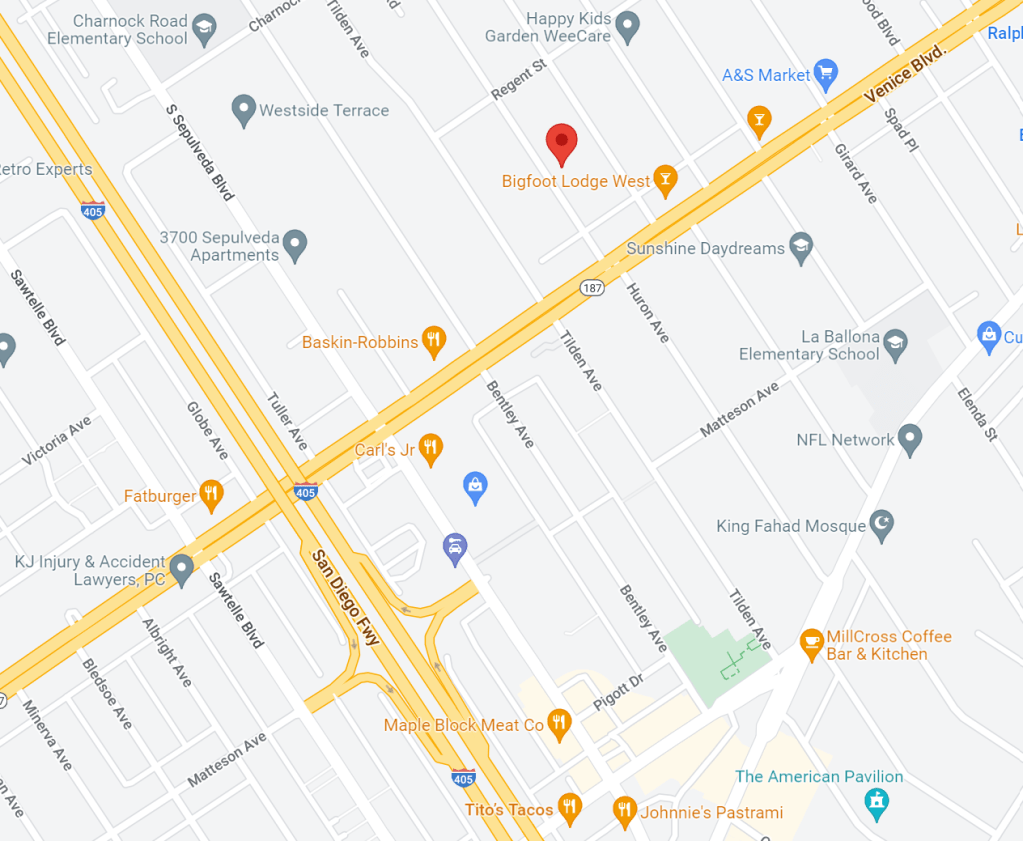
The same is true with people and places. As we find ourselves in different spots over the course of our lives, we are sometimes at home and other times visitors. As a kid, I knew one home and that was the Palms/Mar Vista area of Los Angeles. Until halfway through the eighth grade, I’d spent my entire life in the same house on the same street in the same neighborhood. (Why this house has since been re-branded “Bigfoot Lodge West” is beyond the scope of this article.)
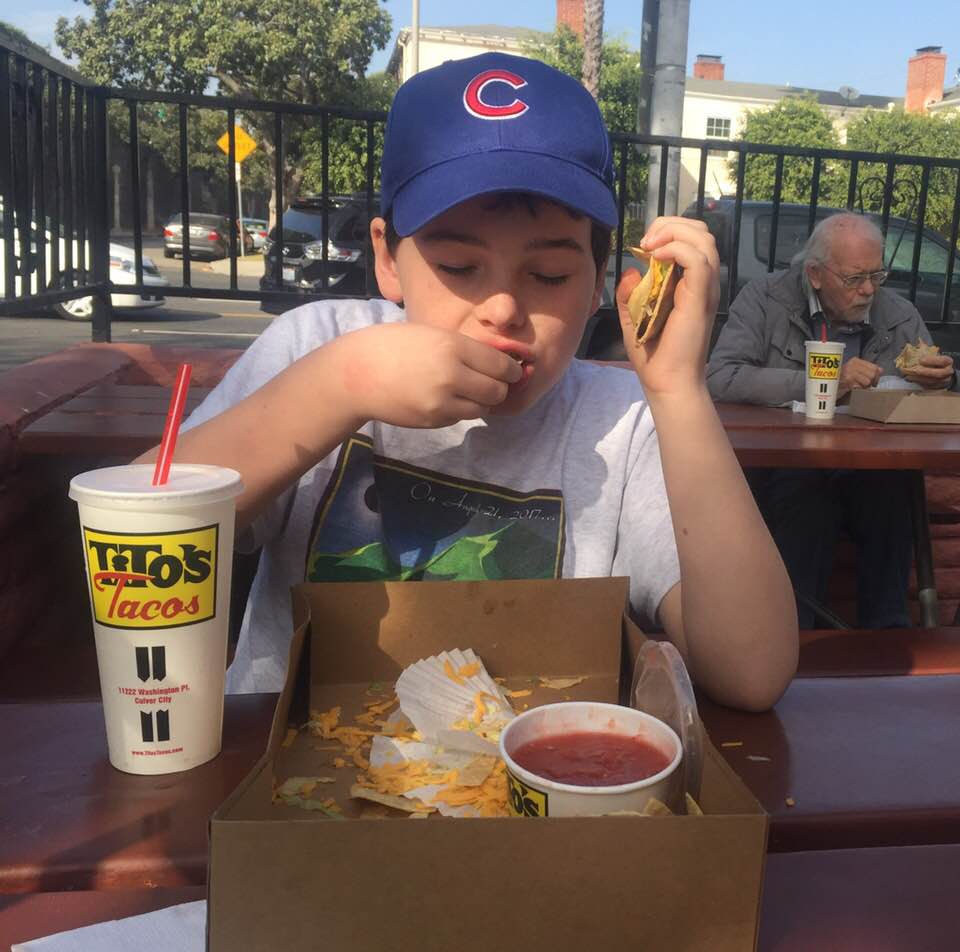
The red pin on the map was our house and center of my universe. That school in the upper left corner, Charnock Road Elementary, was where I walked for first and second grade. Tito’s Tacos, at the bottom of the map, was where we’d go out to eat. The Baskin-Robbins in the middle is where we’d go for ice cream when guests were in town. And most importantly, in the same strip mall as Baskin-Robbins was the liquor store where I traded what I could skim from my mom’s parking meter change for pack after pack of baseball cards.
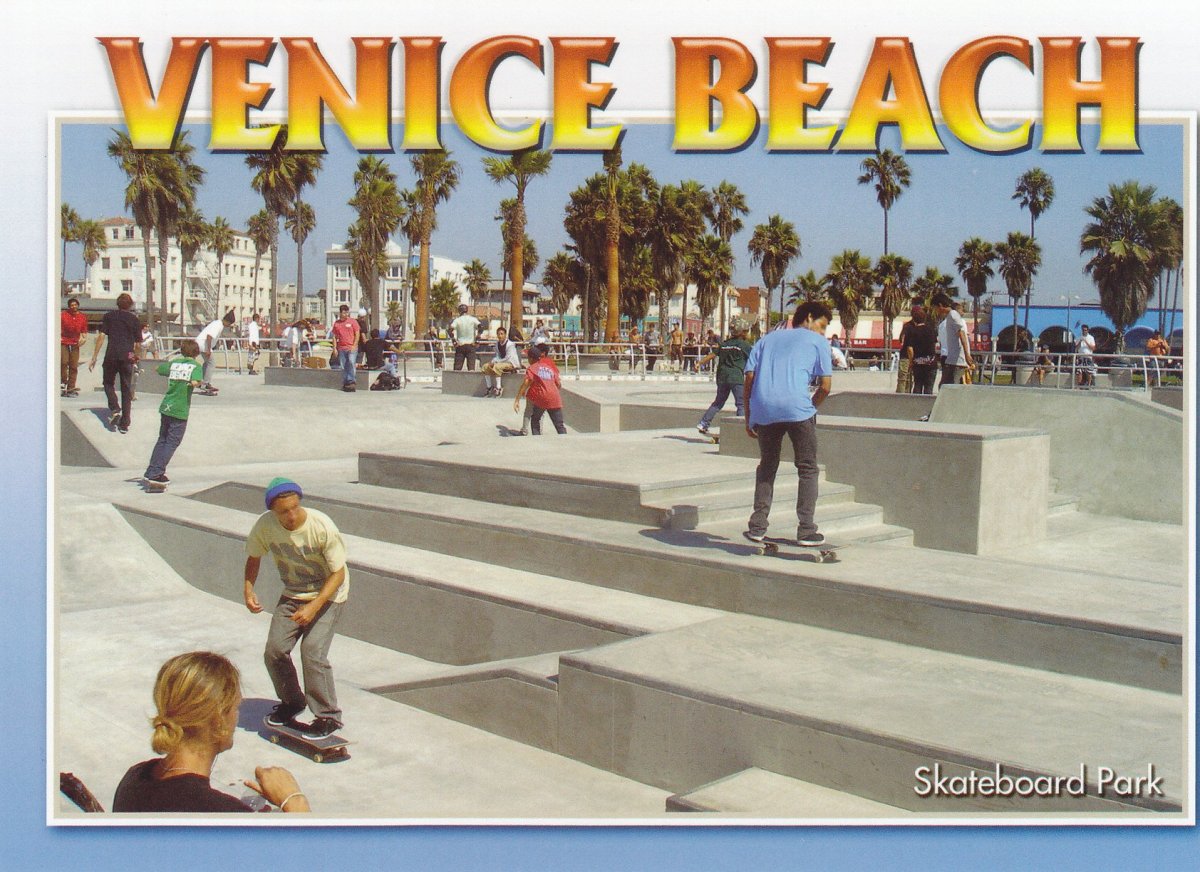
Every now and then I make the trip back to Los Angeles to see old friends and take in a Dodger game. Forty years later, the old neighborhood is part familiar, part unrecognizable. Make the mandatory trip to Tito’s and place the same order I’ve always placed (tacos with cheese), head down Venice Boulevard to Baskin-Robbins, and this is home. Pass just about anything else, even the house I grew up in, and I’m the visitor, connected to nothing I see.
My son keeping tradition alive, 2017
Los Angeles will always be home to me, but my connections have dwindled to a just four: high school buds, tacos, the Dodgers, and nostalgia. Not a bad four to keep, I suppose, but sure a lot less than in the old days. That’s what the decades do to a place. Things happen. Things change. The blessing, of course, is that my remaining touchpoints, while few, have all gotten better with age.
* * *
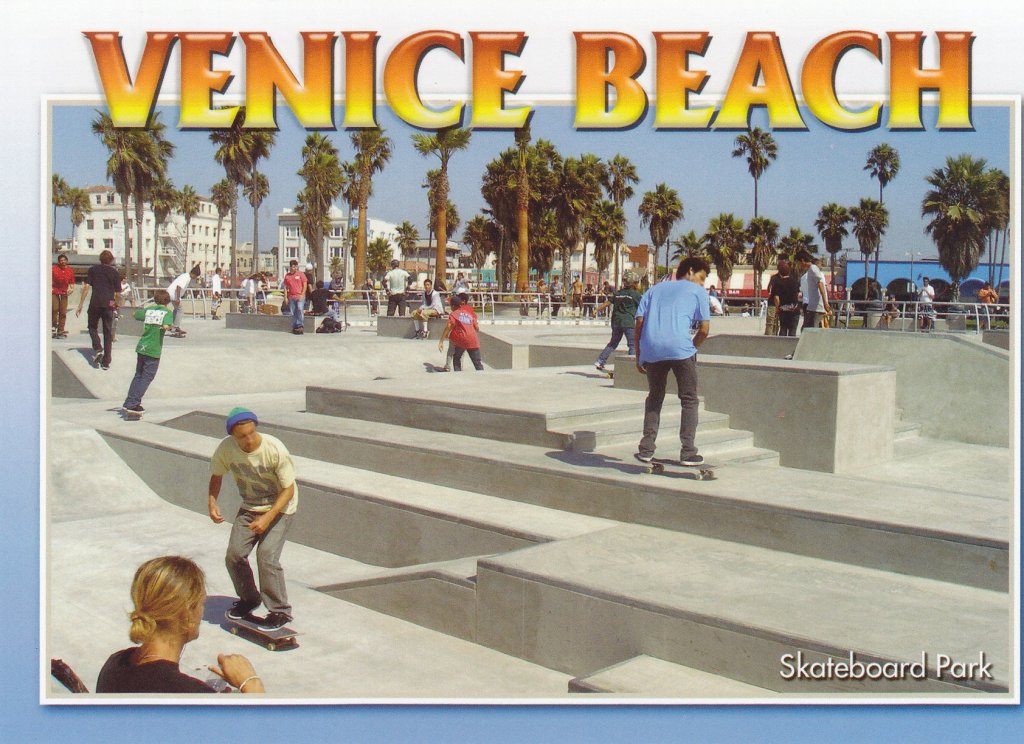
Only a few years ago there was a fifth connection to the city: family. My dad passed in October 2020, an indirect COVID casualty, but before that had spent a good 70 years of his life in L.A. That said, his true spiritual home was Venice, especially Venice Beach.
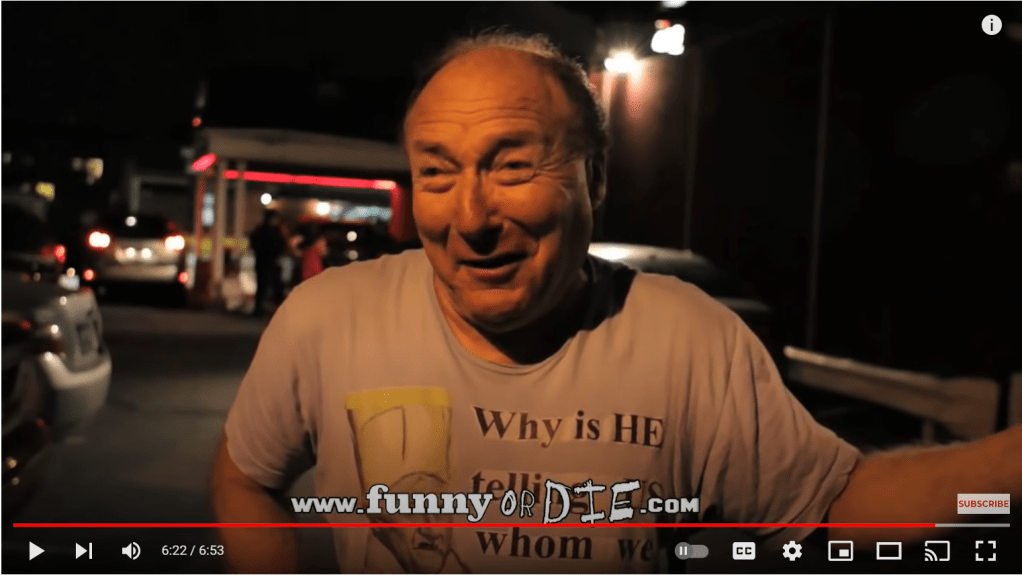
Locals, depending how far back they go, will remember him as the “cardboard sign man” of the 1980s and 90s, or–this century–as the “tee shirt guy.” In a town that prides itself on its freaks and crazies, my dad managed to lap the field, rendering the pretenders of this new urban Bohemia downright normal by comparison.
Accidental Jewel co-star Nelson Schwartz
Still, despite my dad’s near celebrity status (if not because of it) I hated Venice as a kid. Too dirty. Too weird. And, when my dad was there (i.e., all the time!) too embarrassing! I was definitely the away team here, a reluctant (though frequent) visitor at best. I hadn’t yet learned to appreciate the ways Venice was my dad’s lifeblood, nor was I aware of its baseball history. And, for damn sure, I had no idea there were baseball cards!
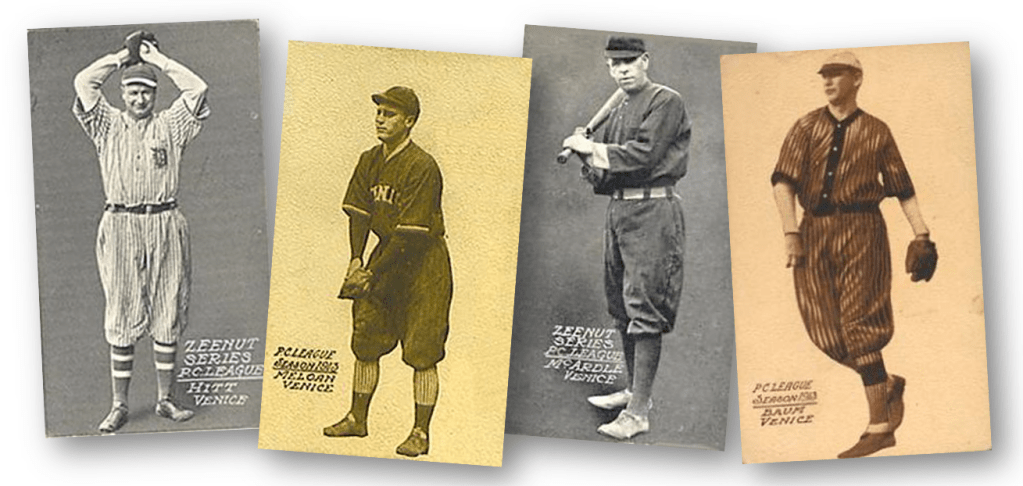
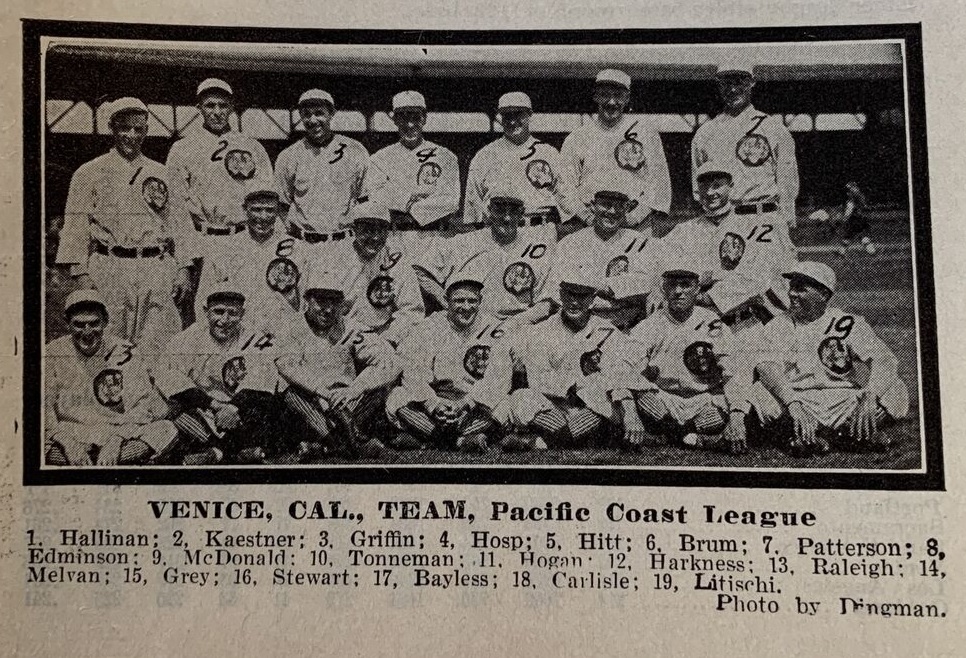
Venice Tigers baseball cards, 1913-14
Yes, Venice was briefly home to the Venice Tigers of the Pacific Coast League. The team that had called Vernon home from 1909-1912 (and would return to the industrial enclave south of Los Angeles in 1915) spent the 1913 and 1914 seasons just a few blocks from the Pacific Ocean. (You can see the approximate location of the Venice ballpark on the SABR Baseball Map. You can also spot Vernon in the map’s lower right-hand corner.)
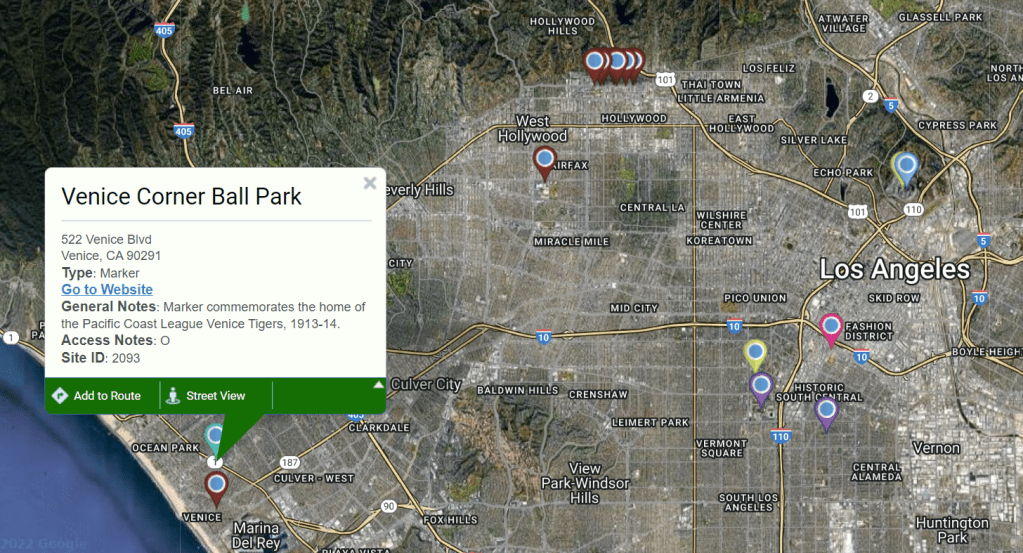
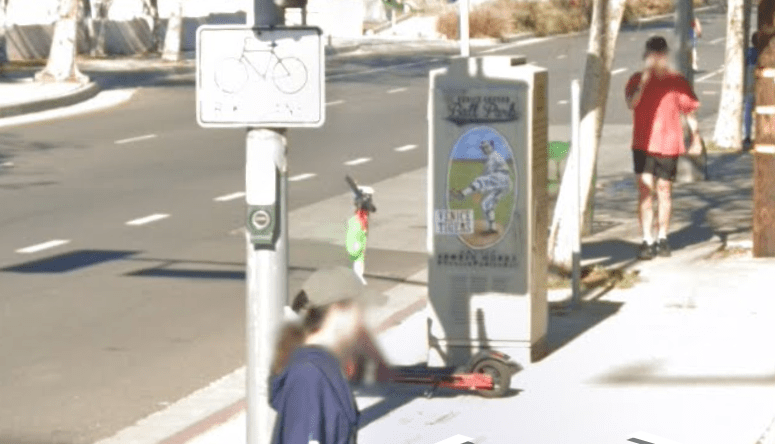
Moving from the map to real life, the marker is not so easy to locate. Having wandered the neighborhood a fair amount, nary noticing a thing baseball related is proof of this. However, some nice online photos are available though the Historical Marker Database. Google Street View also affords this image, though my understanding is that it’s frequently defaced by graffiti.
The presence of the Tigers in Venice (and even Vernon) pre-dates my dad by quite a bit, and it would be a stretch to even call my dad a baseball fan beyond his love of Fernando Valenzuela. Still, I feel drawn to this Pacific Coast League squad of no-names simply because these Tigers, like my dad, called Venice their home, even if both parties left too soon.
I have a Venice trip in my future, one that I’ve already put off too many times. A friend has been holding my dad’s ashes for me far longer then etiquette should allow, and the plan has always been to spread them at Venice Beach. There are a lot of reasons why I’ve waited this long, but I feel like the ghost of an old ballpark, whether as bonus or distraction, may be just what I need to get moving.
* * *
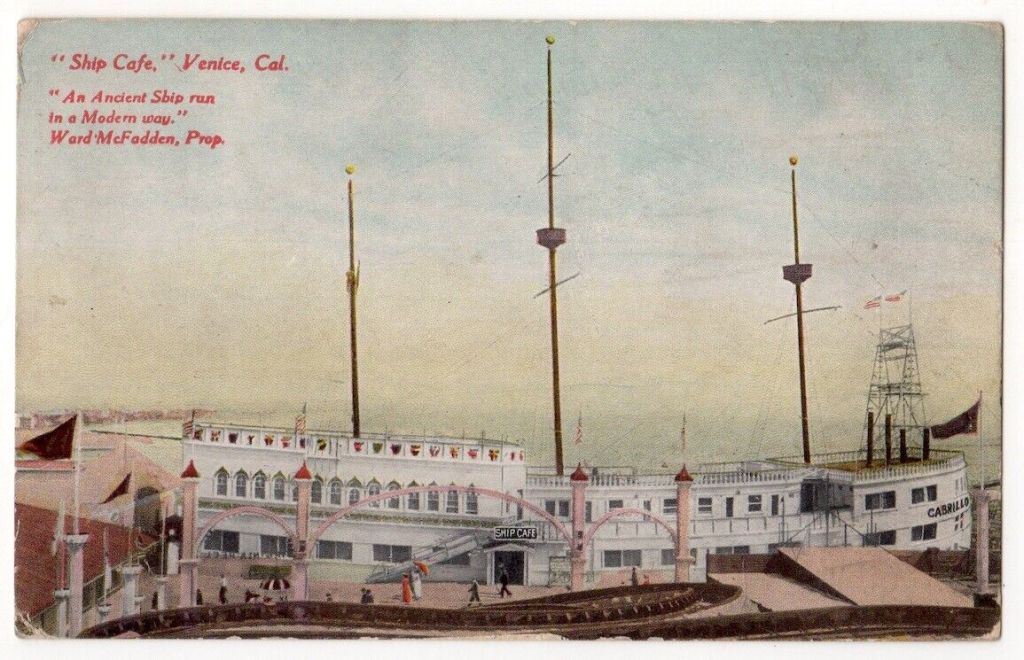
While I’m in the neighborhood I can also check out a couple other Venice Tigers-themed sites. About 0.4 miles from the Corner Ballpark marker, there is the precise location (southwest corner of South Venice and Abbott Kinney) where the ballpark (built in only five weeks!) stood . Though not an official SABR Landmark, why not take a look! And finally, if I’m dropping ashes off the Venice Pier, I may as well stroll past the old parking spot of Ward McFadden’s Ship Café.
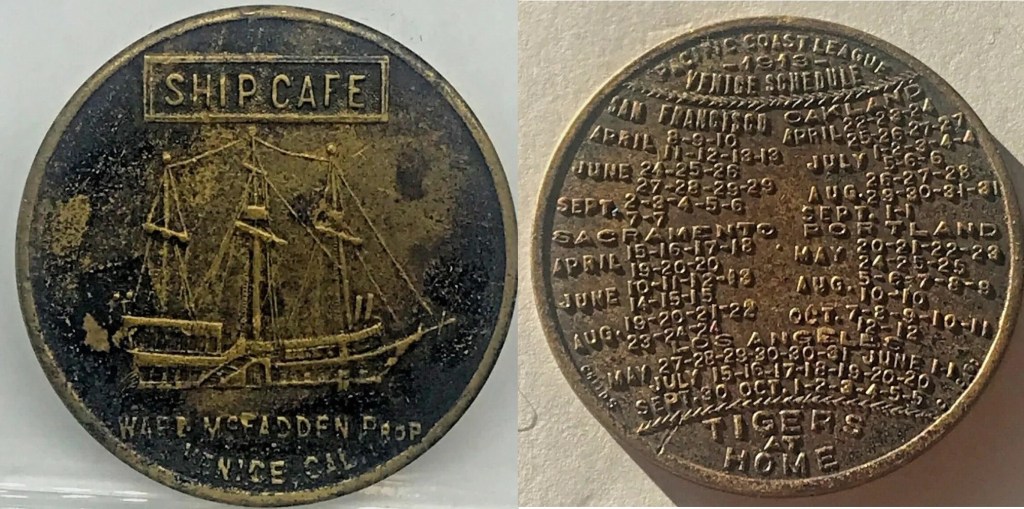
What does the Ship Café have to do with baseball?! How else did fans get ahold of their 1913 Venice Tigers schedule doubloons!
There will be a weirdness to the trip, as is tautologically true of all things Venice, but the weirdness will not emanate from the sights, the sounds, or even the smells. Now the weirdness will be my dad joining me, unmistakably, at every step. It will be his weirdness, once off-putting but now sufficiently missed as to turn the unwanted to welcome and the foreign to familiar. Steeped in his memory, this New Venice will offer me what it offered the Tigers, neither errand nor detour but—for however long it lasts—Home.
Author’s Note: This article is dedicated to my father, Nelson Schwartz (1947-2020)and his special love of all things Venice.
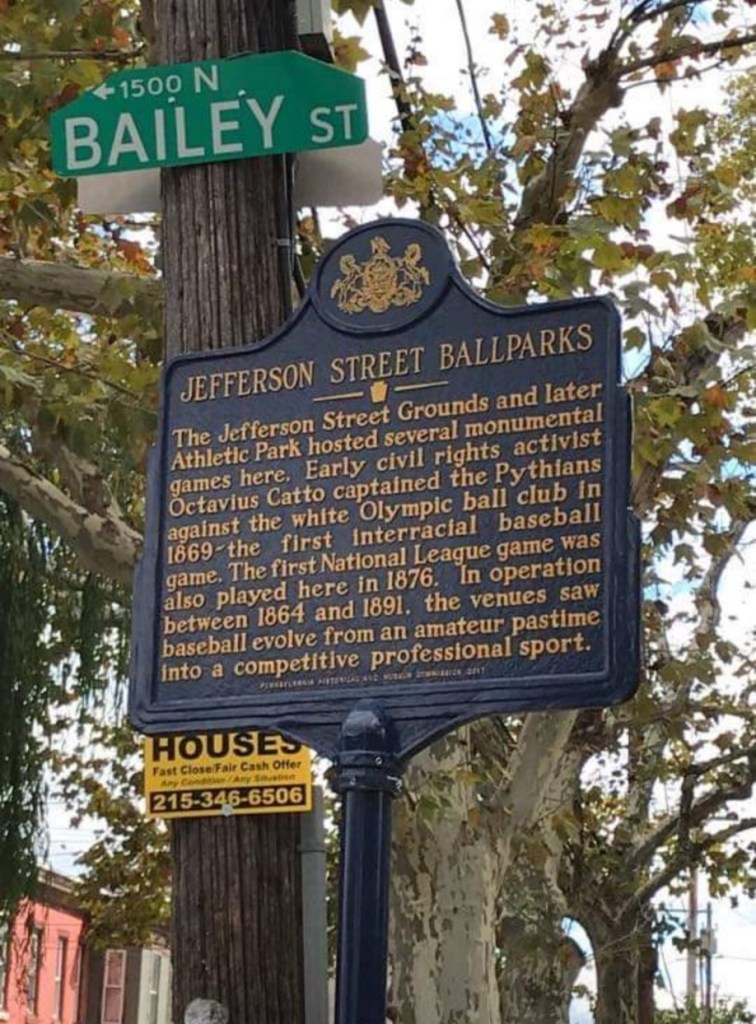
Amid the noise of bouncing basketballs and splashing in the new pool at the Athletic Recreation Center, there exists a baseball diamond whose provenance is embedded in baseball’s past. Just outside the fence along the third baseline stands a Pennsylvania historical marker that details that background. Primarily funded by the generous donations of SABR members and dedicated in September 2017, the marker explains that the property played host to the first National League game, was the site of the first interracial baseball game and was home of the American Association’s Philadelphia Athletics.
Harry Stovey leads off second base at Athletic Park in 2017
In 2015 I went down a rabbit hole and discovered Jerry Casway’s biography of the Jefferson Street Ballparks. I was new to SABR and just developing my passion for 19th century baseball history. After learning about the extraordinary history that took place there, I decided to hop in my car and make the half hour trek to the Athletic Recreation Center and view the site with my own eyes. When I arrived, I walked onto the field where I was mentally transported back in time. I tried to imagine the sights, sounds and smells that would have been familiar to those who visited the ballparks during the 19th century. I’d like to take you on that journey.
The Jefferson Street ballparks were situated in a Philadelphia neighborhood called Brewerytown. Its proximity near the Schuylkill River, outlying farms, and lack of development attracted brewers and beer related industries to the area in the 1860s. The Philadelphia Evening Bulletin recalled the Brewerytown of the late 19th century with fondness. “…the air was as nourishing as vaporized bread…It was a place for family bakeries and rich delicatessens, a neighborhood scrubbed to within an inch of its life and resounding to the guttural language of Goethe and Schiller…” Railroad lines serviced the industry along the river while streetcar lines acted as the neighborhood’s public transit option, bringing fans to and from the ball grounds. The noises and smells of a developing Brewerytown enveloped this epicenter of Philadelphia baseball for nearly three decades.
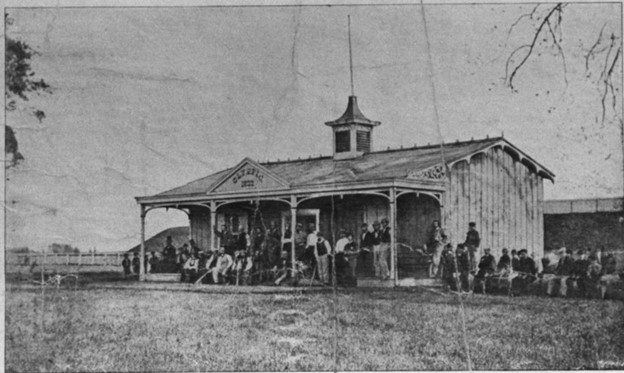
Olympic Ball Club clubhouse along Master Street. 1860s
The property was used regularly for baseball beginning in 1864 when the Olympic Ball Club leased the grounds. On September 3, 1869, the first interracial baseball match between nationally prominent clubs was played at the Jefferson Street Grounds. The Olympic Ball Club, an all-white team, and Philadelphia Pythians, an all-black team, squared off in a match that was reported on as far away as Utah.
The Athletics called Jefferson Street home during their championship season of 1871, the first professional baseball league championship season in history. On April 22, 1876, all the inaugural National League games were rained out except the game in Philadelphia where Boston defeated the Athletics in the first National League game in history. But the Athletics were expelled from the League at the end of the season, ending Philadelphia’s affair with top-flight baseball. It would be six years before Major League Baseball returned to the Quaker City and Jefferson Street.
Frank Leslie’s Illustrated Newspaper. 10/6/1883
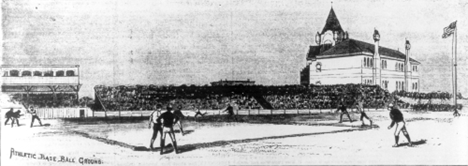
The Jefferson Street Grounds experienced change in the absence of top-flight baseball between 1877-1881. A school was constructed on the original field, while 26th street was cut through the middle of the lot. But in 1883, baseball returned to Jefferson Street when the American Association’s Philadelphia Athletics constructed Athletic Park at 27th and Jefferson streets. The first city championship game in years was played on April 14 between the Athletics and Al Reach’s Philadelphia Phillies. The account published in the Times noted that “the audience gave audible criticisms on the merits of both nines” when the squads were warming up on the field. Evidently, Philadelphia fans haven’t changed in 139 years. Toledo visited Athletic Park on May 26, 1884, and when Moses Fleetwood Walker, MLB’s first African American player, stepped to the plate for the first time, the Philadelphia fans rose to their feet and applauded him. Jackie Robinson received a different reception 63 years later.
I thought about these things as I stood in the baseball diamond at the Athletic Recreation Center. I could almost smell the beer, hear the fans yelling themselves hoarse, and see Moses Fleetwood Walker step into the batter’s box as the American flag lazily waved in deep center field. History buries its treasure deep.
In the case of the smells, sounds, and sights from within the Jefferson Street ballparks our imagination is almost all we have that will allow us to visit this space as it once was. Newspaper accounts the only vestiges of their existence. But they are lacking the context that I often enjoy, the fan experience. I left the Athletic Recreation Center convinced that I needed to do something to memorialize the place and the people who made it important.
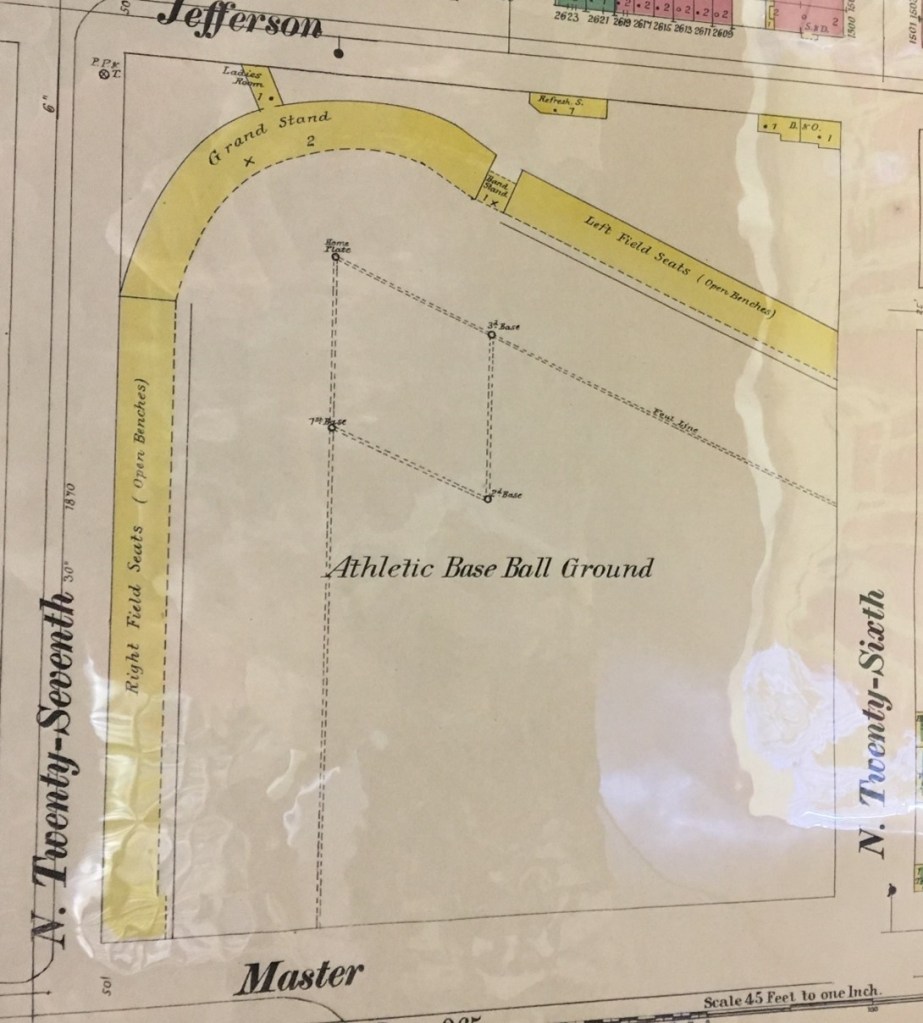
Athletic Park as printed in the 1886 G.W. Bromley Atlas of Philadelphia
Finding what made the Jefferson Street ballparks special and worthy of a Pennsylvania State Historical Marker wasn’t difficult. Period newspaper accounts and images combined with secondary source work made this nomination a home run. I was confident the oversight committee would approve the marker. My concern was funding the marker.
The cost for the historical marker in 2017 was approximately $2,000. I had created a GoFundMe in late 2016 to fundraise and by late March, had raised approximately $500 of the $2,000. On March 27, 2017 I announced that the Pennsylvania State Historical and Museum Commission (PSHMC) approved my nomination. Once this announcement was made, full funding was achieved within a week!
The next challenge was finalizing the wording with the PSHMC. Ultimately everything I wrote made it onto the sign with one alteration: I stated that the April 22, 1876, game between Boston and the Athletics was the first Major League Baseball game in history. Despite explaining that MLB has held that stance since 1969, the PSHMC required the wording to be changed to “first National League game.”
Jefferson Street Ballparks historical marker
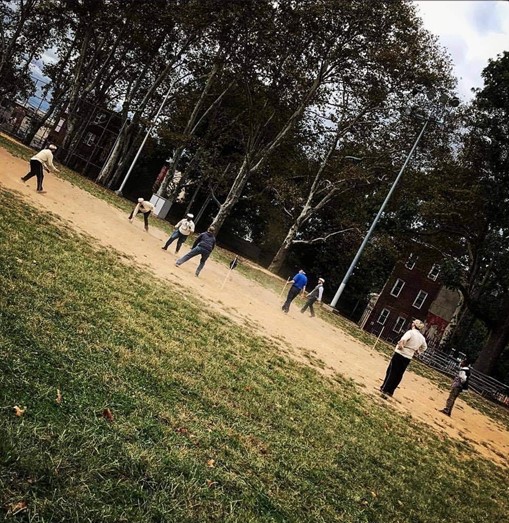
The Jefferson Street Ballparks historical marker was officially dedicated on September 30, 2017. Speeches were given by Dick Rosen, then Co-Chair of the Connie Mack SABR chapter, Rob Holiday, Director of Amateur Scouting Admin of the Phillies, a member of the Athletic Base Ball Club of Philadelphia (vintage baseball), and me. After the speeches and the unveiling, the Athletic Base Ball Club played a game of Philadelphia Town Ball and invited attendees and those in the community to join in the action. The Athletic club’s uniforms are almost exact replicas of the Athletics’ 1866 uniforms. It was surreal seeing those uniforms back on such a historic field. My favorite part was the young kids engaging in a 19th century game on a field where so much history had taken place, and their naivete to it all. The Philadelphia Inquirer covered the event and published a story in their October 1, 2017, issue
Philadelphia Town Ball played on the grounds of Athletic Park
Just days ago, the Philadelphia faithful packed Citizens Bank Park three straight nights as the Phillies hosted the Houston Astros in the 2022 World Series. It has been an exhilarating month for Philadelphia baseball fans, who have once again become a topic in the grand postseason narrative. I had the privilege to attend two postseason games, both Phillies victories, and they were both the loudest baseball experiences I’ve ever had. The crowd was authentic, bombastic and boorish. As we cheered our Phillies and jeered the opposition, the wind rustled leaves on an old crusty baseball diamond in Brewerytown, some five miles away from Philadelphia’s current baseball epicenter. Did our voices travel those five miles to Jefferson Street and transform into distant echoes of what once was a hotbed of baseball activity? Maybe that’s too mystical for the real world, but I’ll choose to believe it.
Since the Hardball Voyager blog was announced, I tried to pick a favorite local landmark to write about related to Pittsburgh baseball. I failed, as there are too many “favorites.” So instead, let’s talk “favorite oldest” landmark.
With recent improvements to the outfield concourse (stress on the word “improvements”), PNC Park is even more rife with reminders of the region’s baseball past than previously. Cartoonish bobblehead statues, club hall of fame plaques, and colorful, decorative signage are just some of the welcome additions to the home of a team with such a long (and occasionally) storied history.
While the new-fangled items are great and welcome, there’s one longtime object within the stadium that has my heart. It has stood steadfast through the years, far away from the glitz and color of PNC’s outfield. Amidst one of the busiest areas in the stadium, it somehow manages to quietly hide in plain sight–it’s the Dreyfuss monument, located at the top of the Peoples Gate escalator, a short distance from the entrance near the Honus Wagner statue. Aesthetically, there is nothing overly significant about the monument itself; a large, gray, tombstone-like slab ornamented with a small, circular bronze plaque. Most folks entering the ballpark probably don’t even notice it, as it seems to fit as a piece of the building’s structure. But given who it is there to memorialize, and given the history it has seen, the marker is a standout amongst so many others on the other side of the ballpark.
Barney Dreyfuss image (ca early 1900s) from Wikipedia, no indicated source
Following nearly two decades of (relative) historical anonymity, the Pittsburgh National League team really burst onto the national baseball scene in 1900. Barney Dreyfuss bought into and (essentially) merged the franchise with the soon-to-be retracted Louisville club, a team he’d previously owned. The combination of the Pittsburgh team with a number of players from Louisville (the previously mentioned Wagner included) turned the new club into a powerhouse in the NL standings immediately, and the success continued for the next decade.
Even though the shine faded a bit after 1912, Dreyfuss’s organization managed to rebound a few years later, and what followed was another period of strong finishes throughout the 1920s. Barney’s knack for finding the right people (both player-wise and management-wise) was evident from looking at the results during his stewardship; the team landed in the upper echelon of the NL quite a bit. They captured six pennants and finished as either runner-up or third place seven times each.
Barney and son Samuel from 1925 team photo, as reprinted in the 10/16/1925 Pittsburgh Gazette Times
As Dreyfuss aged, his intention was to pass ownership of the Pirates on to his son, Samuel. The younger Dreyfuss joined the club in 1920, and apprenticed as the team’s treasurer, as well as taking numerous other roles in the employ of his father during the Pirates’ resurgence. Unfortunately, tragedy struck in 1931 when Samuel passed away from pneumonia at the age of 34. It has been theorized that the loss of his son was the psychological and emotional blow that led to Barney’s decline and death only a year later.
Heydler wreath image from 7/1/1934 Pittsburgh Press
Two and a half years after Barney Dreyfuss passed away, a monument dedicated to both Barney and Samuel was unveiled at the game that marked the 25th anniversary of one of Barney’s crowning achievements—the opening of Forbes Field. NL president John Heydler and several local dignitaries were on hand for the ceremony. The memorial for the Dreyfuss men was placed in deep centerfield, near the flagpole. In the years following, the monument saw a good bit of action, as it was located within the field of play. Just like the early years of Yankee Stadium’s Monument Park, outfielders had to be aware of their surroundings, lest they become part of an unwanted collision.
After the Pirates moved in the early 1970s, the Dreyfuss monument was as well, transported from the Forbes outfield to a more fan-friendly (and less hazardous) concourse location in Three Rivers Stadium. In 2001, it was taken to the new digs on the concourse at PNC Park, and resides there to this day.
Early Pirates broadcaster ‘Rosey’ Rowswell image from 10/2/1948 Bulletin Index
If you come to a game in Pittsburgh, it’s imperative that you take in the statues and various markers celebrating the players and history of the Pittsburgh Pirates. Above all others, though, I ask that you be certain to stop by the simple gray slab, near the home plate entrance, to pay your respects to the two Dreyfuss men who left an indelible mark on Pittsburgh baseball history.